
Tarot and Rituals
Astrology Journaling Prompts for Beginners
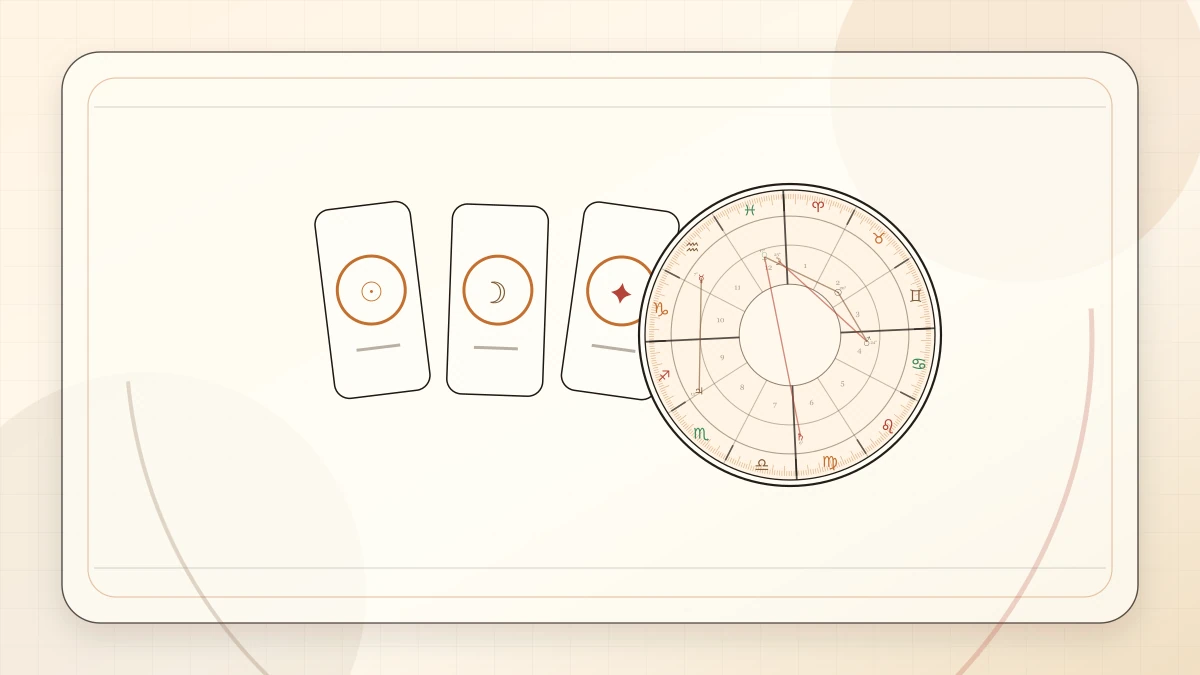
Good beginner prompts start with your Sun, Moon and Rising signs, such as asking when you last felt fully yourself. Keep entries to five lines, with what happened written before the chart idea.
Table of contents
- Example or practical exercise
- What an astrology journal is actually for
- How to set up a notebook in five minutes
- Prompts for your Sun, Moon and Rising signs
- Prompts for the houses, grouped so they stay short
- A three-line Moon log, with a worked example
- A weekly check-in that keeps prompts fresh
- Questions beginners ask about astrology journaling
- How to review the notebook without fooling yourself
- What this does and does not establish
Example or practical exercise
Priya logs the Moon's sign, a one-word mood and one thing that stood out each night for four weeks, and finds her moods do not line up with signs but that she sleeps late whenever she stays up scrolling.
What an astrology journal is actually for
A beginner astrology journal is a place to look at your own patterns using the chart as a set of questions. It is not a place to collect proof that astrology works, and it does not need to be beautiful. A plain notebook that you open for five minutes does more than a decorated one that stays on the shelf.
The prompts below start with the three placements most people know, then move to houses and the Moon’s daily sign. Each prompt asks you to describe your experience first and connect it to the chart second. That order keeps you honest, because you notice what you actually felt before the symbol offers its explanation.
How to set up a notebook in five minutes
You need a birth chart, which the birth chart calculator on this site can produce from a date, time and place. Without a birth time you can still use your Sun sign unless you were born near a sign change, and your Moon sign unless the Moon changed signs on your birth date, which happens often because it moves into a new sign about every two days. The Rising sign and houses always need the time.
- Write your Sun, Moon and Rising signs on the first page, with the house of each if you have them.
- Draw a line down the middle of every later page. Put what happened on the left and the chart idea you are testing on the right.
- Date each entry, and add the Moon’s sign if you like.
- Keep entries to five lines. A short habit lasts longer than an ambitious one.
- Leave the last page of each month free for a review.
Prompts for your Sun, Moon and Rising signs
In the tradition, the Sun describes your core drive, the Moon your emotional habits and the Rising sign the way you meet new situations. These are interpretive ideas. Use them as openings, not as facts about you.
| Placement | What tradition associates with it | Prompt to write on |
|---|---|---|
| Sun sign | Identity and what you want to develop | When did I last feel fully myself, and what was I doing? |
| Moon sign | Comfort, mood and emotional habits | What helps me settle after a hard day, and when do I forget to do it? |
| Rising sign | First impressions and approach | How do people seem to see me in the first ten minutes, and how does that compare with how I feel? |
Prompts for the houses, grouped so they stay short
The twelve houses are areas of life. Rather than twelve separate entries, try four groups and write on one each week.
- Houses 1 to 3 (self, resources and values, everyday talk): what have I said or done this week that matched what I care about?
- Houses 4 to 6 (home, enjoyment, routine): what part of my day felt settled, and what part felt scattered?
- Houses 7 to 9 (partners, shared matters, learning): where did I rely on someone, and where did I learn something new?
- Houses 10 to 12 (public role, friends and hopes, rest): what did I show others, and what did I keep to myself?
A three-line Moon log, with a worked example
The Moon spends a little over two days in each sign and moves about 13 degrees a day. A short daily log pairs the Moon’s sign with your mood, and over a month you can see whether any pattern shows up or whether the days simply vary.
Here is a constructed case. Suppose the Moon enters Pisces at 0 degrees on a Monday noon. At 13 degrees a day it reaches about 13 degrees by Tuesday noon and about 26 degrees by Wednesday noon. It needs another 4 degrees to leave Pisces, which takes about seven hours, so it enters Aries on Wednesday evening. Priya, a constructed beginner, writes three lines each night: the Moon’s sign, her mood in one word and one thing that stood out. After four weeks she finds her moods do not line up with signs at all, but that she sleeps late whenever she has stayed up scrolling, which is a useful finding in its own right.
A weekly check-in that keeps prompts fresh
Once the first pages feel familiar, add a Sunday check-in of about ten minutes. It keeps the notebook from becoming a list of daily moods with no direction. Use the same four questions each week so the answers can be compared across months.
- What was the Moon’s sign on the days that felt easiest and hardest?
- Which house or life area took most of my attention?
- What did I do that matched what I care about?
- What is one question I want to carry into next week?
Questions beginners ask about astrology journaling
Do I need to believe in astrology to do this? No. You can treat the chart as a structured set of questions and judge for yourself whether any of them are helpful.
What if my entries contradict my chart? That is valuable data. Note it and leave the mismatch unresolved. Contradictions teach you more than neat matches.
How long should I write? Five minutes is enough. If you are writing for half an hour you are probably drifting away from your original question.
Should I journal about other people’s charts? Keep your journal about yourself. Writing conclusions about someone else’s private motives is guesswork, however good the chart.
How to review the notebook without fooling yourself
At the end of a month, read your entries and count matches and mismatches in two columns. Memory favors hits, so the written count protects you from an impression that astrology is working better than it is. A small sample of anecdotes cannot show that a chart predicts anything. What it can show is which questions kept you thinking.
If a prompt stirs up something painful, close the notebook. You can come back to it later, talk it through with someone you trust, or bring it to a qualified professional if it stays heavy.
What this does and does not establish
A small set of matching entries cannot show that a chart predicts anything, because memory favors hits over misses.
Related calculators
Use the matching tool when you want a direct chart or timing result after reading the guide.
Moon Ritual Calculator
Monthly Moon ritual planner that uses exact lunar dates and keeps the ritual layer explicitly symbolic.
Moon Ritual Timing Calculator
Live Moon-phase page that converts the current direction into clearer symbolic ritual-timing guidance.
Best Day for Meditation Calculator
Inspect unranked monthly Moon records and reported station intervals, with coverage limits and optional symbolic themes. Intraday elections remain uncalculated.
Related articles
Keep reading with nearby topics that deepen the same question from another angle.
Moon Phases Explained for Beginners
Moon phases show how much of the Moon's sunlit half we can see as it circles Earth. One 29.5-day cycle splits into eight phases of about 3.7 days, each starting at a multiple of 45 degrees.
6 min read
Full Moon Meaning and Emotional Release
A full Moon is the night the Moon sits opposite the Sun and shows its whole lit face. Emotional release here means a quiet review, such as dropping an expectation, not forcing strong feelings.
6 min read
Tarot for Decision Reflection
Tarot can support a decision by prompting questions about each option, such as what you value or what worries you. Make the choice itself from a separate list of facts.
6 min read
Tarot Reading for Beginners
To start reading tarot, ask an open question about your own life, describe each picture before its meaning and write one practical sentence. A standard deck has 78 cards: 22 Major and 56 Minor Arcana.
6 min read
Keep exploring
Use the category page and the main hubs when you want the next layer of context.
Previous article
Tarot for Decision Reflection
Next article
Yearly Astrology Guide