
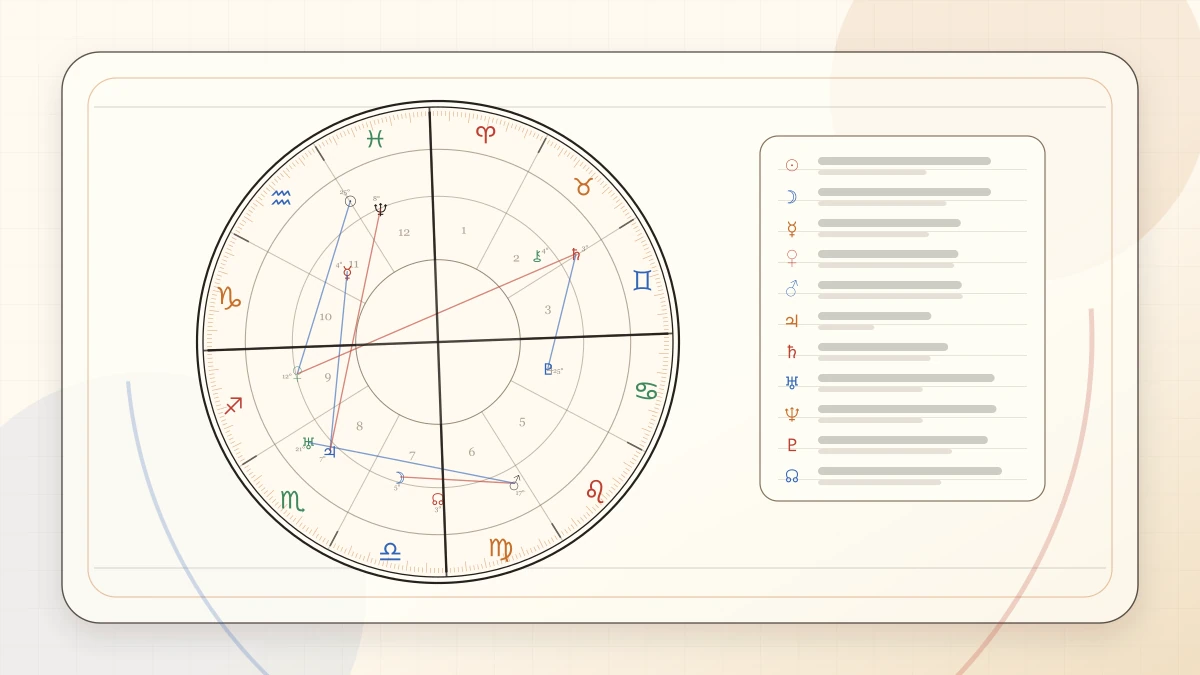
Birth Chart Basics
Zodiac Elements and Modalities Explained
Zodiac Elements and Modalities Explained becomes more useful when you connect the concept with the rest of the chart instead of reading it in isolation.
Quick answer
The most useful first pass is to focus on the core role of the placement, why exact inputs matter, and what the result changes about the rest of the chart.
Table of contents
Start with the core idea
The point of zodiac elements and modalities explained is not to memorize jargon. It is to understand what part of the chart you are looking at and what kind of question it helps answer.
When you understand the role first, the details stop feeling random and start feeling connected.
Why exact inputs matter
Birth charts are built from date, time, and place. As soon as the question depends on houses, angles, or sensitive points, exact birth details become part of the answer rather than background information.
That is why a strong article and a strong calculator work together. The article explains what you are seeing; the calculator shows where it actually lands in your chart.
- Use your full birth date, exact birth time, and the correct birth city whenever you have them.
- If the birth time is uncertain, read with extra caution around houses and the Rising sign.
- Treat sign-only answers as a starting layer, not the finished interpretation.
How to read the result step by step
Start with the plain-language meaning, then compare it with the nearby chart context. One placement becomes more accurate when you know which house it falls in, what aspects support it, and whether it repeats a theme already visible elsewhere.
This is how you keep the reading grounded: one symbol shows its role, and the broader chart pattern shows how strongly that role matters.
Common mistakes to avoid
The biggest mistake is reading one part of the chart as if it cancels the rest. A Moon sign does not replace the Sun sign. A Rising sign does not override every planet. A chart-reading article should help you combine layers instead of force a winner.
The second mistake is skipping the practical input check. If the time or city is off, the interpretation can drift fast.
What this means for you
A useful chart article should leave you knowing what to compare next, not just what label to memorize. Once the core piece makes sense, move to the full chart, supporting guides, or a more exact calculator.
That approach usually gives you a result that feels clearer, more specific, and much less like a generic personality blurb.
Zodiac Elements and Modalities Explained quick reference
Use this quick reference as the high-level map for zodiac elements and modalities explained. It shows what to check first, what to compare next, and which part of the guide matters most when you want a useful answer instead of a vague impression.
For birth chart basics, the premium reading starts with what this chart layer changes in the birth chart. From there, compare birth date, exact time, place, houses, angles, and placement context with the Sun, Moon, Rising sign, houses, aspects, and chart ruler so the article becomes a practical decision aid rather than a loose list of meanings.
| Step | What to check | Why it matters |
|---|---|---|
| First scan | Identify the main chart layer the article explains. | Stops the reading from becoming a list of disconnected symbols. |
| Input check | Confirm date, exact time, and birth city when houses or angles matter. | Improves accuracy before interpretation begins. |
| Context check | Compare the topic with the Big Three, house placement, and key aspects. | Shows whether the same theme repeats elsewhere in the chart. |
| Next action | Open the matching calculator or full birth chart after the guide. | Turns the explanation into a personal chart result. |
Reference chart
Zodiac Elements and Modalities Explained reference chart
A scan-friendly view of the core layers behind this guide, built to help you decide what to read, compare, and calculate next.
Input
Date, time, place
Exact details matter most when houses, angles, or timing-sensitive points are involved.
Core layer
chart details
Read the topic as one layer inside the whole wheel.
Compare with
Big Three
Sun, Moon, and Rising usually give the fastest context for beginners.
Best next step
Full chart
Use a calculator when you want to see where the topic lands in your own chart.
How to use this guide well
Zodiac Elements and Modalities Explained becomes more helpful when you treat the article as a reading framework. Start with the question the page answers, then compare that answer with the chart layer, timing layer, or symbolic layer that applies to the topic. That sequence keeps the meaning clear and useful.
Use it to build a cleaner chart-reading order before you jump into advanced details or isolated placement meanings.
The best reader takeaway is a cleaner way to notice patterns, ask better follow-up questions, and decide whether a calculator, article, or personal chart detail should be checked next.
- Read the quick answer first so you know the core point.
- Use the table to decide what to check before you personalize the meaning.
- Compare the article with at least one related calculator or supporting guide.
- Write down one practical question the guide helps you answer today.
Make the reading more useful
A premium astrology or numerology article should give you language for a pattern, a timing cue, a chart layer, or a reflective practice. Zodiac Elements and Modalities Explained becomes strongest when the idea is connected to the details that matter for the question.
If the question depends on houses, angles, or the Rising sign, uncertain birth time can change the interpretation quickly.
When the topic feels personally important, the next step is to move from general meaning into context. Use Birth Chart Tools, compare nearby articles, and keep the interpretation connected to real choices, real relationships, and the actual details available to you.
- Start with the plain-language role of the topic before memorizing keywords.
- Confirm whether the article needs exact birth time or only sign-level context.
- Compare at least one supporting placement before drawing a conclusion.
- Use the related calculator when you want the answer for your own chart.
Frequently asked
Do I need an exact birth time for this topic?
If the question touches houses, the Rising sign, angles, or relocation, exact birth time is strongly recommended. If it is a sign-only topic, you can usually begin without it.
What should I read first in a birth chart?
Start with the Sun, Moon, and Rising sign, then notice the strongest houses and only after that move into aspects and finer details.
What is the biggest mistake beginners make?
Trying to decode every symbol at once is the biggest mistake. Read the chart in layers instead of treating every placement as equally important.
Should I use a guide or a calculator first?
Use whichever removes confusion faster. A calculator gives you the placement; the guide explains what to do with it.
What is the next useful step after this article?
A full birth chart, Moon sign, Rising sign, or house guide is usually the strongest next step because those layers add context immediately.
Related calculators
Use the matching tool when you want a direct chart or timing result after reading the guide.
Free Birth Chart Calculator
Create a birth chart from birth date, time, and place to review placements, houses, angles, and aspects.
Moon Sign Calculator
Exact Moon-sign verification from full birth-chart math for practical emotional and compatibility use cases.
Rising Sign Calculator
Exact Ascendant verification from full birth-chart math for practical house and Big 3 interpretation.
Related articles
Keep reading with nearby topics that deepen the same question from another angle.
The 12 Houses Explained
Use this guide to understand the meaning of the placement, the life area it touches, and how to read it in context.
12 min read
How to Read Current Transits Without Overreacting to Every Aspect
Use this guide to understand timing patterns, current sky themes, and how transits connect with your chart.
11 min read
What Each Planet Means in a Birth Chart
Use this guide to understand the chart more clearly, know what the key symbols mean, and take the next step with confidence.
11 min read
How to Read Houses and Signs Together
Use this guide to understand the chart more clearly, know what the key symbols mean, and take the next step with confidence.
10 min read
Keep exploring
Use the category page and the main hubs when you want the next layer of context.
Birth chart basics in plain English
Start here when you want to understand the chart wheel, the Big Three, house structure, and how exact birth details change the result.
Articles hub
Browse astrology, numerology, and timing guides in one place.
Guides hub
See beginner-friendly chart reading guides and next-step explainers.
Birth Chart Tools
Use exact chart tools when you want houses, angles, and precise placements.
Previous article
What Each Planet Means in a Birth Chart
Next article
How to Read Houses and Signs Together