
Timing Guides
Yearly and monthly astrology planning guides
Use these guides when you want a broader planning view of the year, the month, or a recurring timing technique.
Featured in this category
Start with the strongest guides in this topic cluster.

Yearly Astrology Guide
A yearly astrology guide maps the cycles that run through any twelve months, from the monthly Sun and Moon to slow Saturn, and separates checkable dates from symbolic interpretation.

How to Read a Yearly Horoscope by Zodiac Sign
Read a yearly Sun-sign horoscope as general themes written for everyone born under your sign, keep lines that name something specific and checkable, and turn them into questions.

Best Moon Phases for Manifestation
The best phase is the one when you will actually sit down and plan: many people write an intention at the new Moon and review it at the full Moon, using the cycle as a calendar.
More in this category
Keep reading with the rest of the articles in this category.

Best Days for Reflection and Planning
The best day for reflection and planning is one where you can protect quiet time, have your notes open and know when to stop; Moon phases and weekdays add only optional themes.

Monthly Astrology Checklist
A monthly astrology checklist confirms your sign, time zone and dates first, gives each week one five-minute check, and keeps facts, themes, your calendar and month-end notes in separate lists.

Weekly Horoscope Reading Guide
Read a weekly horoscope as general text for one twelfth of readers, mostly built from the Moon's movement, and sort its sentences into mood, advice, timing, event and open statements.

How to Plan Your Month With Transits
Write your real obligations on the calendar first, then add four light layers: the Moon's quarter points, the Sun's sign, one or two slow transits and one question for the month.

How to Use a Retrograde Calendar
Pick one or two planets, copy their stations, the moments they appear to stop, into your calendar in your time zone, and treat the stretch between as a reminder to review, not a list of things to avoid.

Best Time to Review, Not Rush, During Mercury Retrograde
Spread small reviews across a Mercury retrograde: tidy before the first station, re-read and confirm early, revise and ask questions midway, decide near the station direct, and record what the checks caught afterward.

Solar Return Chart Guide: How to Read the Year Without Overpredicting It
A solar return chart is cast for the moment the Sun returns to its exact birth position, once a year near your birthday, and read as a yearly theme for planning rather than a forecast of events.

Lunar Return Guide for Monthly Themes
A lunar return is the moment the Moon comes back to its exact birth degree, about every 27.3 days, and astrologers read a chart for that moment as a theme for the month ahead.

Eclipses and Yearly Timing: A Practical Guide
Eclipses come in seasons about 173 days apart, with four to seven a year; list each from an almanac, then treat visibility and any chart contact as separate questions from the event itself.

Personal Yearly Astrology Planning
List your fixed commitments for the year first, then add a few slow-planet themes and, if you use one, your solar return, and give each three-month block one practical aim and one sky question.

Birthday Season Reflection Guide
Birthday season is the roughly 30 days when the Sun is in your Sun sign; use it as a yearly appointment to look back, review your values and plan, with or without a solar return chart.

New Year Astrology Reset Guide
A new year reset is a short pause to sort the past year into finished, unfinished and surprising, glance at the sky only afterward, then choose one word, one small habit and one thing to release.
Quarterly Astrology Review Template
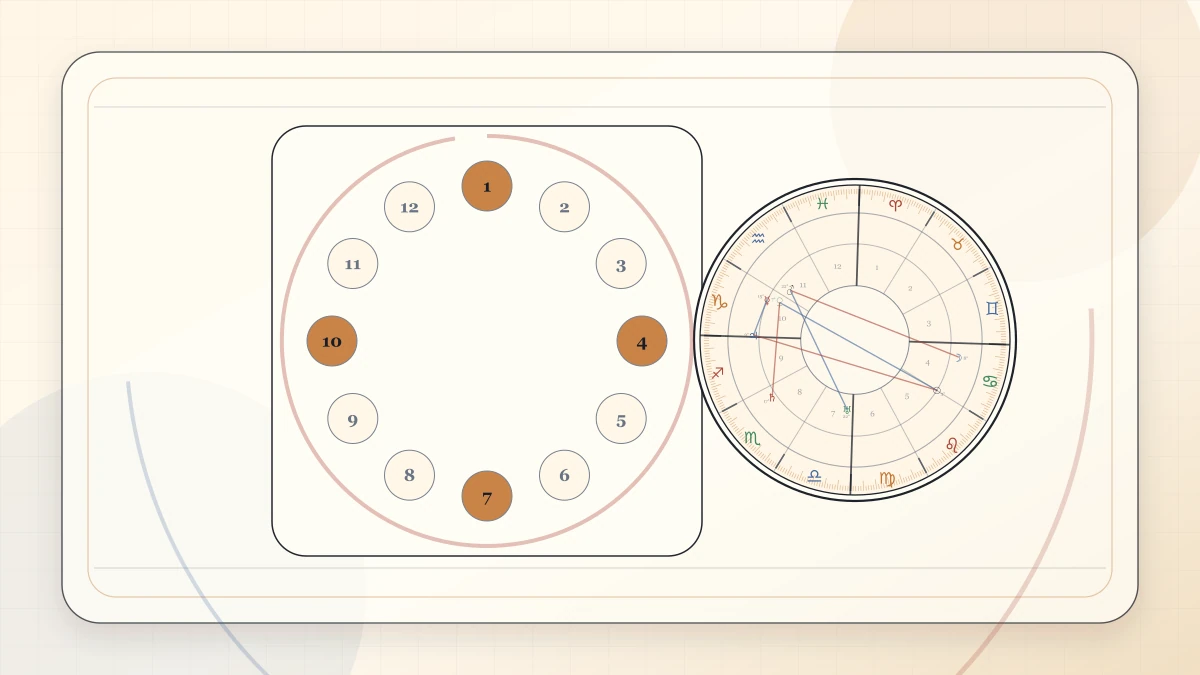
A quarterly astrology review template keeps four fields apart for each goal: the plan written at the start, the actual result, the computed sky contacts and your interpretation, marked fit, partial or did not fit.

Best Days for Important Conversations Using Astrology
A good day for an important conversation is one where both people are willing, the setting is private, nobody is rushed and you know your purpose; the Moon's sign can at most hint at tone.

How to Use an Electional Astrology Tool
Set the purpose, search window, location, time zone and time of day first, shortlist times that already pass practical tests, then compare each one's Moon, next aspect and Ascendant (rising degree), choosing by practical fit.
Transit Check-In Routine for Beginners
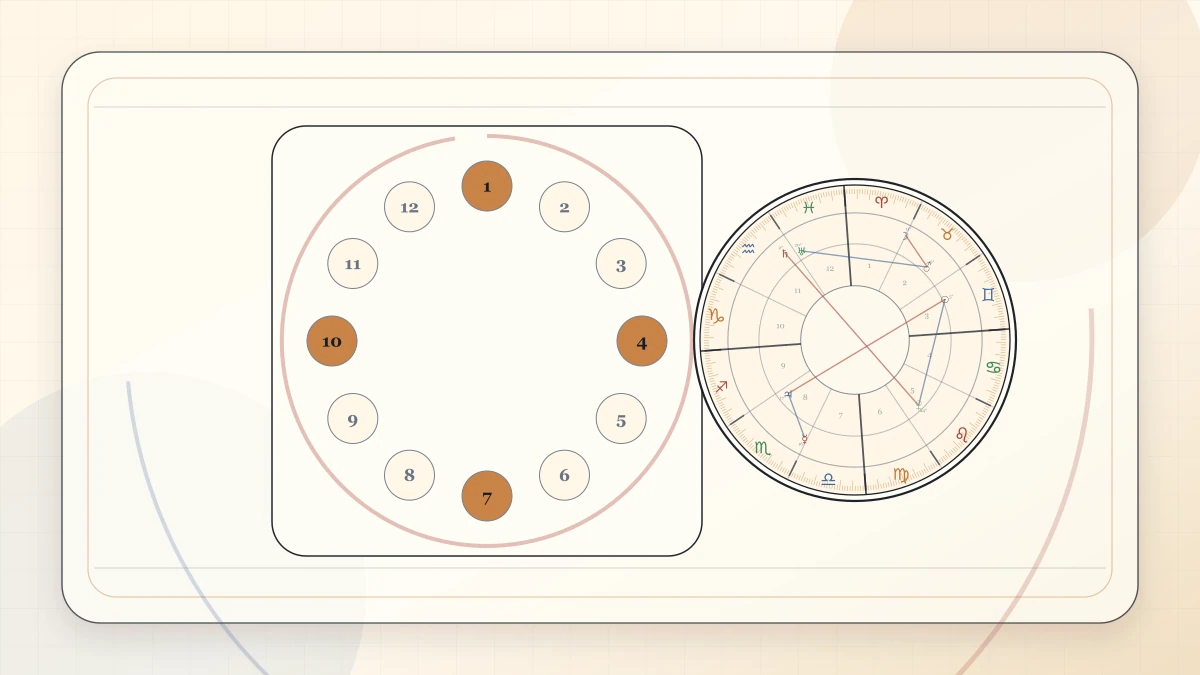
A beginner's transit check-in is a five-to-ten-minute look, at the same time each week, at the Moon, one slow and one fast transit, then writing a fact, a feeling and one question.

Monthly Moon Calendar Planning Guide
To plan a month with a Moon calendar, mark the four main phases, about 7.4 days apart, in one stated time zone, and attach one ten-minute habit to each checkpoint.

How to Read a Monthly Horoscope Without Overreading It
Treat a monthly horoscope as general reflections for everyone with your Sun sign: sort its lines into general advice, dated sky references and specific event claims, and act only on what you can check.

Mercury Retrograde Dates: How They Are Calculated and Checked
Mercury retrograde dates are calculated from the two stations, when Mercury's apparent motion changes direction; check them against two independent sources and convert everything to one time zone before planning.

Saturn Return Age Range Explained
Saturn circles the zodiac in about 29.5 years, so most people's first return falls at about 28 to 30, the second at about 58 to 60 and the third at about 87 to 89.

Jupiter Return Timing Explained
Jupiter circles the zodiac in about 11.9 years, so returns fall slightly before the round ages of 12, 24, 36 and so on, drifting about half a year early by the fifth return.

Best Time to Start a New Habit With Astrology
The best time to start a habit is as soon as the action is small enough to do today; the Moon's 29.5-day cycle can then supply five checkpoints for reviewing how it is going.

How to Use a Solar Return Before Your Birthday
Start a few weeks ahead: confirm your birth data, choose and record a location, find the exact return instant in both UTC and your local time, then read the chart in a fixed order and pick three questions.

Moon Void Calendar Guide
A Moon void calendar lists the stretches from the Moon's last major aspect in a sign until it enters the next sign; check its time zone and which planets and aspects it counts before trusting a time.

How to Plan Around Eclipse Season
Plan around an eclipse season by keeping your real deadlines where they are, confirming each eclipse's type and visibility, and adding at most one short optional review across the roughly four-week window.

Daily Astrology Check-In Routine
A daily astrology check-in takes about five minutes: write the time, the Moon's phase and sign as plain facts, what you need today, one optional question and one small action.

How to Review a Quarter With Astrology
Review a quarter from notes written at the time, such as three new Moon check-ins about four weeks apart, and compare them with a dated expectation before telling any astrological story.

How to Use Weekly Transits for Planning
Once a week, write your fixed commitments first, then add the Moon's sign and phase, any contacts from the Sun, Mercury, Venus or Mars with their exact days and orbs, and one slow background theme.

Best Time to Have a Difficult Conversation With Astrology
The best time for a difficult conversation is one the other person has agreed to, in private, when you have one topic and can pause, and a sky chart, checked last, adds only a little context.

Best Time to Start a Creative Project With Astrology
Start a creative project as soon as you have a time slot, materials and a tiny first goal; Moon, Mercury or Venus symbols can frame the work but do not decide how it turns out.

Best Time to Review Relationships With Astrology
The best time to review a relationship is a regular, agreed slot, such as once a Moon cycle or once a season, with Venus, the Moon and Mercury used only as optional conversation headings.

Best Time to Launch Something: Readiness First, Sky Second
The best time to launch is when the thing works, support and a rollback plan exist, key people are free and the date avoids clashes; a sky chart can only break a tie between ready dates.

Monthly Reset Ritual With Astrology Timing
A monthly reset is a half hour to look back, sort commitments into keep, change or end, clear one task and schedule one step, timed to a marker such as the new Moon or the first of the month.

Year Ahead Questions to Ask Your Solar Return
Ask your solar return open what, how or where questions tied to its Rising sign, the Sun's and Moon's houses, planets near angles and Saturn's and Jupiter's houses, and answer them yourself first.

How to Use the Moon Cycle for Goal Tracking
Use the Moon's 29.5-day cycle as a tracking frame: set a countable goal at the new Moon, then check your numbers at about day 7, day 15 and day 22, and review at the next new Moon.

When to Slow Down During a Retrograde Season
Slow down when a task is hard to undo or you lack key information, whatever the planets are doing; a retrograde can remind you to check, but reversible tasks with full information can proceed.

Astrology Timing for Travel Planning: Check the Facts First
Plan travel from official advisories, entry rules, health advice, booking terms and weather forecasts; astrology can add only an optional mood note afterward and never serves as a safety rating.
What Is Panchang?
A Panchang is a daily Vedic almanac built from five factors: weekday, Tithi, Nakshatra, Yoga and Karana. Its timings depend on local sunrise, so they change from city to city.
What Is Dasha?
A dasha is a planetary period in Vedic timing. The common Vimshottari system runs a 120-year cycle of nine periods, starting from the ruler of the Moon's birth nakshatra.
What Is Rahu Kalam?
Rahu Kalam is a daily period, traditionally avoided for new starts, found by dividing local daylight into eight equal parts and taking the one assigned to that weekday.
What Is Choghadiya?
Choghadiya divides the day from sunrise to sunset into eight periods, and the night until the next sunrise into eight more, each carrying a traditional label such as Amrit, Shubh or Kaal.
Frequently asked questions
Are timing guides the same as prediction?
Timing guides are meant to help you plan, reflect, and work with patterns through a clearer calendar rhythm.
Which timing guide is best for beginners?
Begin with the yearly overview, retrograde calendar guide, or a monthly checklist before moving into advanced timing systems.