
Planetary Transits
Transit and retrograde guides that stay grounded and practical
Start here when you want to understand retrogrades, returns, current transits, and how the moving sky interacts with the birth chart.
Featured in this category
Start with the strongest guides in this topic cluster.

Mercury Retrograde Meaning and a Practical Checklist
Mercury retrograde is a few weeks, three or four times a year, when Mercury appears to drift backward as seen from Earth. Astrologers read it as a time to review, revise and double-check.

Venus Retrograde Meaning in Love
Venus retrograde is a stretch of about six weeks, roughly every 19 months, when Venus appears to move backward. Astrologers read it as a second look at affection, values and what you want.

Mars Retrograde Meaning in Motivation and Conflict
Mars retrograde is a stretch of two to two and a half months, about every 26 months, when Mars appears to move backward. Astrologers read it as drive turning inward, favoring revision over pushing harder.
More in this category
Keep reading with the rest of the articles in this category.

Saturn Return Explained
A Saturn return is when Saturn comes back to the degree it held at your birth, about every 29.5 years. Astrologers read it as a checkpoint for responsibility and the structures you have built.

Jupiter Transit Meaning
A Jupiter transit is Jupiter passing a sign, a house or a natal planet in your chart. Astrologers read it as a stretch of growth, learning and confidence that can also run past what you can manage.

How Planetary Transits Affect Your Birth Chart
Transits do not change your birth chart. A planet in today's sky forms an angle to a fixed natal point, and astrologers read that pairing as a prompt for attention.

How to Read Current Transits Without Overreacting to Every Aspect
Choose your question first, list the slow-planet contacts within a tight orb, then add fast ones only for timing. A Saturn contact lasting months outweighs a Moon contact lasting hours.

Transit-to-Natal Astrology for Beginners
Transit-to-natal astrology compares where a planet is now with where planets stood at your birth. Your natal point is the fixed reference, and the moving planet is the clock.

Uranus Transit Meaning
A Uranus transit is a slow contact, often lasting a year or more with up to three exact hits, that astrologers read as a push toward change, independence and fresh experiments.

Neptune Transit Meaning
A Neptune transit is a slow contact, often lasting about two years, that astrologers read as a time when certainty softens, ideals get tested and facts need extra checking.

Pluto Transit Meaning
A Pluto transit is a slow contact lasting about one and a half to four years, which astrologers read as restructuring: power, depth and what remains when something is stripped back.

Mercury Retrograde Calendar Guide
A Mercury retrograde calendar lists the two stations, when Mercury appears to stop and reverse, and often shadow periods. Check its time zone and whether shadows are included before relying on it.

Eclipse Season Meaning
An eclipse season is a stretch of about a month, roughly every 173 days, when the Sun is near a lunar node and new or full Moons can become eclipses.
Jupiter Return Guide
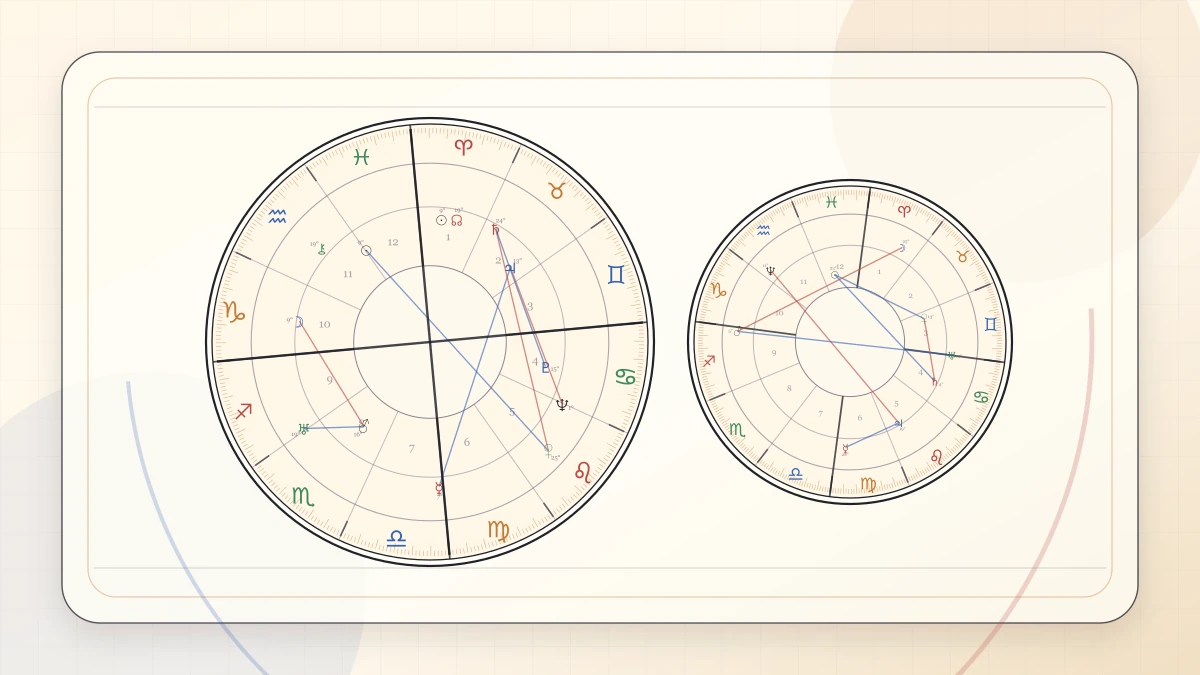
A Jupiter return is when Jupiter comes back to the degree it held at your birth, roughly every 12 years. Astrologers read it as a time to ask what you want to grow and how much you can carry.

Chiron Transits Explained
A Chiron transit is the small body Chiron touching a point in your chart. Modern astrologers read it as a prompt to reflect on a sore spot and what you have learned from it.

Nodal Transits Explained
A nodal transit is a lunar node touching a planet or angle in your chart, or the nodal axis moving through a pair of houses. Both are slow themes to reflect on.
Outer-Planet Transits vs Inner-Planet Transits
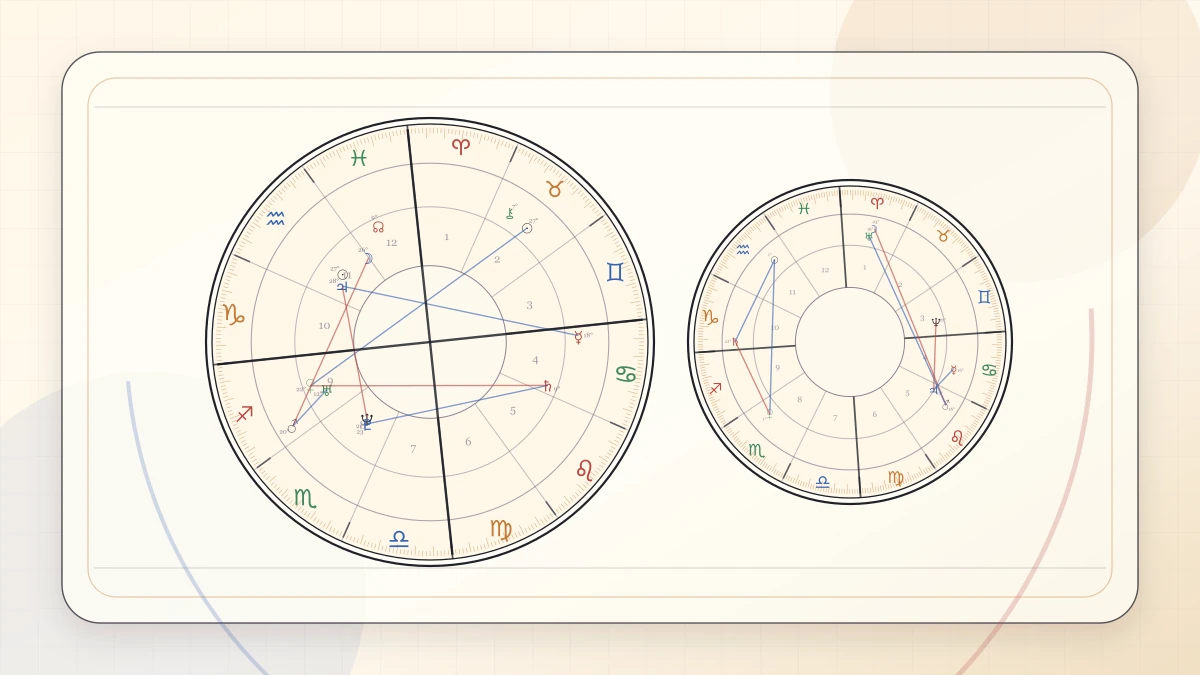
Inner-planet transits, from the Moon through Mars, last hours to weeks and work as timing cues. Outer-planet transits, from Saturn outward, last months or years and set long background themes.

How Long Do Transits Last?
A transit lasts as long as the moving planet stays inside your chosen orb: hours for the Moon, about two months for Saturn and a year or more for the outer planets.

Retrograde Shadow Periods Explained
A shadow period is the stretch of zodiac between a retrograde's two station degrees, crossed once before the retrograde and once after. It is an astrological convention, not an astronomical event.

Saturn Opposition Explained
A Saturn opposition is transit Saturn standing opposite its birth degree, at about ages 14 to 15, 44 and 74. Astrologers read it as a time to weigh your structures from the far side.

Uranus Opposition and the Midlife Transit
The Uranus opposition comes at about age 40 to 42, when Uranus reaches the point opposite its birth degree. It is called the midlife transit and read as restlessness, independence and change.

The Best Way to Track Transits Weekly
Keep one notes page a week with a slow background transit at the top, three chosen fast contacts, a plain daily line and a fifteen-minute weekend review that counts misses as well as matches.

Mercury Retrograde in Relationships
Mercury retrograde is read as a time of crossed wires and old topics in relationships, but the motion does not cause misunderstanding; it simply offers a reason to slow down and check in.

Mercury Retrograde and Technology Delays: What Really Goes Wrong
No known mechanism links Mercury retrograde to crashes, lost emails or travel delays. Selective memory makes it feel true, while updates, full storage, weak connections and weather explain most problems.

Venus Return Meaning
A Venus return is when Venus reaches the degree it held at your birth, roughly once a year and sometimes two or three times in one stretch. Astrologers read it as a prompt about affection and values.

Mars Return Meaning
A Mars return is when Mars comes back to the degree it held at your birth, about every two years. Astrologers read it as a recurring check on drive, initiative and friction.

Jupiter Return vs Saturn Return
Both are a planet returning to its birth degree, but Jupiter comes back about every 12 years as a checkpoint for growth, while Saturn returns about every 29.5 years as an audit of structure.

Pluto Square Pluto Explained
Pluto square Pluto is transit Pluto reaching 90 degrees from its birth position. Because Pluto's speed is so uneven, it can arrive anywhere from the late thirties to beyond a lifetime.

Neptune Square Neptune Explained
Neptune square Neptune is transit Neptune reaching 90 degrees from its birth position, at about age 41 for most people. Astrologers read it as a time when long-held ideals are tested against ordinary life.

Chiron Return Explained
The Chiron return comes around age 50, when Chiron reaches its birth degree again. Modern astrologers read it as a time to reflect on old sensitivities and what you could pass on.

What a Venus Transit Can Mean in Love
A Venus transit is the fast-moving Venus touching a point in your chart for a few days. Astrologers read it as a passing mood of affection, attraction or values, shaped by the point it meets.

Transit Triggers vs Long-Term Cycles
A long-term cycle is a slow transit that sets a theme for months or years; a trigger is a brief fast contact that falls inside it. The model keeps slow and fast timing apart.

How to Read Jupiter Transits for Growth
Read a Jupiter transit through the natal point it touches, since that point names the topic where wider thinking is welcome. Then turn a loose wish for more into a goal you can check.

How to Read Saturn Transits for Responsibility
Read a Saturn transit as an audit of what you carry in the area it touches: what you chose, what was assigned and what you inherited, and whether each still fits.

How to Read Mars Transits for Energy and Conflict
Read a Mars transit as a brief push to act, lasting about three or four days, aimed at whatever natal point it touches. It points at pace and impatience, not at arguments.

How to Read Venus Transits for Relationship Timing
Find the actual Venus contact in your own chart, note its orb and use it to time a social occasion. A contact usually lasts about two days, longer when Venus slows near a turn.

Mercury Retrograde Through the Houses
To read Mercury retrograde through a house, match the sign Mercury is retracing to a house in your chart; that house names the area of life to review for a few weeks.

Saturn Transits Through the Houses
When Saturn moves through a house of your chart, usually for two to three years, astrologers read that area of life as asked to become more durable: tested, simplified or committed to.

Jupiter Transits Through the Houses
Jupiter spends about a year in each house of your chart, and astrologers read that area as a place where growth wants room, along with the risk of taking on more than you can sustain.

Outer Planet Transits Through the Houses
When Uranus, Neptune or Pluto moves through a house of your chart, astrologers read that area of life against a long backdrop: change for Uranus, ideals for Neptune, rebuilding for Pluto.

What an Opposition Transit Can Mean
An opposition transit is a moving planet 180 degrees from a point in your chart. Astrologers read it as a tug between two legitimate things, often involving other people.

What a Square Transit Can Mean
A square transit is a moving planet 90 degrees from a point in your chart. Astrologers read it as friction that asks for adjustment, with the planet pair setting the question.
Frequently asked questions
How should I read transit articles?
Read each transit as a timing pattern, then compare the planet, house, aspect, and repeated hits for the clearest personal layer.
When do retrogrades matter most?
Retrogrades matter most when they repeat a theme in a sensitive part of your chart or align with a broader timing layer.