
Love Compatibility
Compatibility guides that explain the pattern, not just the match score
Read these when you want a deeper relationship lens than a one-word match label, especially around emotional fit, attraction, and synastry basics.
Featured in this category
Start with the strongest guides in this topic cluster.
Zodiac Compatibility: How to Read Love Matches
To read a zodiac match, compare the two signs' elements, then their modalities, then count how many signs apart they sit. The result is a first look, not a judgment on a relationship.
Moon Sign Compatibility Explained
Moon sign compatibility compares how two people seek comfort and settle after a hard day, by element, modality and the exact angle between their Moons. It gives words for differences, not a ranking.
Venus Sign Compatibility Explained
Venus sign compatibility compares what two people find pleasant and how they show and receive affection. Read it by element, modality and exact distance, never as a score.
More in this category
Keep reading with the rest of the articles in this category.
Mars Sign Compatibility and Attraction
Mars sign compatibility compares how two people pursue what they want and how they argue. It describes pace and conflict style, not whom anyone will desire.
How to Read Synastry Without Turning Every Aspect Into a Verdict
Synastry lays one birth chart over another and reads the angles between their planets. Read each contact as a question two people can discuss, never as a verdict on the pair.
Composite Chart Basics for Beginners
A composite chart is one chart built from the midpoints between two people's planets. It is read as the relationship's own character, starting with its Sun, Moon and Ascendant.
Big Three Compatibility Guide
Big Three compatibility compares two people's Sun, Moon and Rising signs: their aims, emotional habits and outward manner. The Rising sign needs an exact birth time.
Rising Sign Compatibility Explained
Rising sign compatibility compares how two people meet the world and each other at first, and checks each Ascendant against the other's Descendant. It needs reliable birth times.
Best Zodiac Matches for Long-Term Relationships: What the Lists Leave Out
No sign is the best long-term match for another; match lists disagree because each uses a different rule. Element and modality pairings work best as topics for a couple to discuss.
Red Flags in Synastry Without Fatalism
A challenging synastry contact is a topic to discuss, not a red flag. Real red flags are behaviors such as threats, control, isolation or pressure to ignore a no.
How to Read Saturn in Synastry
Saturn contacts in synastry are read through commitment, restriction and seriousness. Which theme shows up depends on the planet Saturn touches, the angle and how both people respond.
How to Read Moon Contacts in Synastry
A Moon contact compares one person's emotional baseline with a planet in the other's chart. Read each one for emotional fit, checking direction, aspect type and the birth time.
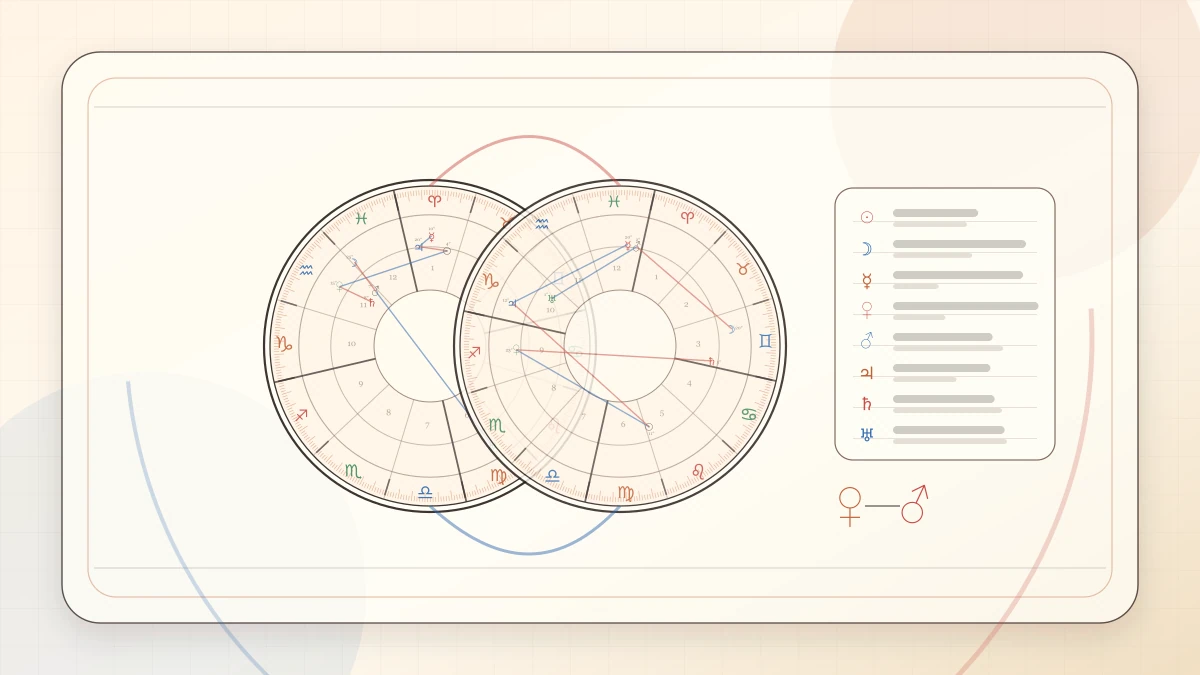
Venus and Mars in Synastry Explained
Venus and Mars contacts compare what one person values with how the other acts. They describe a pull of chemistry, which is a separate question from day-to-day cooperation.
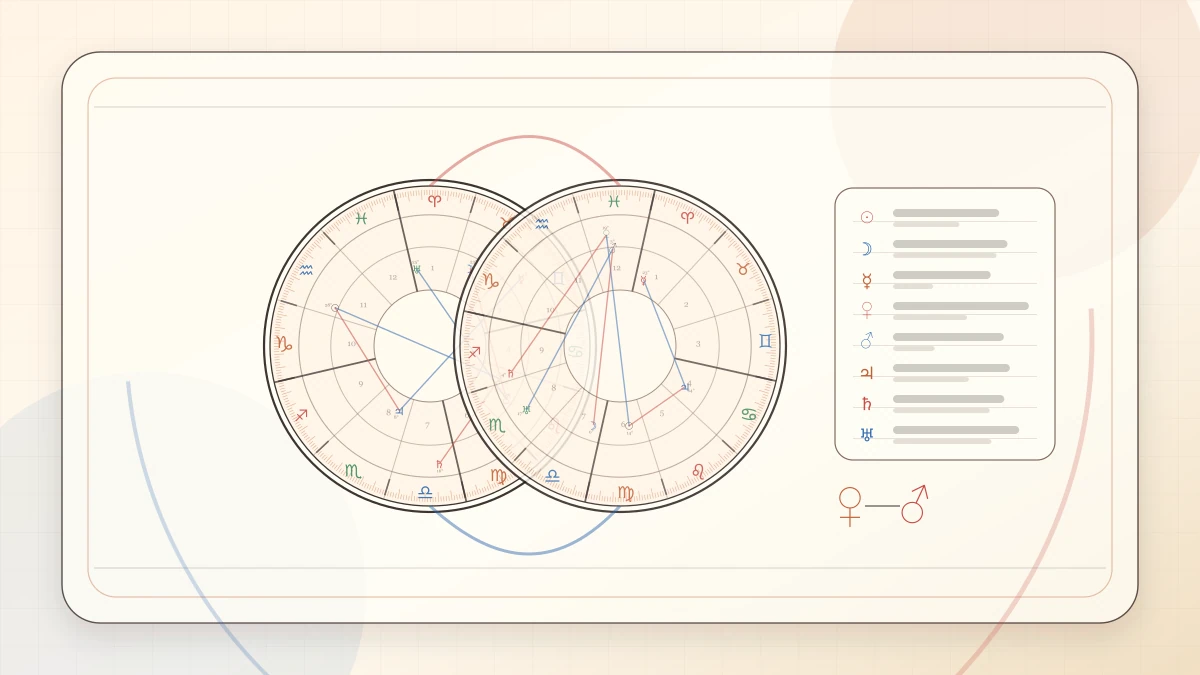
Mercury in Synastry: A Communication Guide
Mercury in synastry compares how two people think, talk and listen. Its sign shows a conversational style, and its contacts show where words flow easily or get crossed.
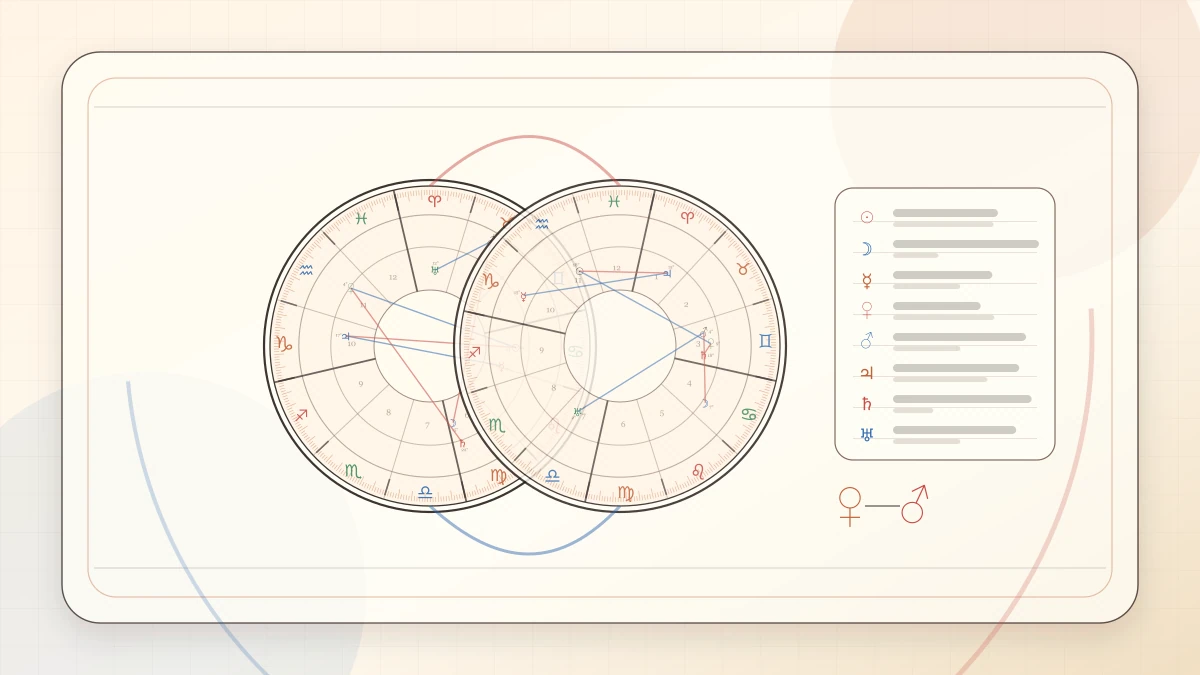
House Overlays in Synastry Explained
A house overlay places one person's planets in the other person's houses, showing which area of life each planet seems to stir. Each direction is a separate reading.
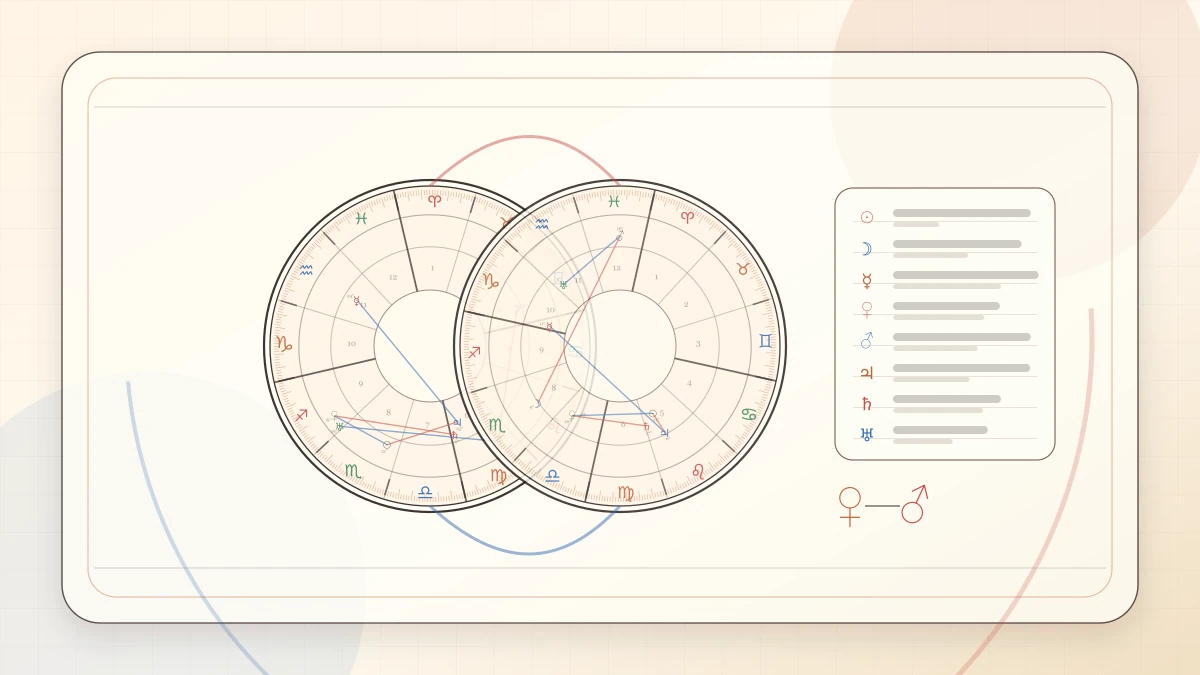
Long-Distance Relationship Astrology
In a long-distance relationship, chart symbols such as the Moon, Venus and Mercury can prompt talk about contact, but time zones, travel money and plans to move do the real work.
Breakup Transits and Relationship Reflection
After a breakup, a transit can serve as a symbolic prompt for reflection, but it never explains why a relationship ended or what another person felt or chose.
Marriage Indicators in Astrology: A Careful Guide
Marriage indicators are chart features read as being about partnership, mainly the seventh house, its ruler and Venus. They are places to look, and schools weight them differently.
Twin Flame vs Soulmate Astrology, Carefully Explained
Soulmate comes from Greek myth and Romantic love, and twin flame from modern popular spirituality. Neither term comes from astrology, and no chart can show who either person is.
Can Astrology Help With Relationship Timing?
Astrology cannot tell you when you will meet someone or when a talk will go well. It can offer a symbolic calendar and prompts that help you notice your own readiness.
Friendship Compatibility in Astrology
Friendship compatibility in astrology looks at Sun, Moon, Mercury, Venus and Jupiter contacts and the eleventh house, asking about respect, comfort, conversation and encouragement rather than romance.
Zodiac Compatibility vs Synastry
Zodiac compatibility compares sign labels, usually Sun signs, while synastry compares the exact degrees of planets in two charts. Synastry is more specific but needs more precise birth details.
How to Compare Two Birth Charts
To compare two birth charts, gather accurate data, use one zodiac and one house system for both, list close contacts, look for repeated themes and check overlays both ways.
Karmic Relationship Astrology, Explained Carefully
A karmic reading points to contacts such as the lunar nodes, Saturn, Pluto and Chiron and reads them as familiarity or repeated lessons. There is no evidence for past lives, and these contacts are very common.
Sun Sign Compatibility vs Moon Sign Compatibility
Sun sign compatibility asks whether two people understand each other's goals; Moon sign compatibility asks whether they settle and recover in similar ways. They answer separate questions.
Venus Sign Compatibility vs Mars Sign Compatibility
Venus sign compatibility compares what two people enjoy and how they show care; Mars sign compatibility compares how fast they act, pursue and push back. A pair can match on one but not the other.
Synastry vs Composite Chart: What Is the Difference
Synastry keeps two birth charts and reads the contacts between them; a composite merges them into one new chart built from midpoints. One shows interaction, the other the relationship as a whole.
What the Seventh House Says About Relationships
The seventh house describes how you approach partnership and agreements with others. Read the sign on it, that sign's ruling planet and any planets inside, not a single label.
Emotional Compatibility in Astrology
Emotional compatibility in astrology compares how two people seek and give comfort, mainly through their Moon signs, their Venus signs and any emphasis on the water signs.
Can Opposite Zodiac Signs Work in Love
Opposite signs sit six signs apart and share a modality, so they are read as two ends of one theme. Whether a pair works depends on the two people, not the axis.
How to Read Attraction vs Long-Term Compatibility
Read attraction and long-term compatibility as two separate columns: Venus and Mars contacts for the pull, and Sun, Moon and Saturn contacts for steadiness. One never answers the other.
Relationship Astrology for New Relationships
In a new relationship, use astrology to raise questions about pace, contact and comfort, then ask the person and listen. What they say and do tells you far more than a sign.
How Birth Time Changes a Compatibility Reading
Birth time decides the Rising sign, houses and overlays, and sometimes the Moon's sign, while Sun signs and most planets survive an unknown time. Read only what the data supports.
What Makes a Relationship Feel Karmic in Astrology
A relationship usually feels karmic because of instant recognition, intensity, repeated arguments or an on-and-off pattern. These feelings are real and often have ordinary explanations worth checking first.
Best Matches for Fire Signs in Love: What Each Pairing Raises
No sign pair has been shown to succeed more than another, so there is no best match for Aries, Leo or Sagittarius. Each pairing instead raises its own topics, such as turn-taking and tempo.
Best Matches for Earth Signs in Love: What Reliability Means in Each Pairing
The tradition cannot name a best match for Taurus, Virgo or Capricorn. A more useful step is finding out what reliability means to each partner, since earth signs define it differently.
Best Matches for Air Signs in Love: Turning Conversation Into Closeness
No sign is the best match for Gemini, Libra or Aquarius. Air signs often fall for minds first, so the useful question is how good conversation turns into decisions and closeness.
Best Matches for Water Signs in Love: Feeling, Privacy and Asking
There is no single best match for Cancer, Scorpio or Pisces. Each pairing is better used to ask what closeness, privacy and reassurance mean to each person, and to say it aloud.
Can Same Sign Couples Work
Same-sign couples share an element, modality and ruler, which can bring quick understanding and shared blind spots. Whether a pair works depends on their other placements and how they treat each other.
Moon Sign Compatibility vs Rising Sign Compatibility
Moon sign compatibility asks how two people settle and feel safe; Rising sign compatibility asks how they arrive and start things. The Rising layer needs a far more exact birth time.
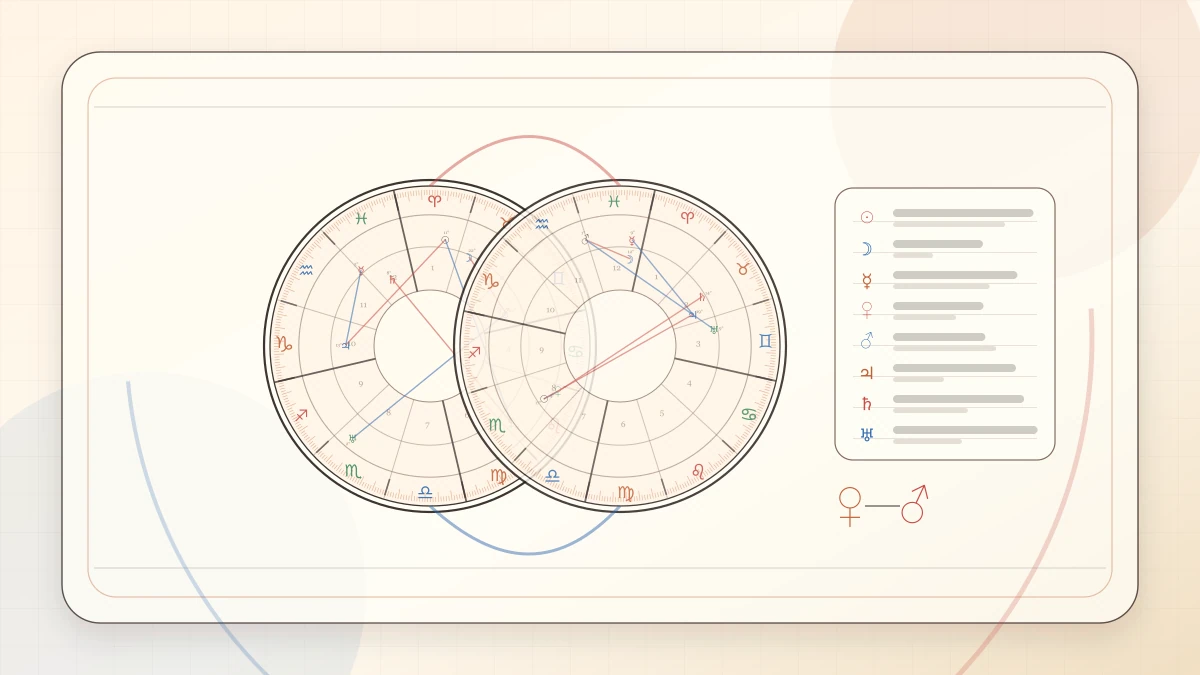
How to Read Communication Compatibility in Astrology
Communication compatibility looks at both Mercury signs, Mercury's contacts to the other person's Moon and Venus, any Gemini, Virgo or air placements, and the third house.
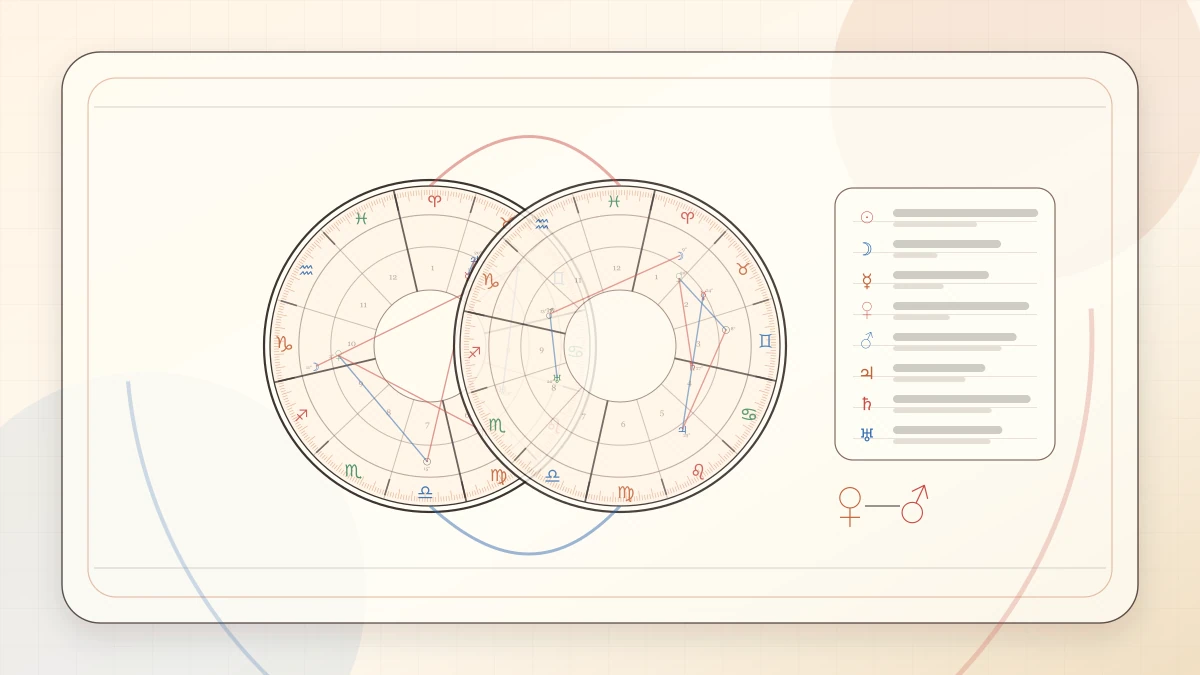
Easy Aspects in Synastry Explained
Easy aspects in synastry are trines and sextiles, and sometimes friendly conjunctions, between two people's planets. The planets involved decide what the ease is about.
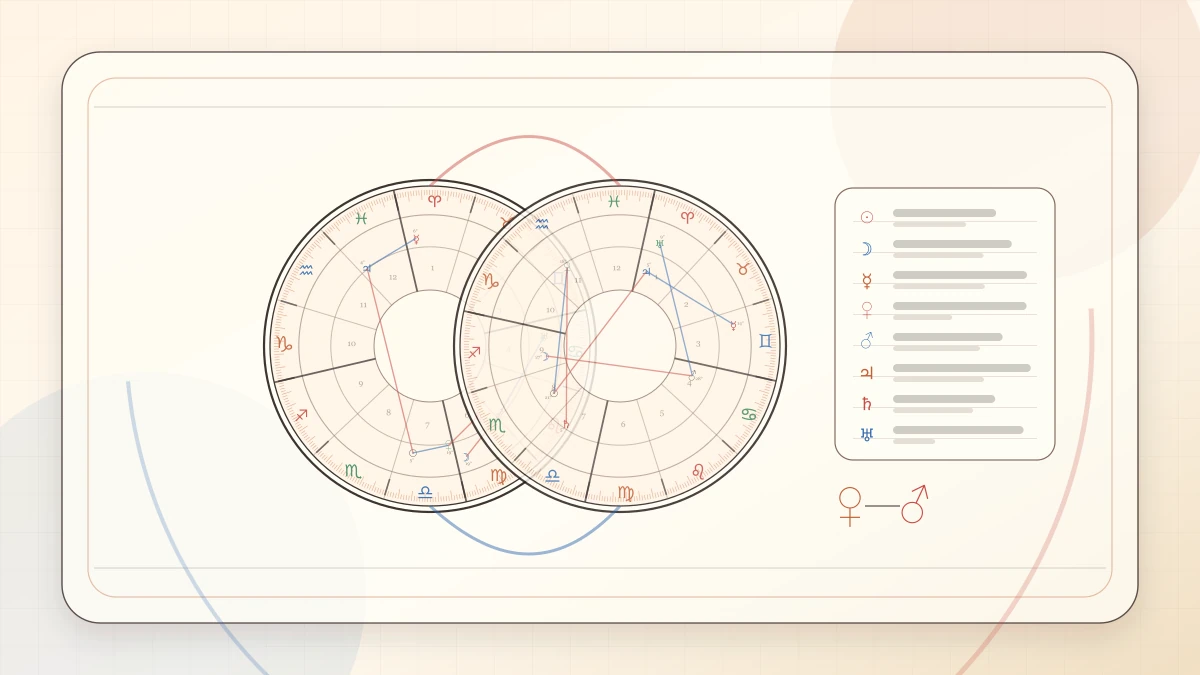
Challenging Aspects in Synastry Explained
Challenging aspects in synastry are squares, oppositions and some conjunctions, where two people's planets want different things. They mark topics to talk through, not verdicts on the pair.
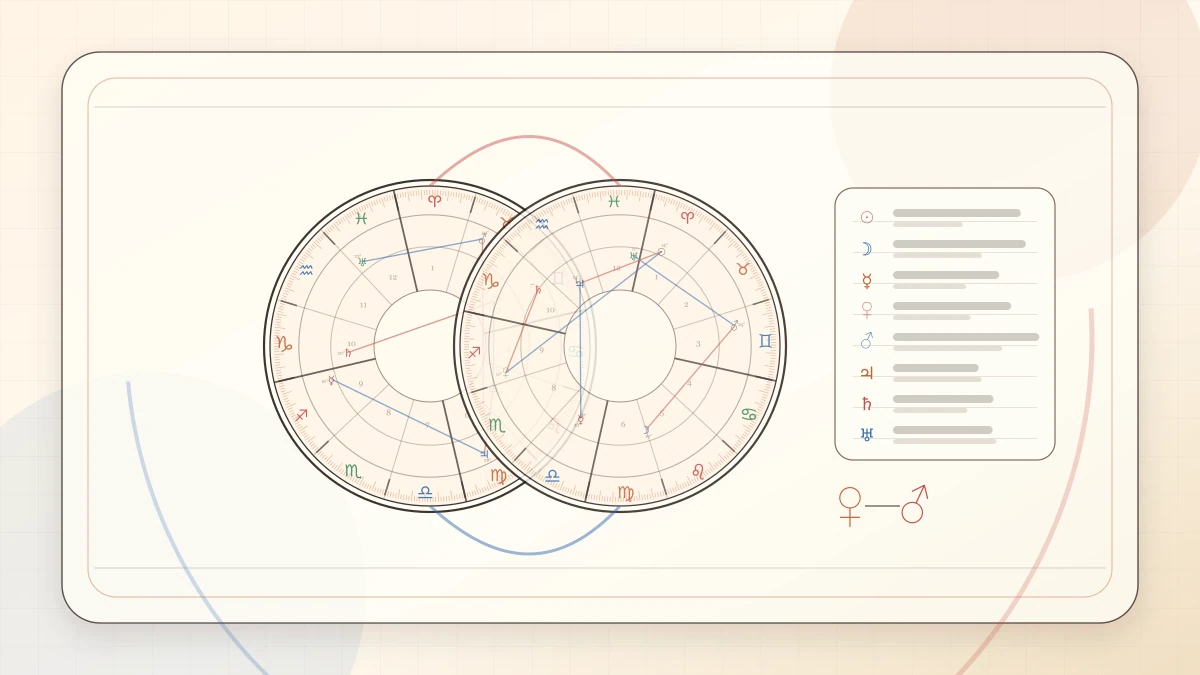
How to Read Long-Term Compatibility in Astrology
Read long-term compatibility topic by topic, such as affection, emotional safety, communication, conflict and commitment, instead of one total score. Each chart factor speaks to one topic at most.
Frequently asked questions
How should I read compatibility articles?
Read them as pattern guides for emotional style, attraction, communication, repair, and timing so the relationship question becomes more specific.
When should I use synastry instead of sign matching?
Use synastry when the relationship question depends on real birth details, emotional tone, and chart-to-chart interaction.