
Career Astrology
Career and money astrology with a realistic, reflective tone
Use these articles when you want astrology to support career reflection, timing awareness, public direction, and work-style clarity.
Featured in this category
Start with the strongest guides in this topic cluster.
Career Astrology for Beginners
Career astrology reads six layers: the tenth house and Midheaven for public role, the sixth for daily work, the second for resources, and the Sun, Saturn and Mars for purpose, discipline and drive.
Midheaven Sign Meaning
Your Midheaven sign describes the public style you tend to show in your work and reputation, such as precise and helpful for Virgo. Its ruler and nearby planets add detail.
Career Astrology Guide: A Reading Path
Read career astrology in six steps: the Midheaven, the tenth house and its ruler, the sixth house, the second house, Saturn and Jupiter, then the Sun, Moon and Rising signs.
More in this category
Keep reading with the rest of the articles in this category.
How to Use Astrology for Career Reflection
Turn chart themes into questions about your own work, then check each one against your work history, feedback and the conditions you have enjoyed. The chart supplies prompts; your record supplies evidence.
Money Houses in Astrology
Astrologers read money themes across five houses: the second for what you own, the eighth for what you share, the sixth and tenth for work, and the eleventh for groups and hopes.
Second House Money Guide
The second house describes what you value and how you relate to your own resources, read through its sign, its ruler and any planets in it. It asks about values, not earnings.
Sixth House Work Style Guide
The sixth house describes your work style: daily tasks, routines, pace and service. Its sign sets the tone of an ordinary working day, and its ruler shows what that routine connects to.
Saturn and Career Lessons
Saturn at work symbolizes responsibility, structure, effort and slow, durable progress. Its sign and house show where you take work seriously, and its cycle marks ages often used for career review.
Jupiter and Opportunity in a Chart
Jupiter symbolizes growth, generosity and learning. Its sign shows how you tend to expand and its house shows where growth questions gather, but a real opportunity is judged by its terms.
Entrepreneurship in Astrology
Astrology can offer questions about working for yourself through Mars, Saturn and Jupiter and the first, second, sixth, eighth and tenth houses. It describes how you work, not whether a business will pay.
Public Image and the Midheaven
Astrologers read your public image through the Midheaven, its sign, its ruler and planets near it. Image, reputation and role are different things, and only feedback shows how others see you.
Can Astrology Help With Job Change Timing?
Astrology has no tested way to time a job change. A transit cannot create an offer or shorten a notice period, though it can prompt reflection questions at moments you choose.
Financial Transits: A Careful Guide
A financial transit is a slow planet's contact with a money-related point in your chart. At most it offers a prompt about habits and attitudes; it cannot time markets or guide money decisions.
Career vs Calling in the Birth Chart
A career is paid work and a calling is activity that feels meaningful; they can overlap without matching. Astrologers read public role through the Midheaven and meaning through houses such as the fifth and ninth.
Work Burnout Patterns in Astrology, Carefully Framed
Astrology cannot diagnose burnout. Its symbols, such as the sixth house, Saturn, Mars and the Moon, can only sharpen questions about a work week you have already measured in hours, breaks and demands.
Best Places for Career by Astrocartography? How to Read a Career Map
An astrocartography career map shows where planetary lines fall on the globe, not where jobs are. Treat a line near a place as a prompt for questions, then research the practical facts.
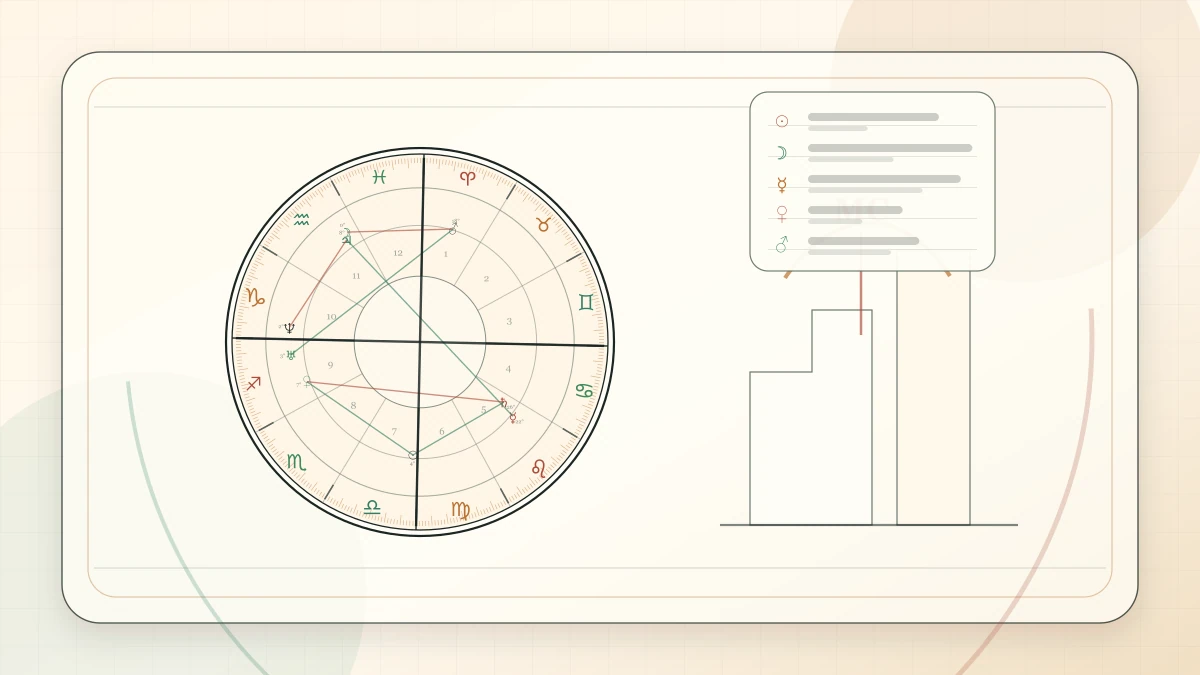
How to Read the Second House for Money Patterns
Declare your house system, find the second-house sign and its ruler, locate the ruler, list planets inside, check aspects, then turn each finding into a question tested against a log of your behavior.
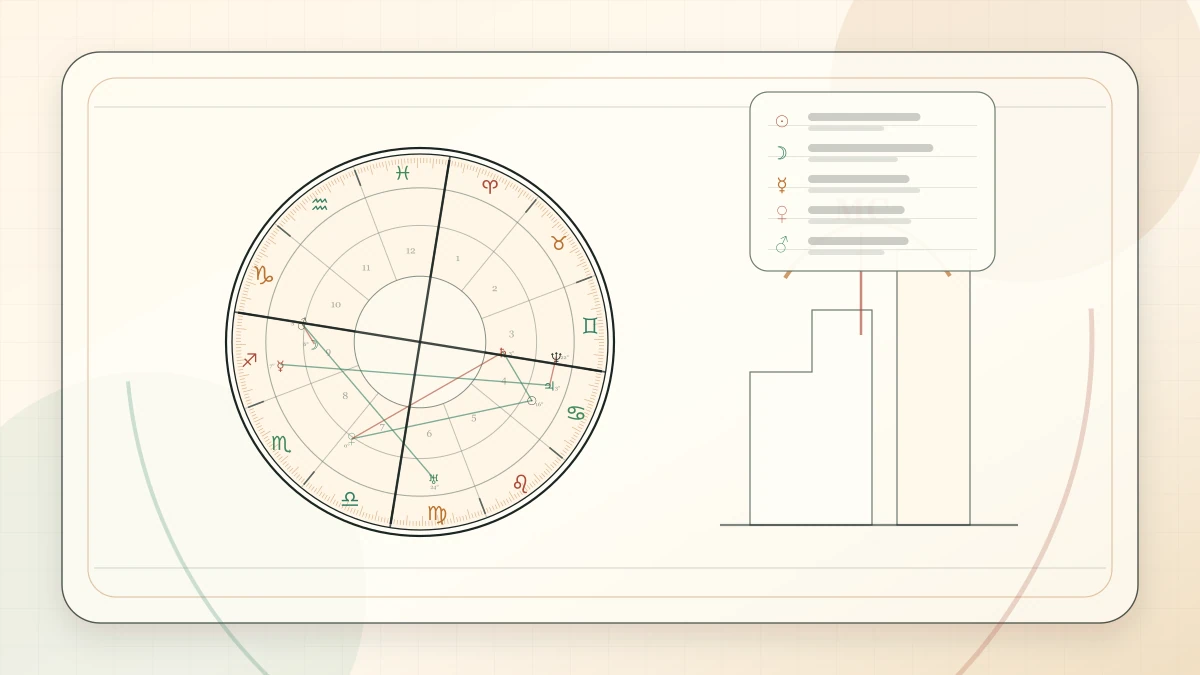
How to Read the Sixth House for Daily Work
Find your sixth-house sign, its ruler and any planets inside, turn each into a question about routine, then compare the questions with a week of real calendar and task notes.
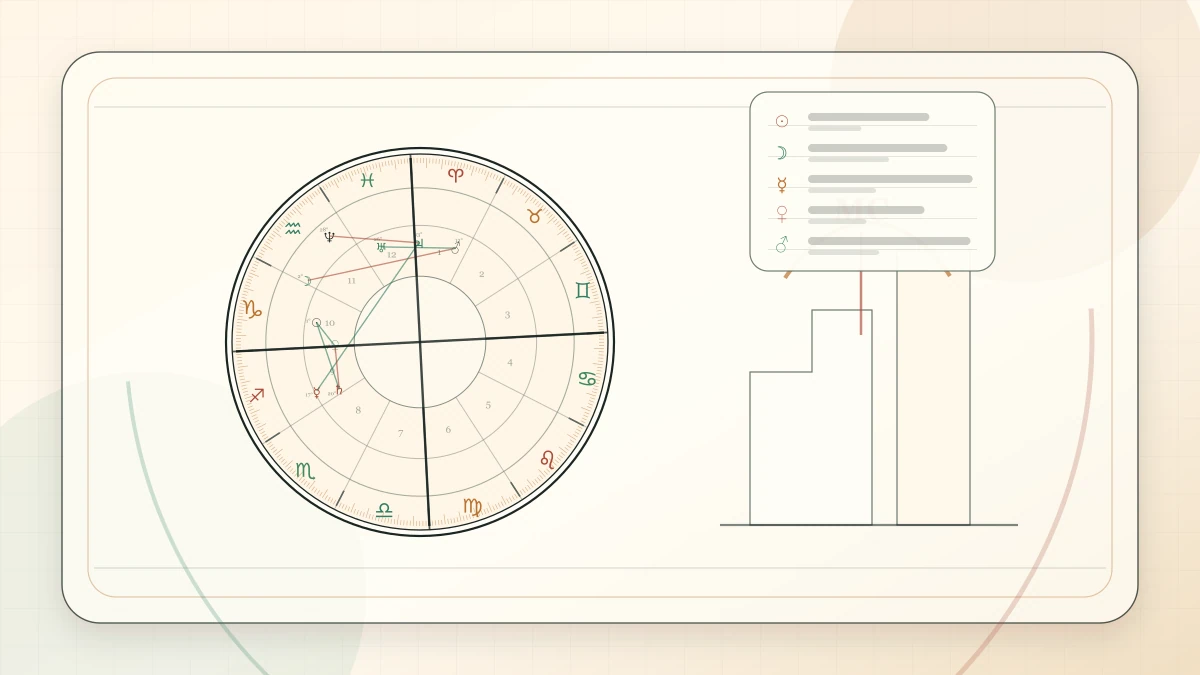
Career Timing With Saturn and Jupiter
Saturn and Jupiter act as two slow clocks: Saturn contacts prompt questions about responsibility and Jupiter contacts about growth. Record each as a date range on its own line, never as one score.
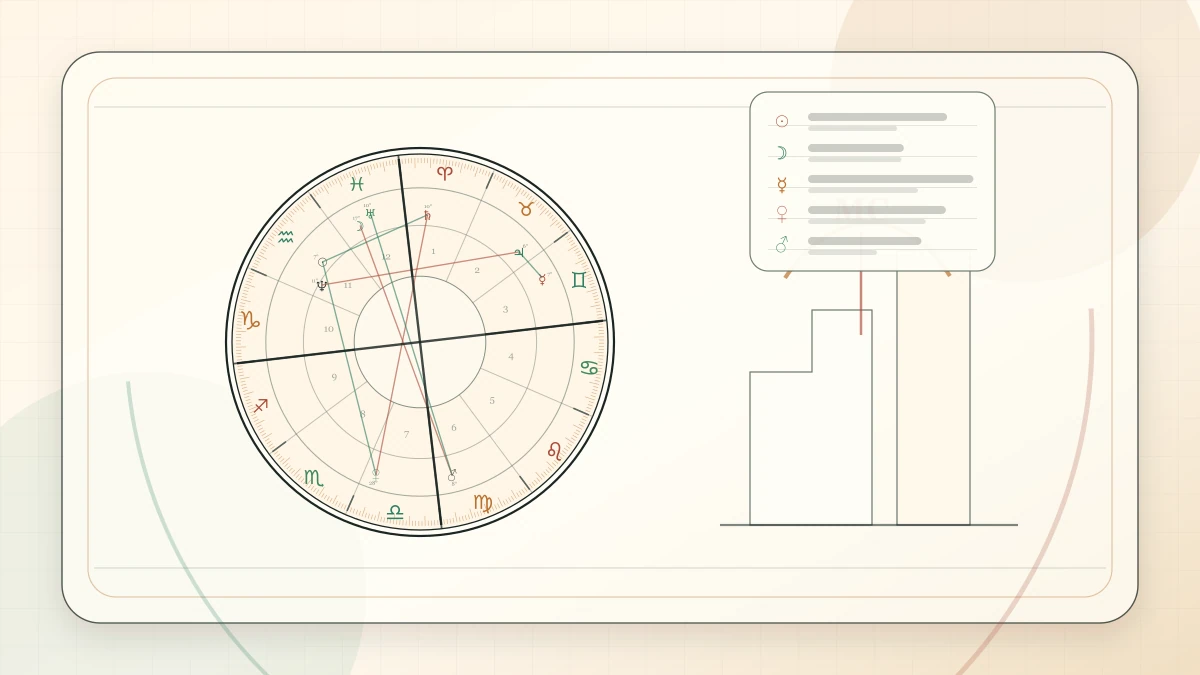
What the Eleventh House Can Mean for Networks and Opportunity
The eleventh house covers friends, groups, networks and shared aims. Astrologers read it as a lens on how you give and receive support, while real opportunity comes through people and reciprocity.
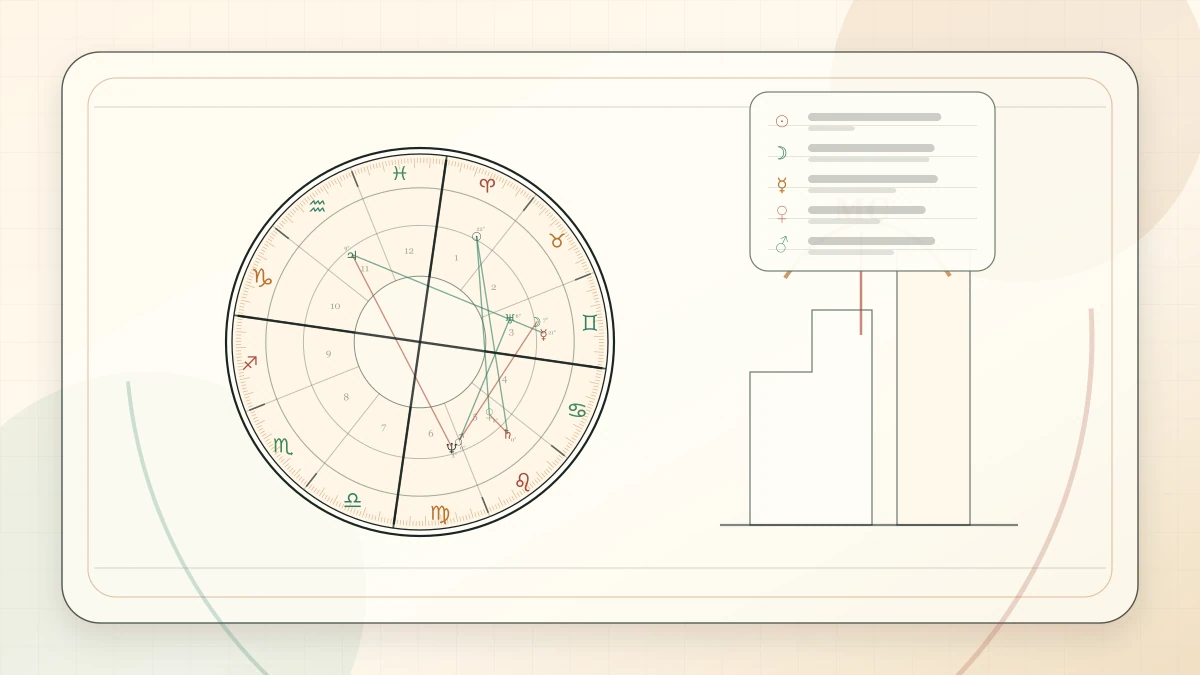
Work Style by Rising Sign
Your Rising sign describes how you begin tasks and come across while working, and your chart ruler shows where that approach is steered. It is one vocabulary for work style, not a job guide.
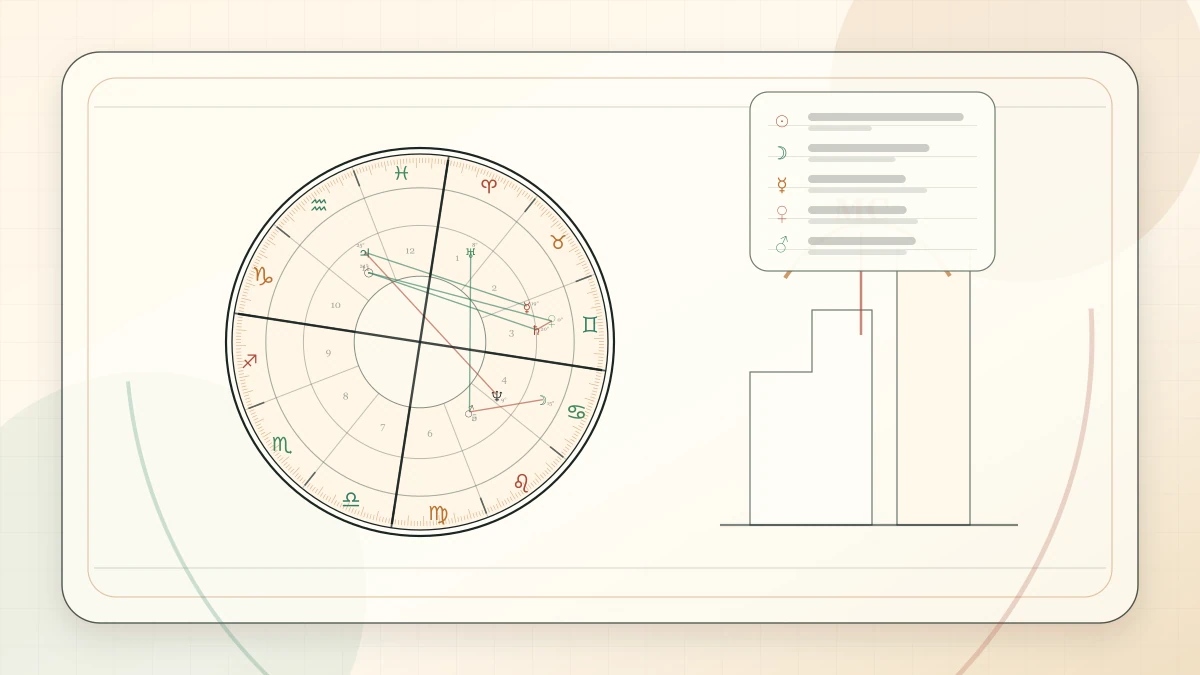
How to Read Career Themes in a Birth Chart
Read career themes as a weave of three houses: the tenth for public role, the sixth for daily work and the second for resources. Follow each house ruler and its aspects, and phrase every finding as a question.
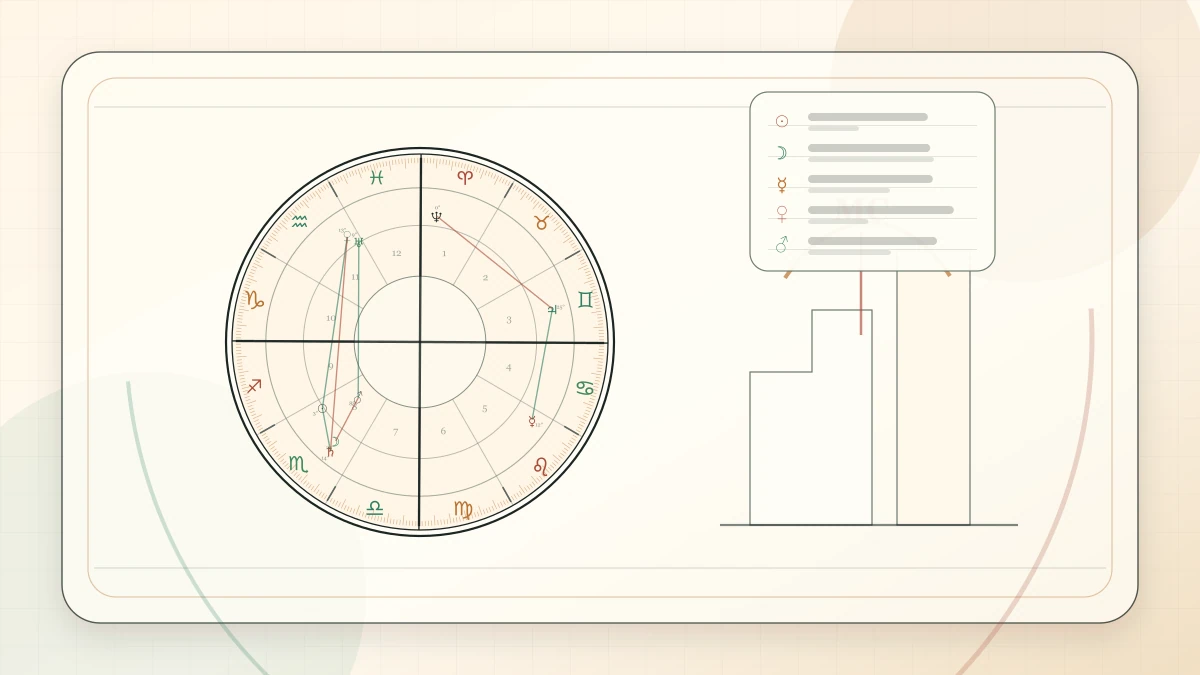
Astrology for Freelancers and Self-Employment
Astrology can offer a vocabulary for reflecting on how you work for yourself, but the practical side comes first: planned hours, real capacity, support and a monthly review of what actually happened.
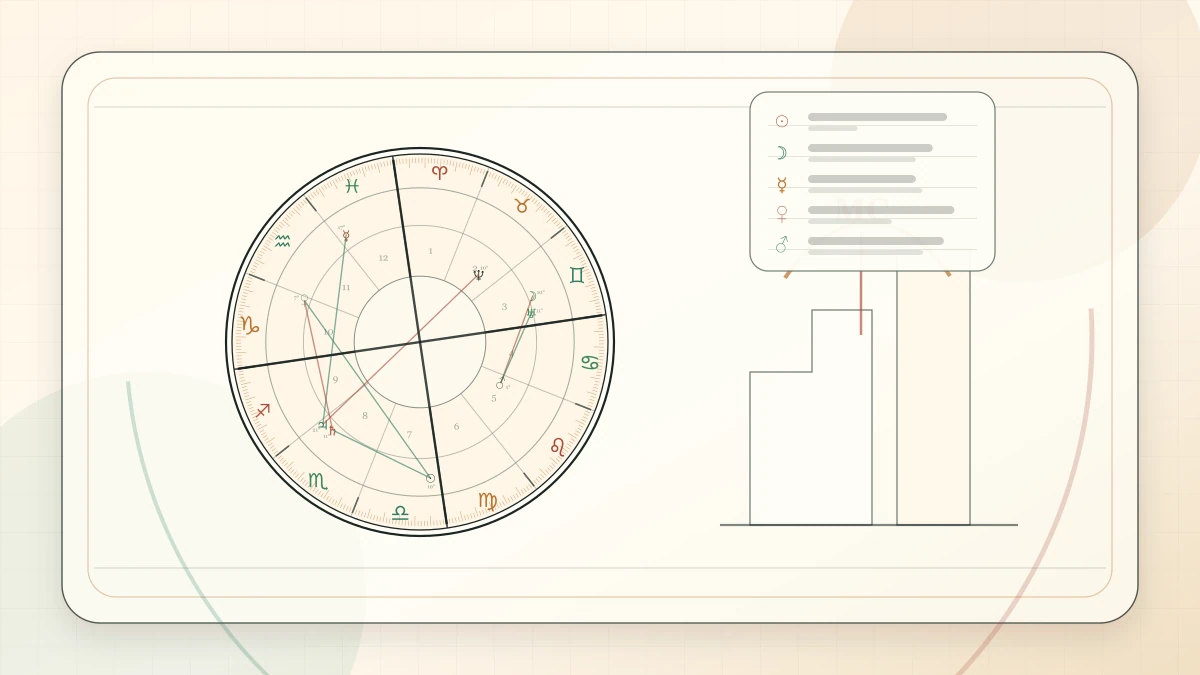
Choosing Between Stability and Risk With Astrology
Treat stability versus risk as a practical tradeoff first: name both options, list known and missing facts, and find a reversible trial and a fallback. Saturn and Jupiter prompts belong only at the end.
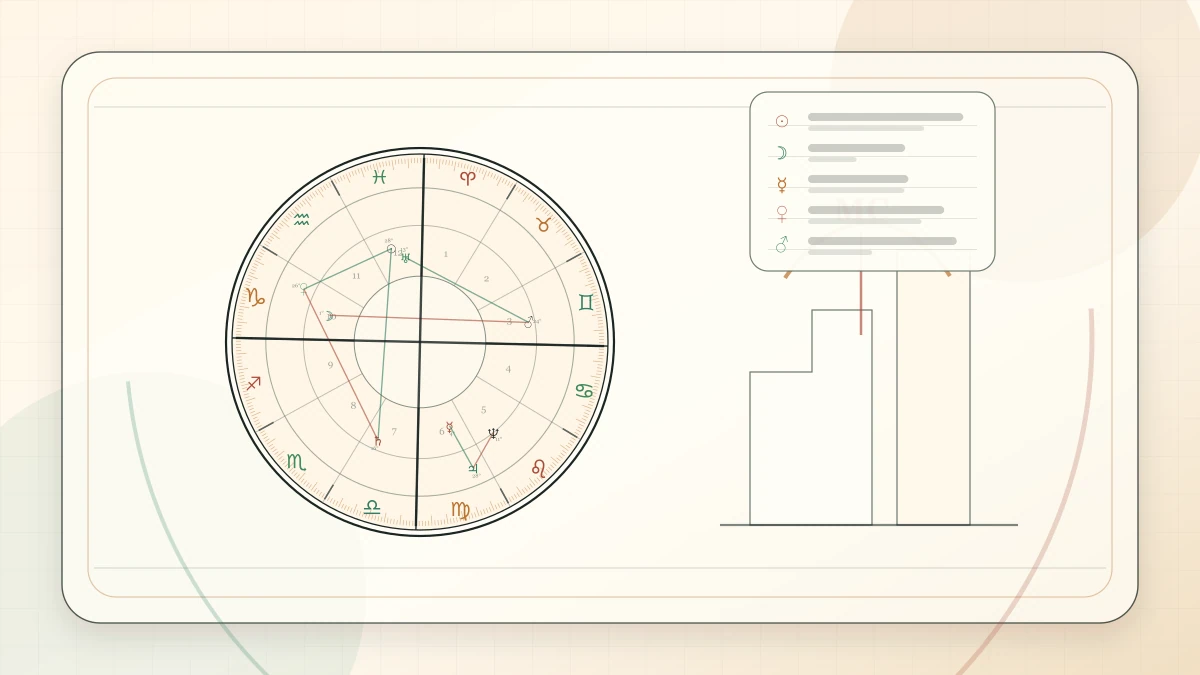
Relocation Astrology for Career Growth
A relocation chart recasts your birth moment for a new place. The planets keep their signs and aspects, while the Ascendant, Midheaven and houses shift with the new location.
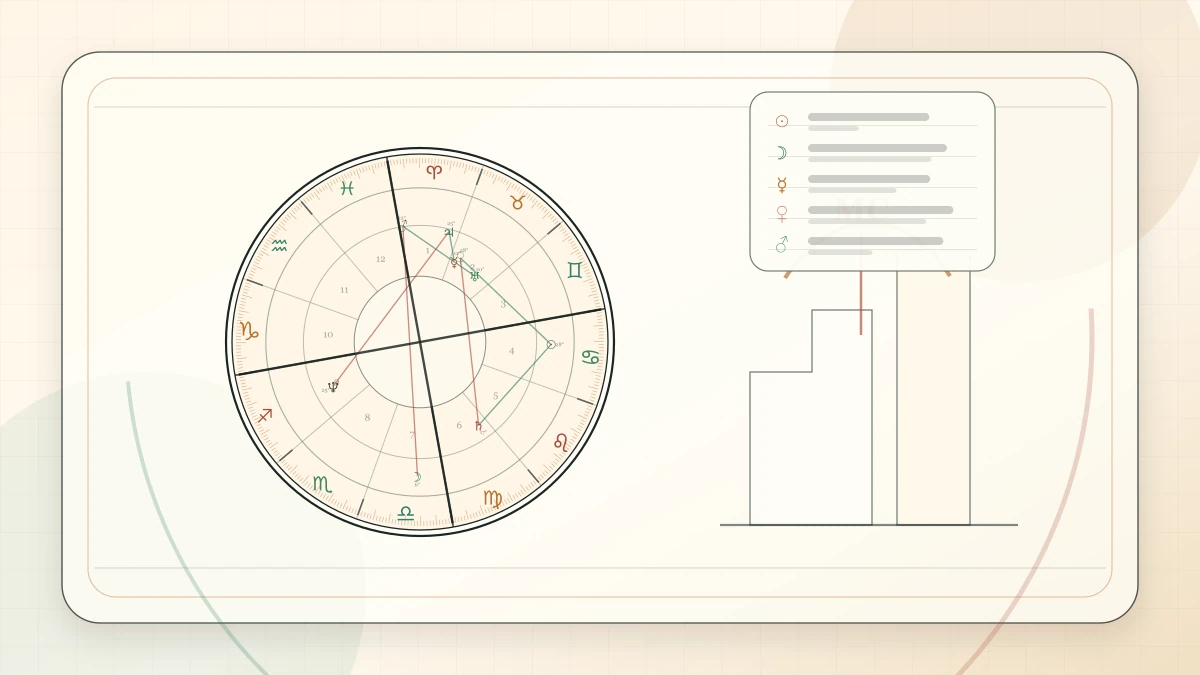
Career Setbacks in Astrology Carefully Explained
Describe a career setback with facts first, sort what you controlled from what you did not, and name how you feel. Only then use a symbol, held loosely, to phrase one question.
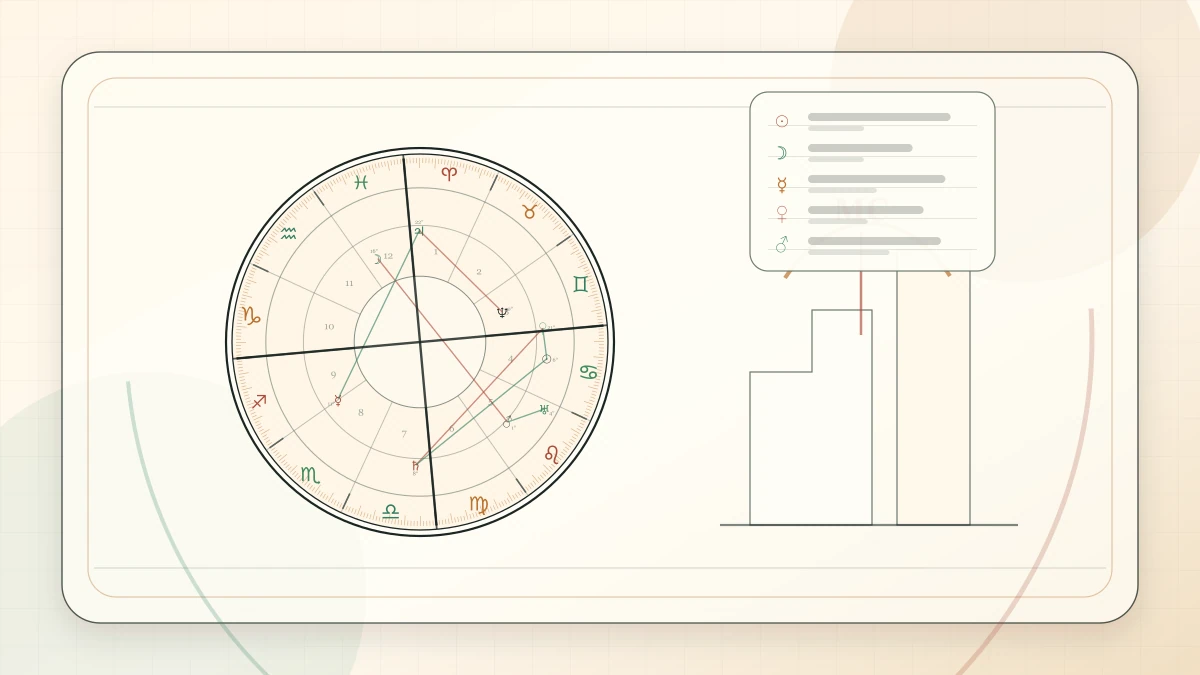
Midheaven vs Tenth House Explained
The Midheaven is a calculated point, the highest zodiac degree in your chart, while the tenth house is an area of the chart. Depending on the house system, they can fall in different signs.
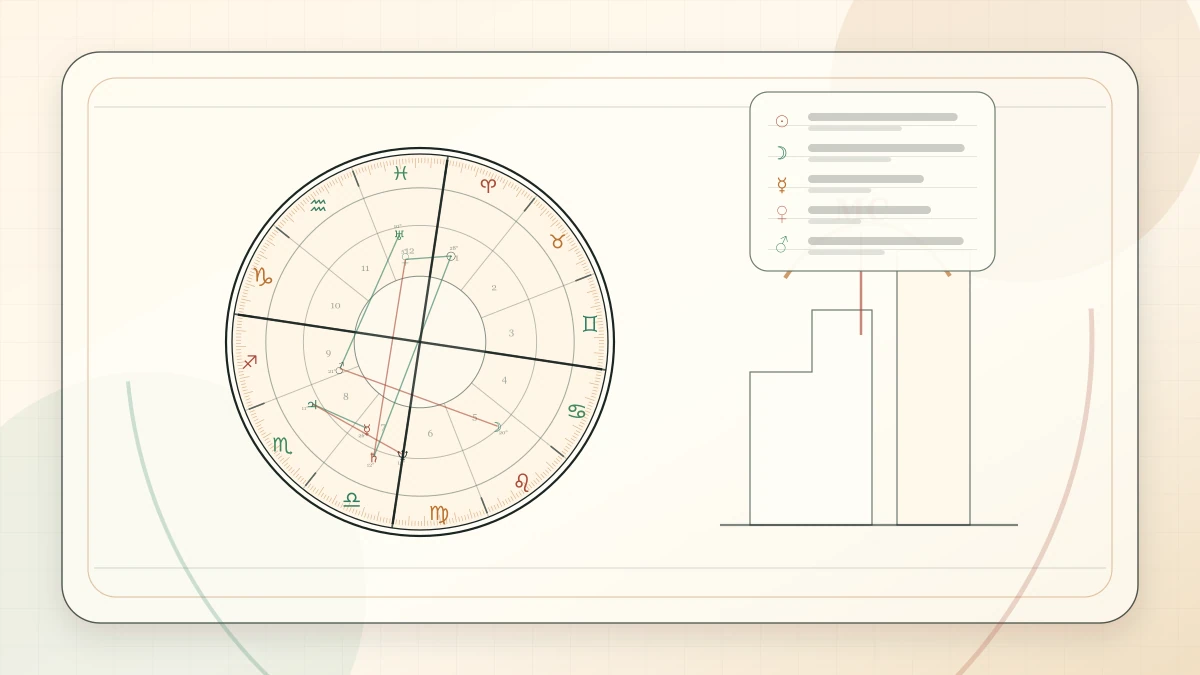
How to Read Public Reputation in a Birth Chart
Astrologers read reputation through the Midheaven, its ruler, planets near it or in the tenth house, and the Ascendant. Turn each into a question, then compare it with real feedback from people who know you.
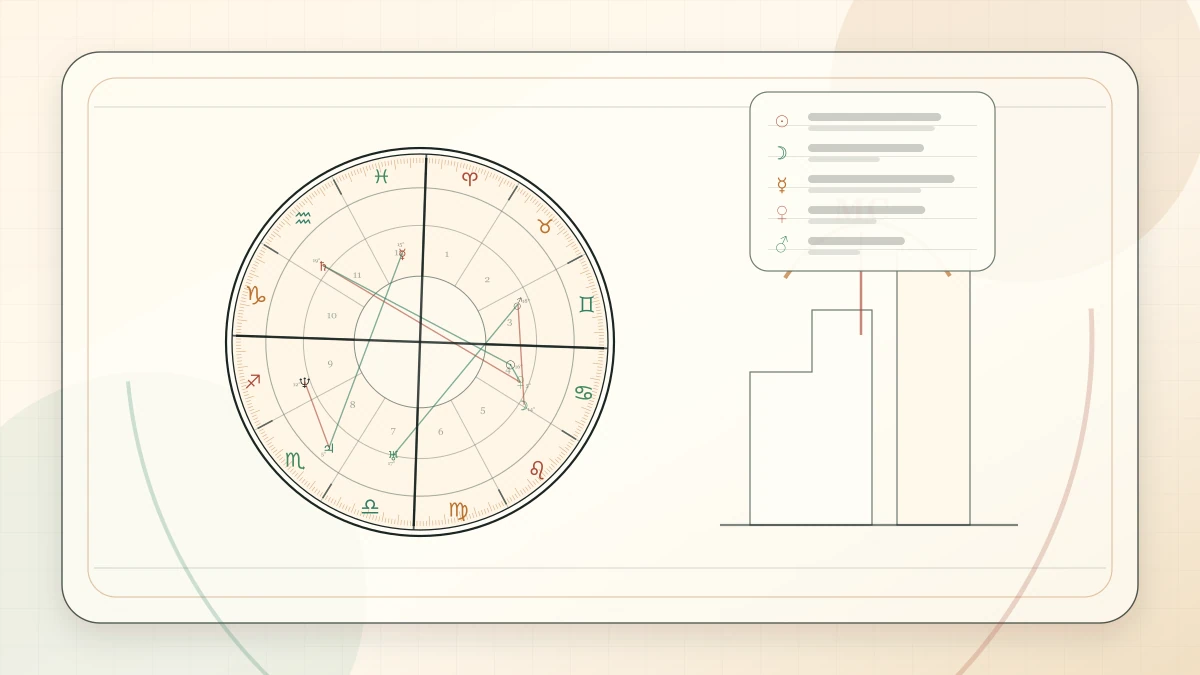
How to Use Astrology for Work-Life Balance Reflection
Begin with your real week of 168 hours, then use chart axes such as the Midheaven and IC to ask questions about proportion. No placement tells you how much to work or rest.
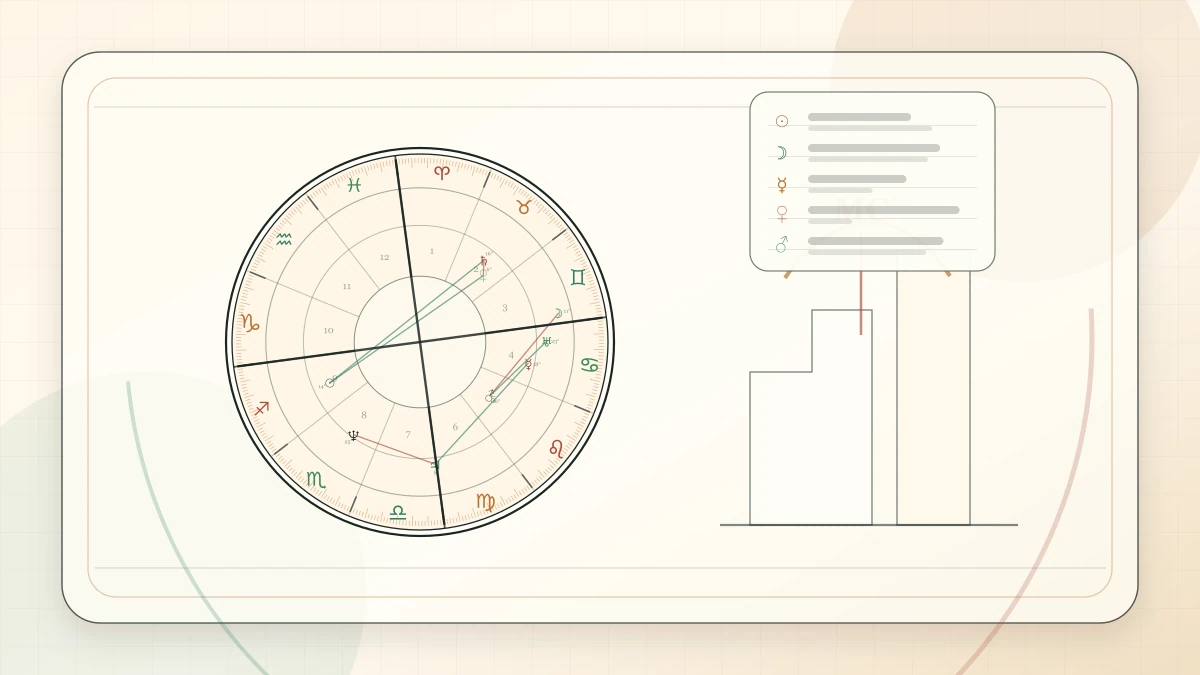
Best Work Environments by Zodiac Element: Questions to Ask
The elements give a vocabulary for workplace preferences: fire for energy, earth for steadiness, air for ideas and exchange, water for attunement. No element has a best workplace, so use them to ask questions.
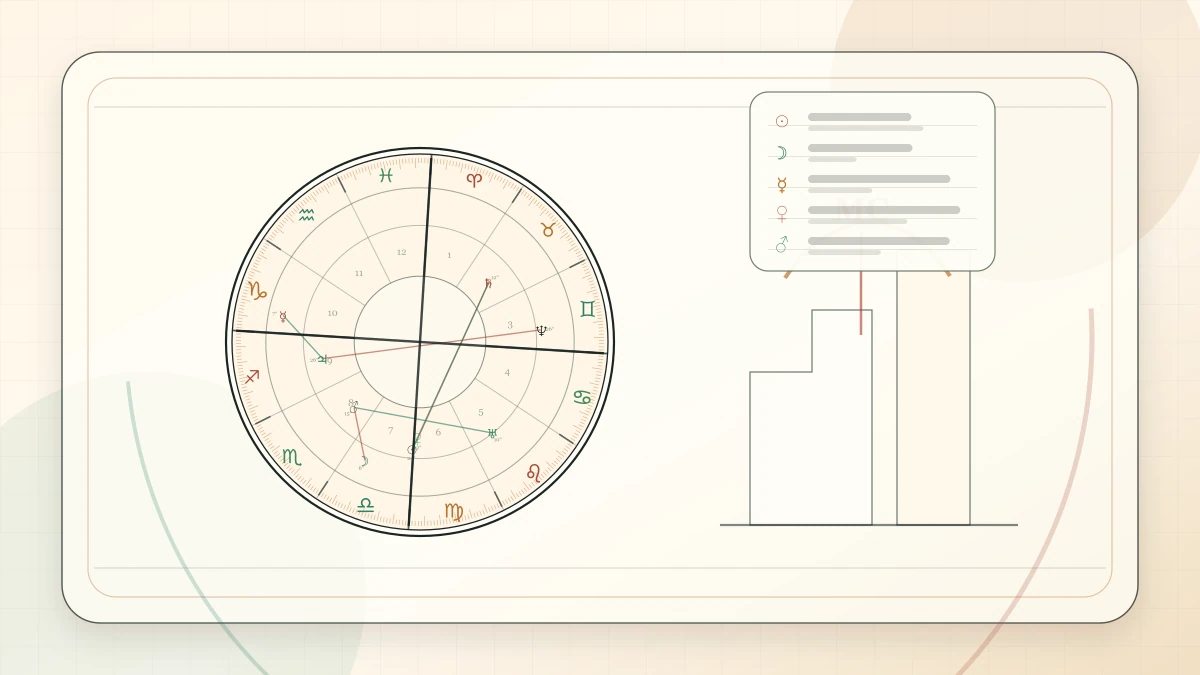
Career Change Astrology in Your 30s
Astrologers point to the Saturn return near 29.5, the Jupiter return near 35.7 and the Saturn square near 36.9 in your thirties. Treat them as reflection markers, not a rule about when to change careers.
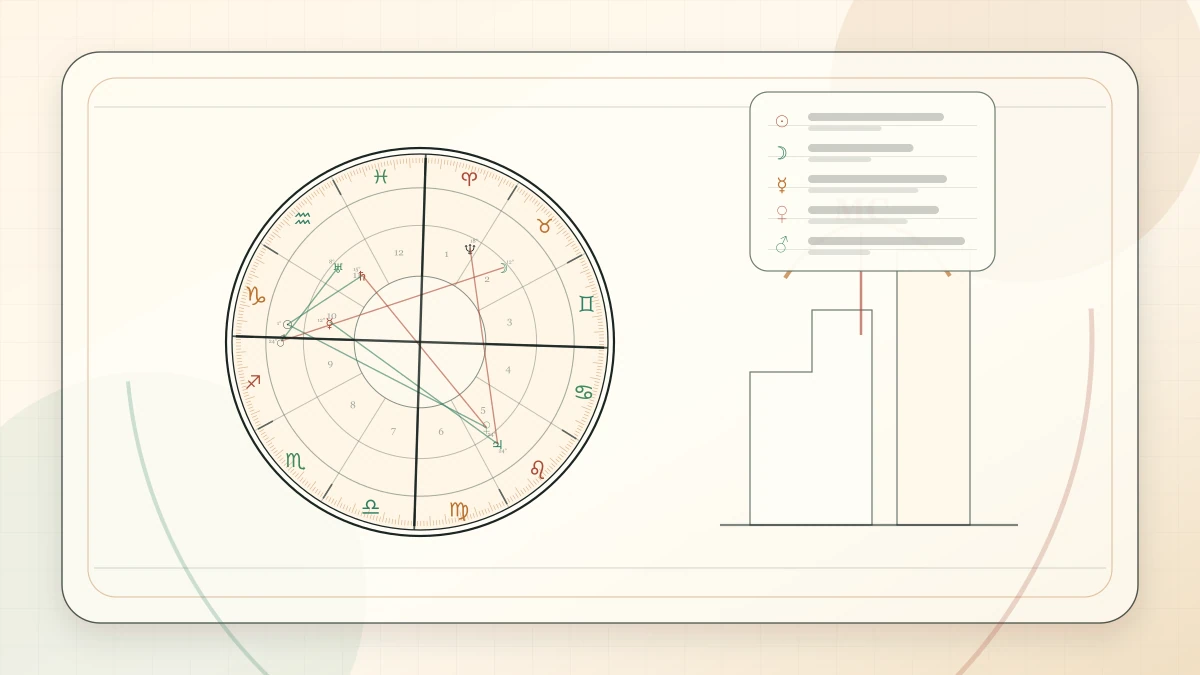
Career Change Astrology in Your 40s
Your forties bring several markers astrologers discuss, including the Uranus opposition around 40 to 42, the Saturn opposition near 44 and the Jupiter return near 47.6. They invite reflection, not crisis or reinvention.
Leadership Style in Astrology
Astrology treats leadership as several qualities, such as initiative, communication and accountability, rather than one score. Write chart prompts for each, then test them against feedback from the people you lead.
How to Read Entrepreneurship Patterns in a Chart
Reduce entrepreneurship to four questions: how you begin, how you keep going, how you exchange value and who you rely on. Tally the chart clues for each and start with the busiest question.
Using Transits for Career Planning Carefully
Use one or two transits as review checkpoints you choose, never as a schedule for applying, asking, resigning or launching. Deadlines, openings and your own readiness set the real timing.
When Career Astrology Feels Confusing
Career astrology gets confusing when methods are mixed and every factor is read at once. Narrow it to one practical question, and notice that seemingly conflicting placements often answer different questions.
Frequently asked questions
How can career astrology help with direction?
It can highlight work style, strengths, visibility patterns, timing windows, and the kinds of questions worth exploring next.
How should I use money-focused astrology articles?
Use them to clarify values, resource patterns, timing themes, and practical questions about security, earning, and shared responsibilities.