
Houses, Aspects, and Planets
House, aspect, and planet meanings you can actually use
Use these guides when you want to understand what a house, planet, or aspect means before layering it into a fuller chart reading.
Featured in this category
Start with the strongest guides in this topic cluster.
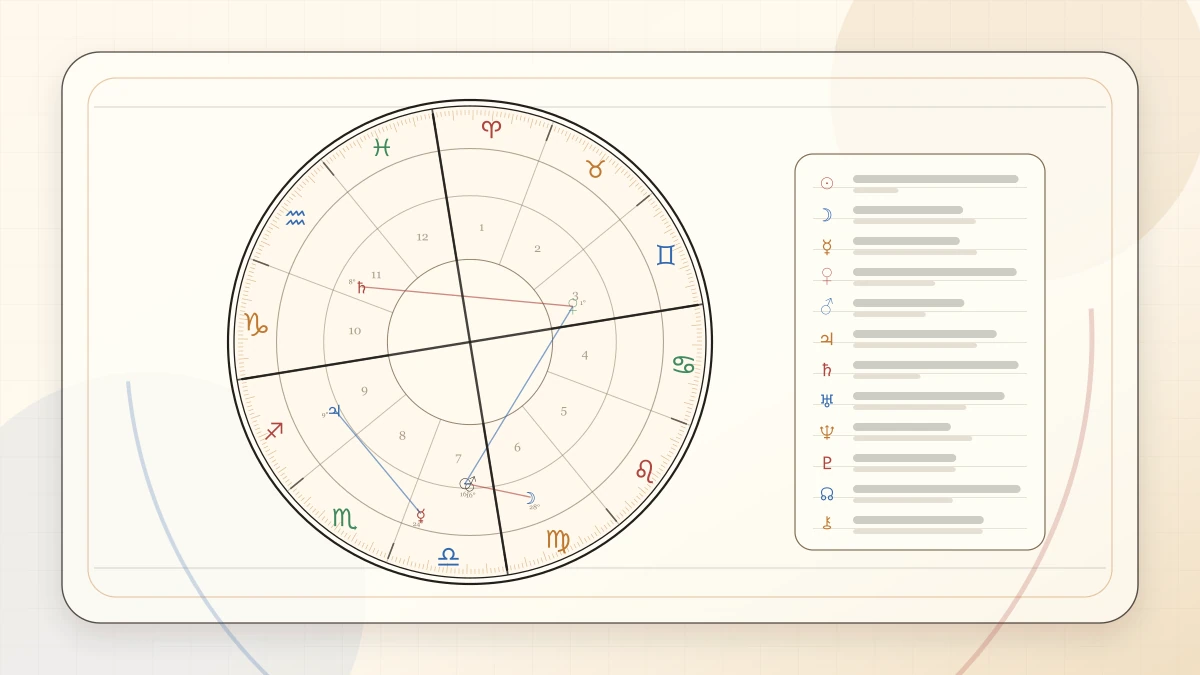
The 12 Houses Explained
The twelve houses split a birth chart into twelve areas of life, measured from the horizon at your birthplace. A planet's sign shows how it behaves, and its house shows where that behavior appears.
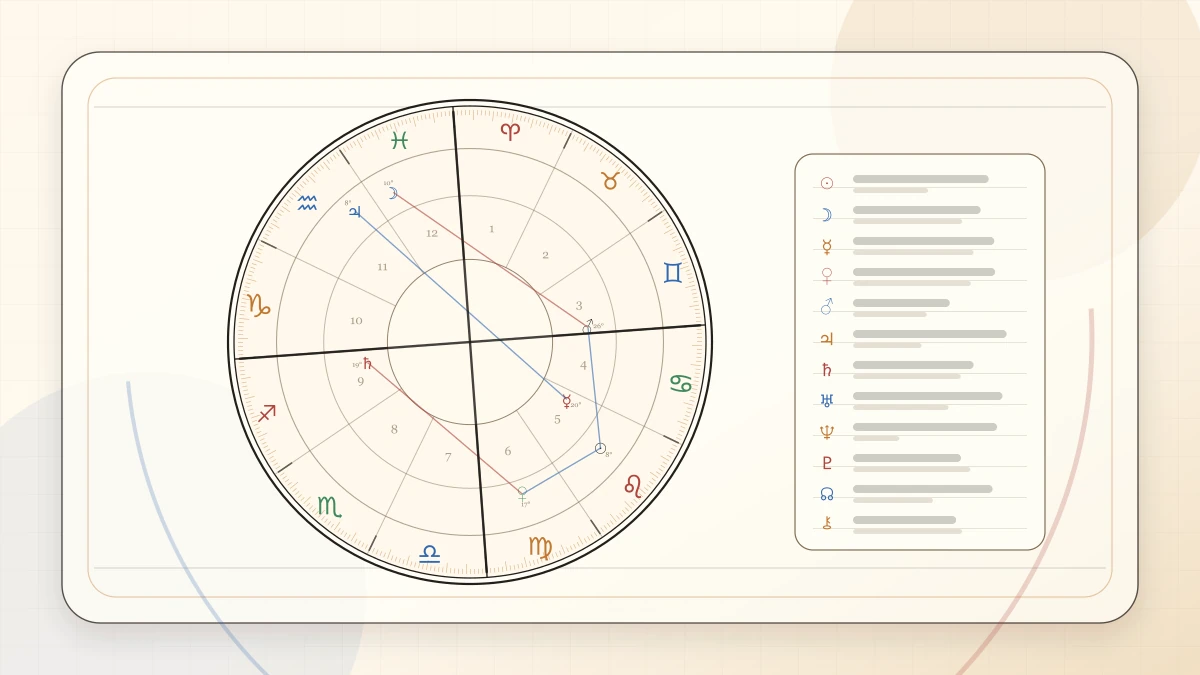
First House Meaning in Astrology
The first house begins at the Ascendant and describes how you meet the world: your manner, how you start things and the first impression you give.
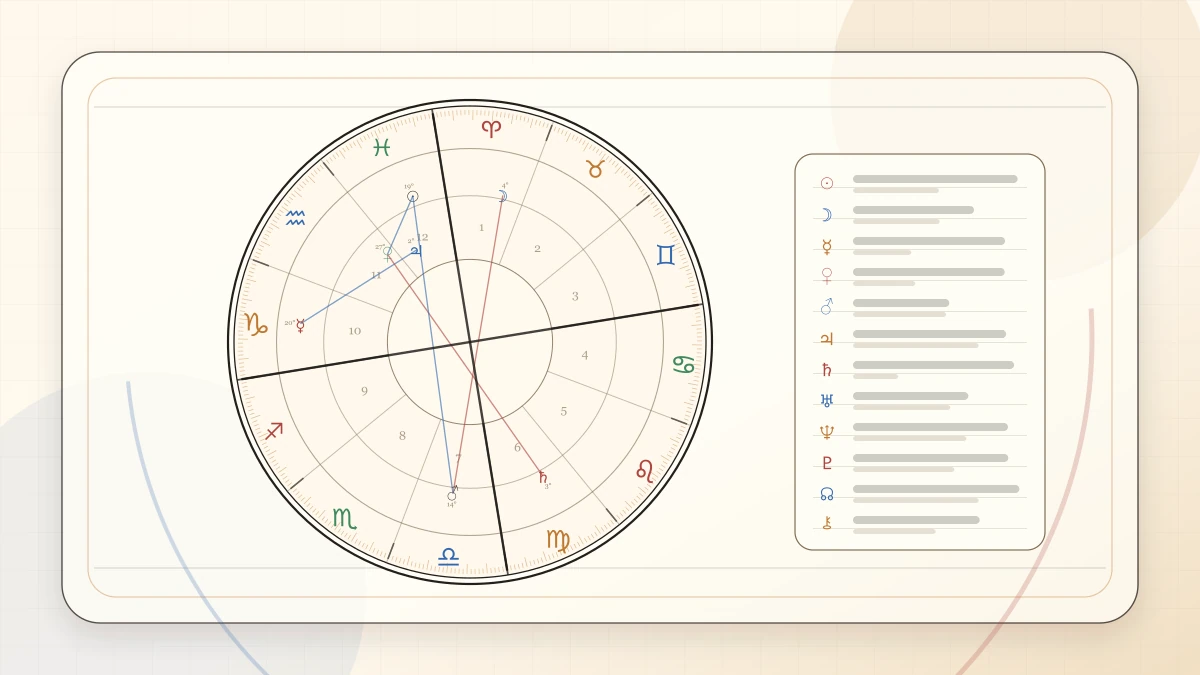
Second House Meaning and Money
The second house covers what you earn, what you own and what you value. It describes your relationship to resources as a theme, not your income or financial future.
More in this category
Keep reading with the rest of the articles in this category.
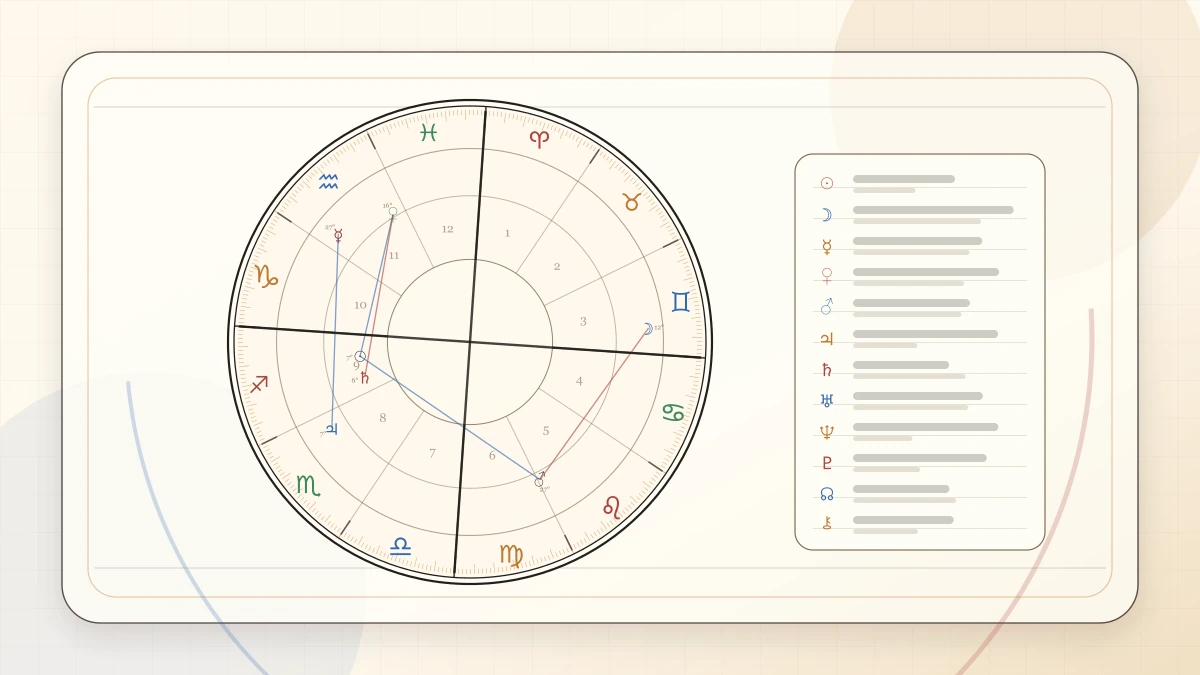
Third House Meaning and Communication
The third house covers everyday communication: talking, writing, messaging, siblings and neighbors, early schooling and short trips. It describes how you pass information back and forth, not how clever you are.
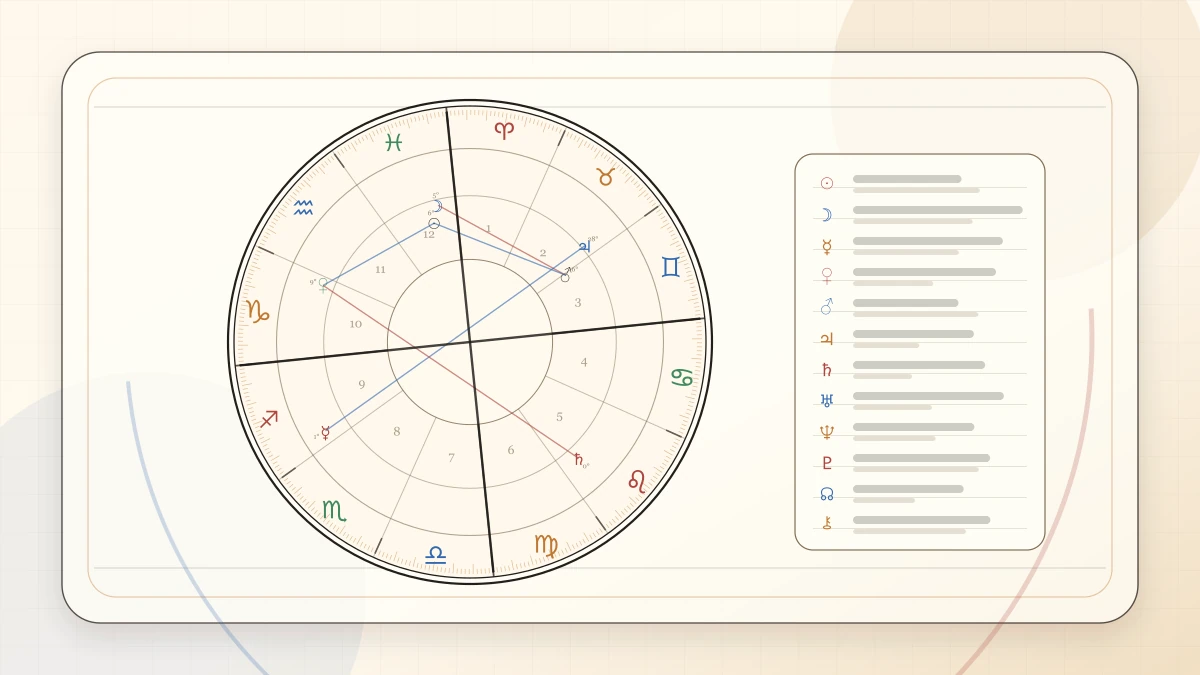
Fourth House Meaning and Home
The fourth house sits at the bottom of the chart and covers home, family roots and the private place you retreat to. In many house systems its cusp is the IC.
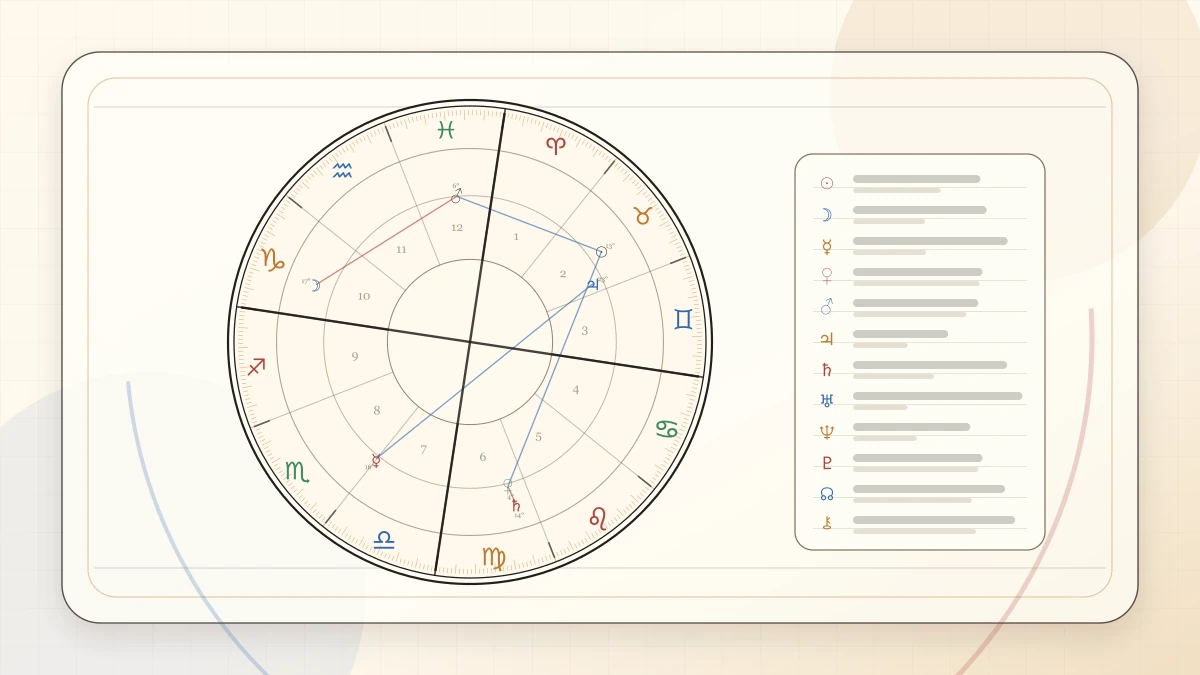
Fifth House Meaning and Creativity
The fifth house covers what you do for its own sake: play, games, hobbies, creative projects, romance and, as a traditional theme, children. It asks what you do because you enjoy it.
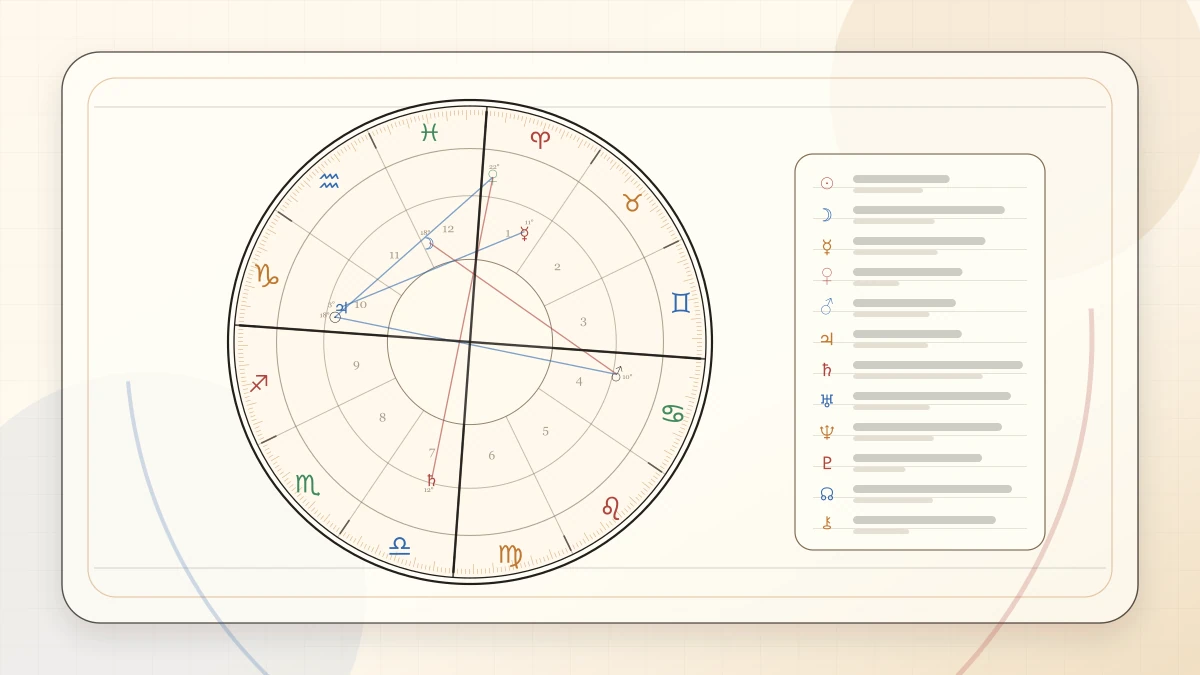
Sixth House Meaning and Routines
The sixth house covers daily work, repeated tasks, the skills you refine and the routines that hold a week together. It describes work as upkeep, which differs from career as public standing.
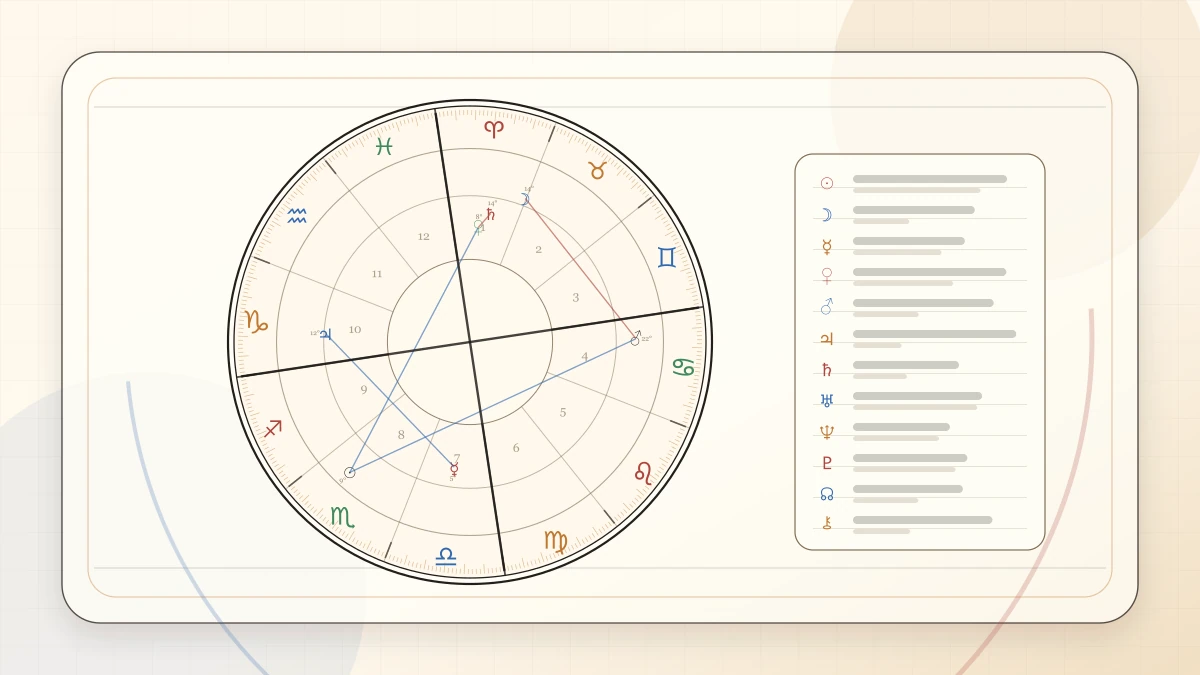
Seventh House Meaning in Love and Marriage
The seventh house covers one-to-one relationships: marriage and committed partners, but also business partners, close collaborators and open rivals. It describes partnership themes, not a marriage prediction.
Eighth House Meaning and Transformation
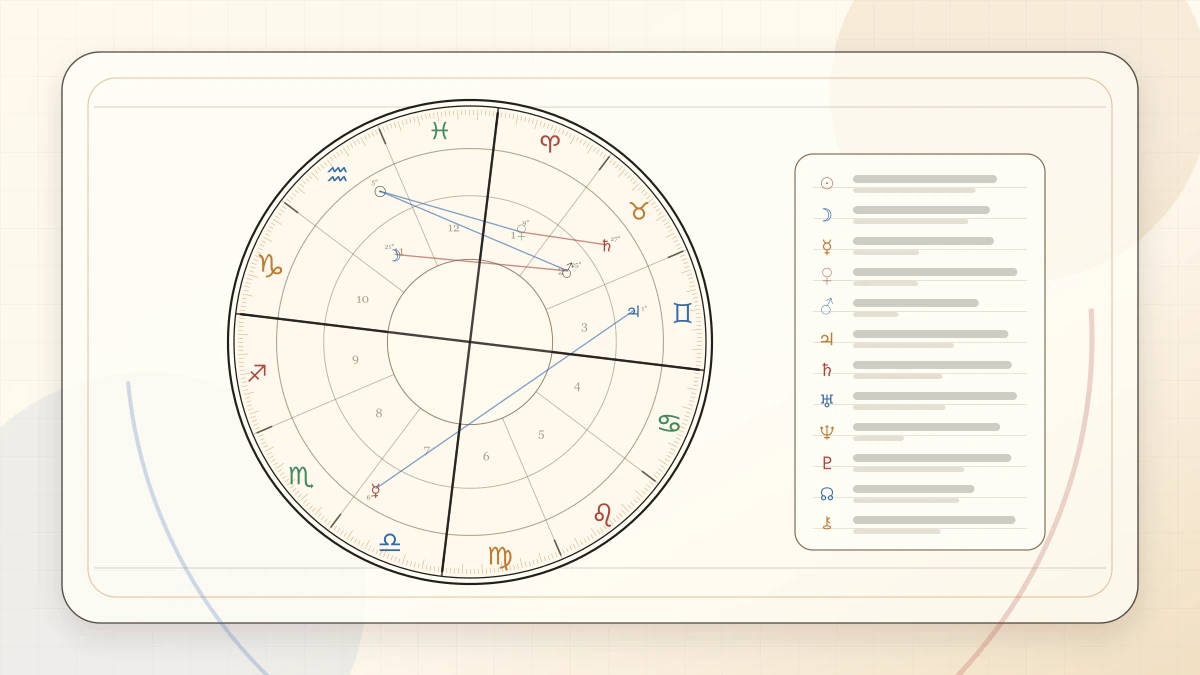
The eighth house covers what people share and what ends: joint resources, debts, inheritance, deep intimacy and endings. Modern astrologers add crisis, secrets and personal transformation.
Ninth House Meaning and Beliefs
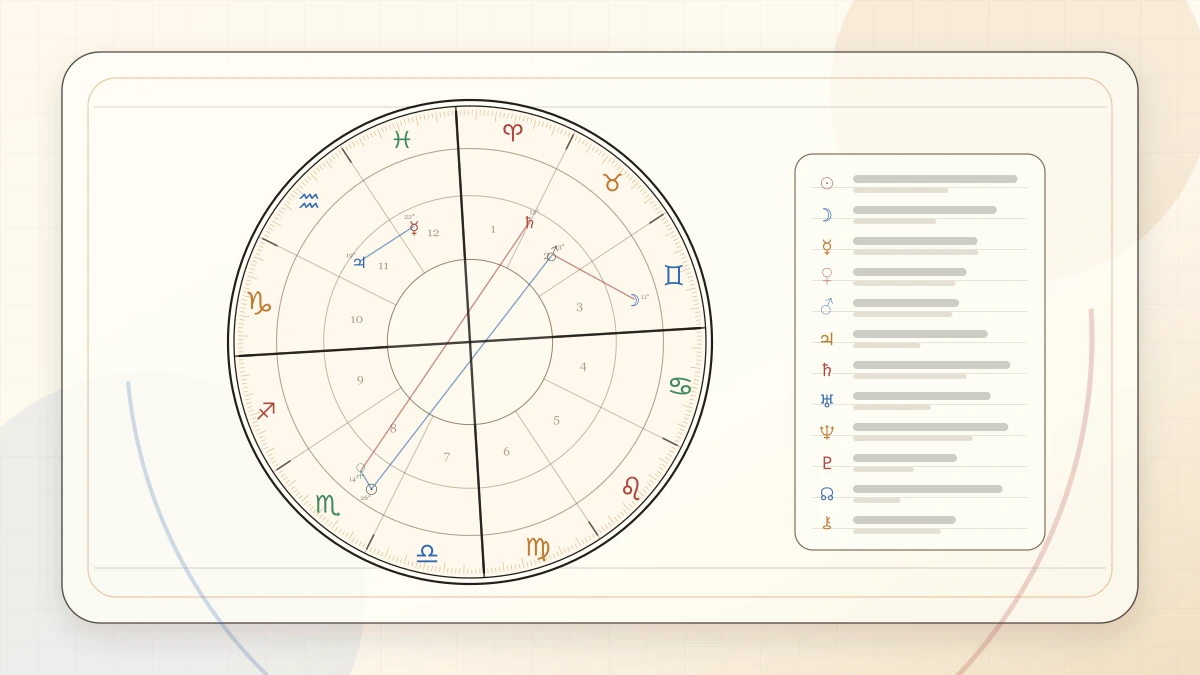
The ninth house covers the long view: far travel, higher learning, publishing, philosophy, religion and the beliefs you use to make sense of life. Where the third house is near, the ninth is far.
Tenth House Meaning in Career
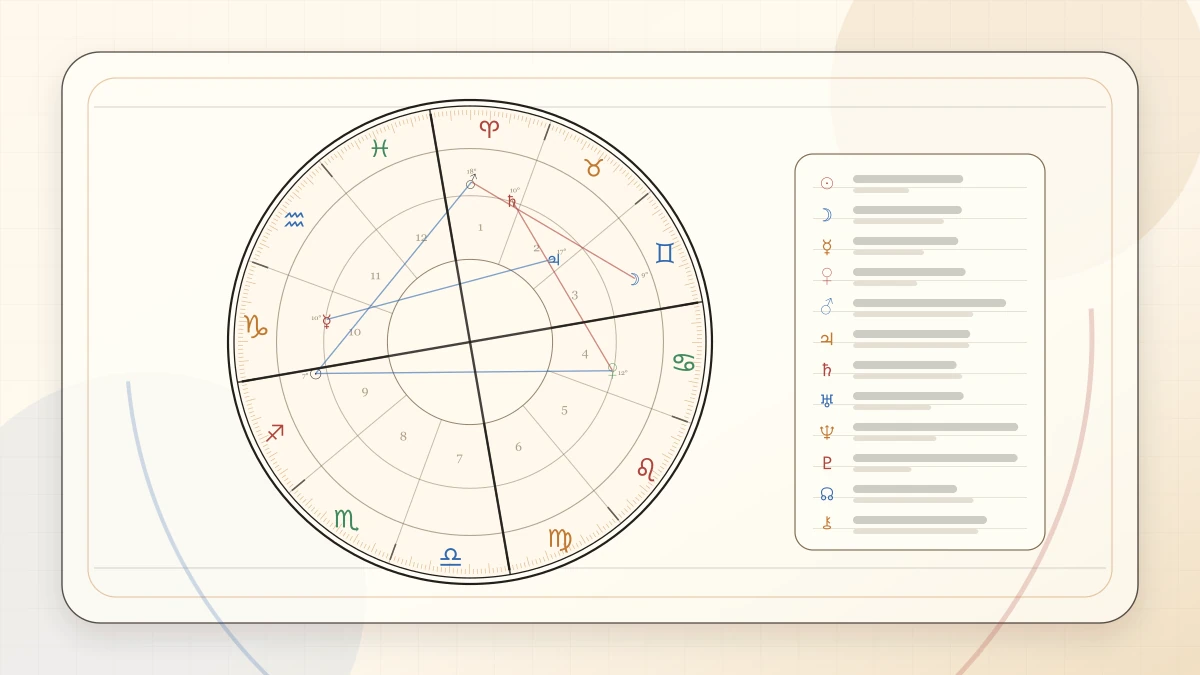
The tenth house sits at the top of the chart and covers your public role: what you are known for, your reputation and the direction you are visibly working toward.
Eleventh House Meaning and Friendship
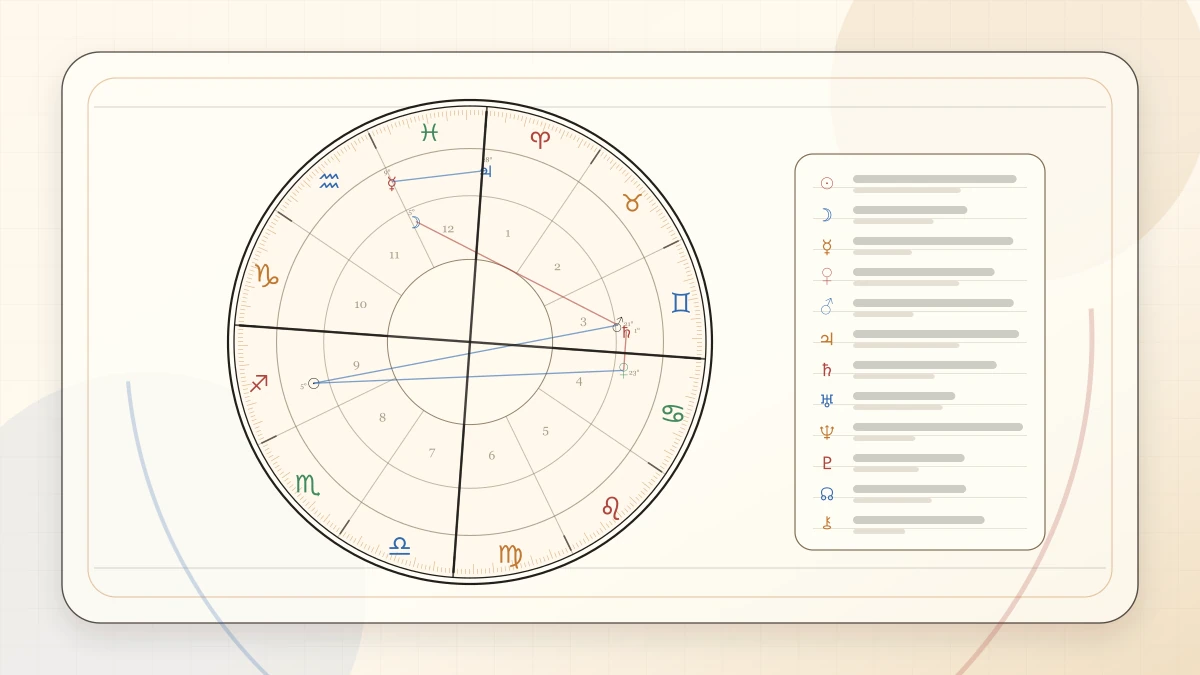
The eleventh house covers friends, groups, networks and hopes for the future: the people you choose and the communities you join, as distinct from family or partners.
Twelfth House Meaning and Inner Life
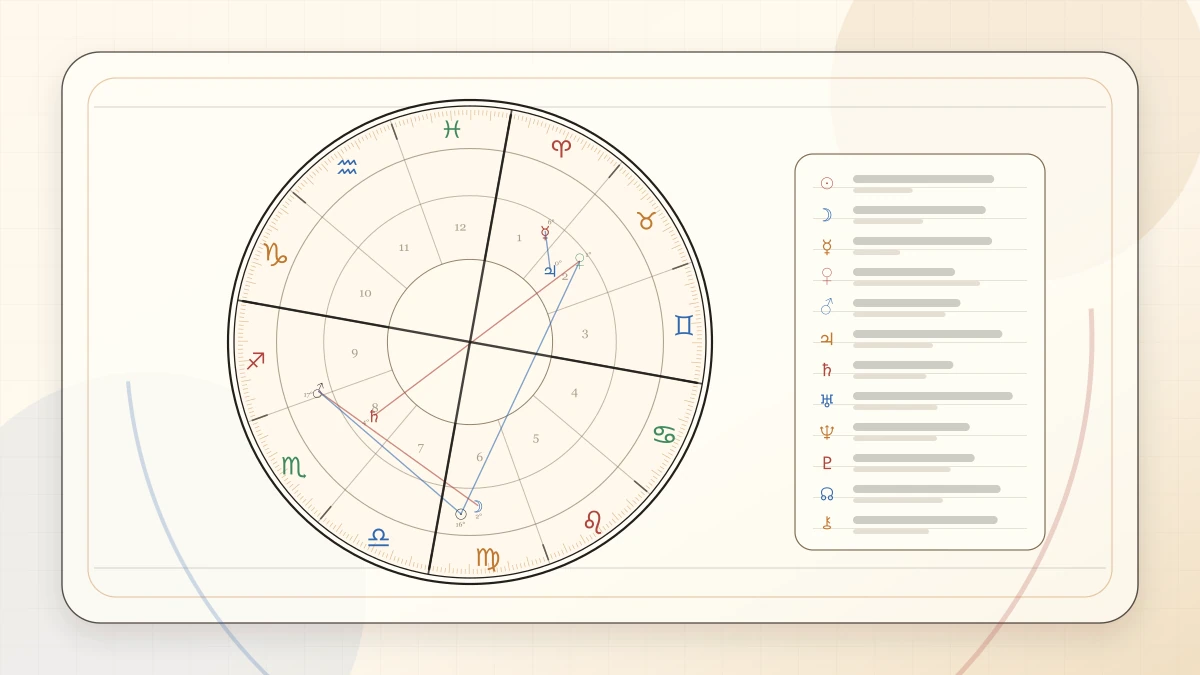
The twelfth house is the last house, the sign just before your Rising sign. Modern astrologers read it as rest, retreat, solitude and what happens out of sight or beneath daily attention.
Conjunction, Square, Trine, and Opposition Explained
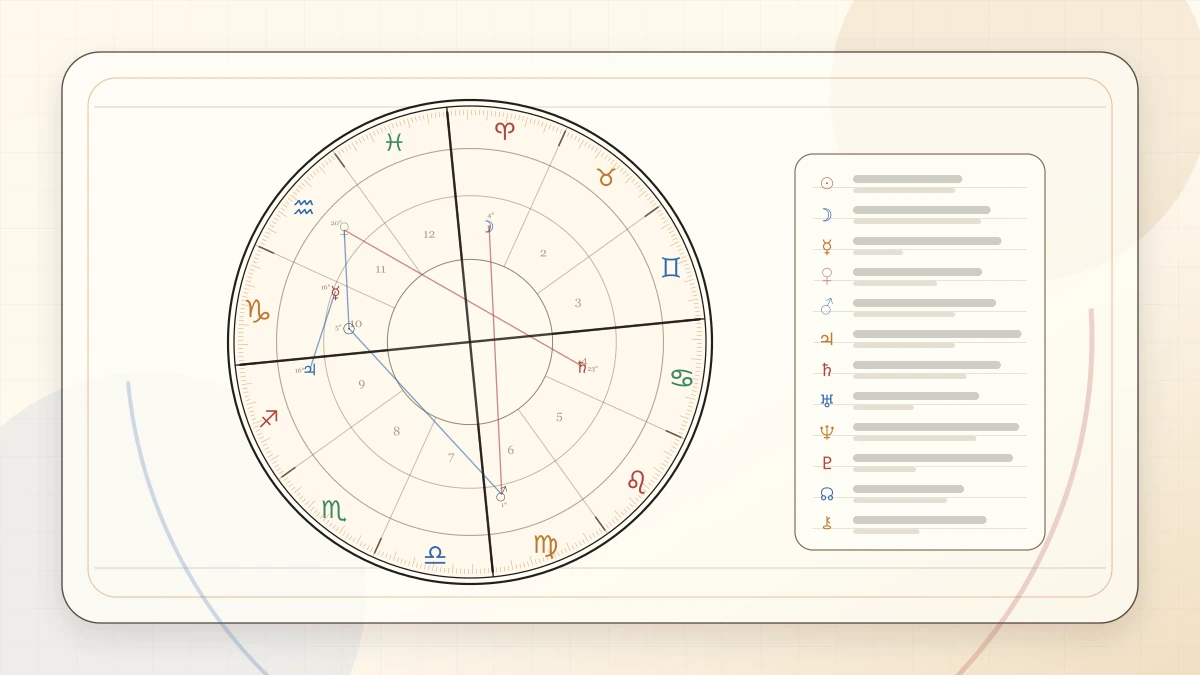
The major aspects are angles between two planets: conjunction at 0 degrees, square at 90, trine at 120 and opposition at 180, with the sextile at 60. Planets in aspect modify each other.
Sextile Meaning in Astrology
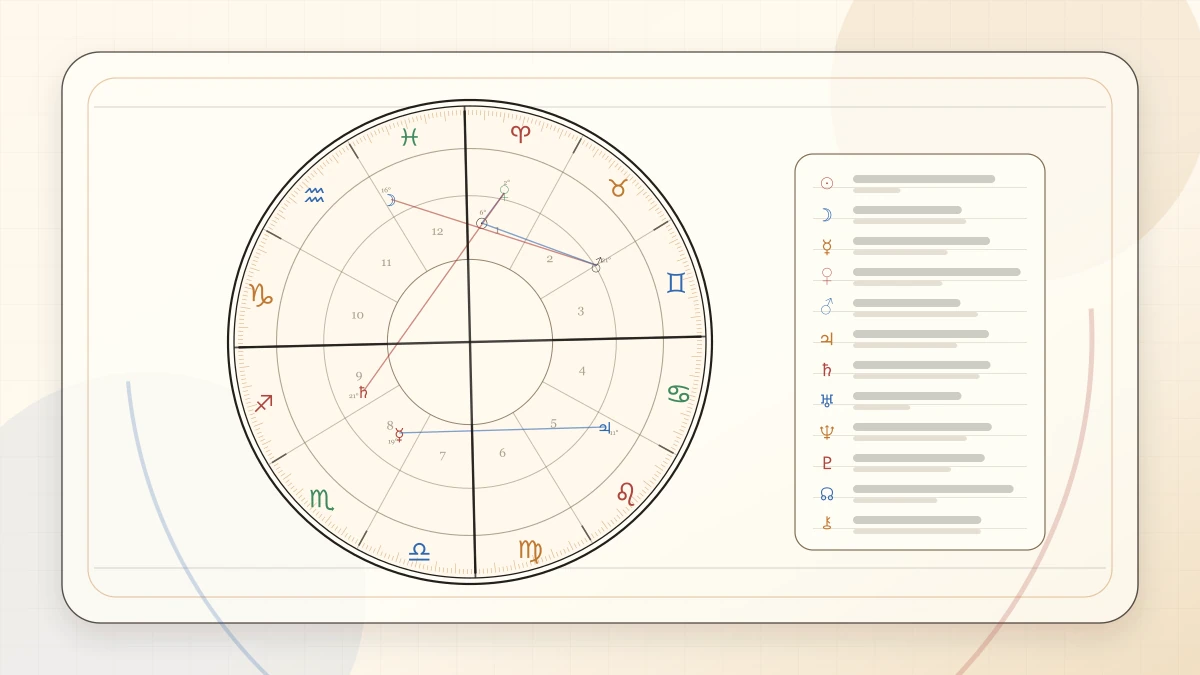
A sextile is a 60-degree angle between two planets, two signs apart, usually allowed an orb of about 4 to 6 degrees. Astrologers read it as easy cooperation that works best when used.
How to Read Chart Aspects Without Overthinking
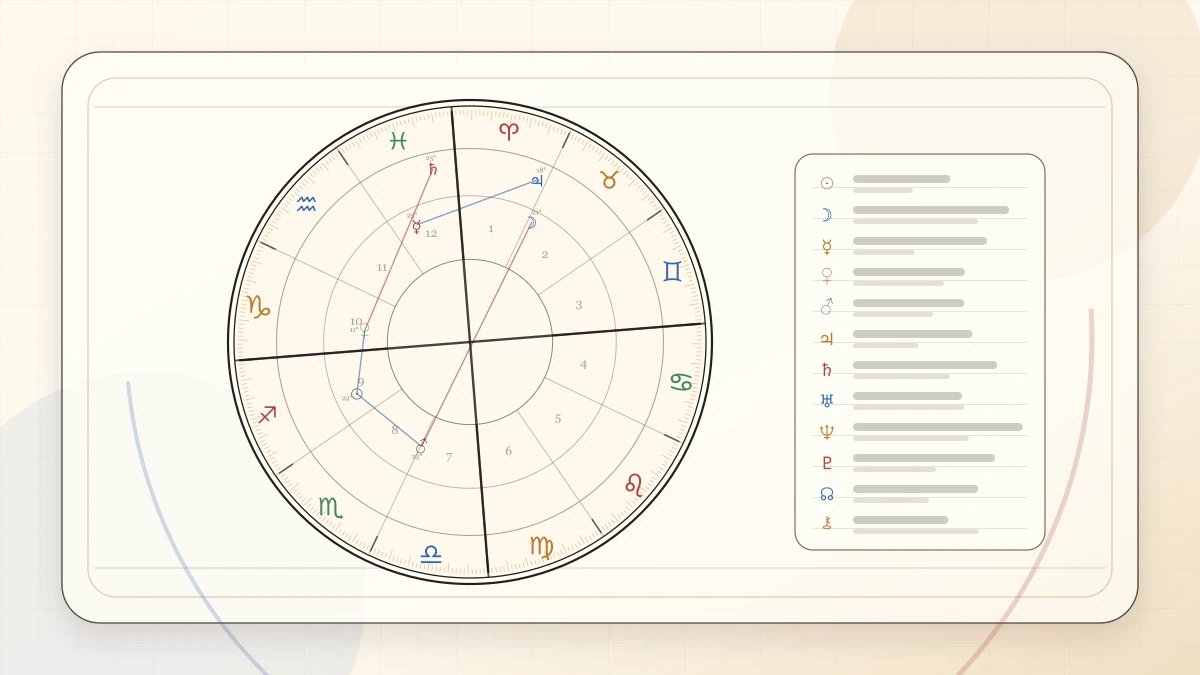
Decide in advance how many aspects you will read, rank them by orb and look for the planet that keeps repeating. A typical chart shows about a dozen major aspects by geometry alone.
Sun Meaning in Astrology
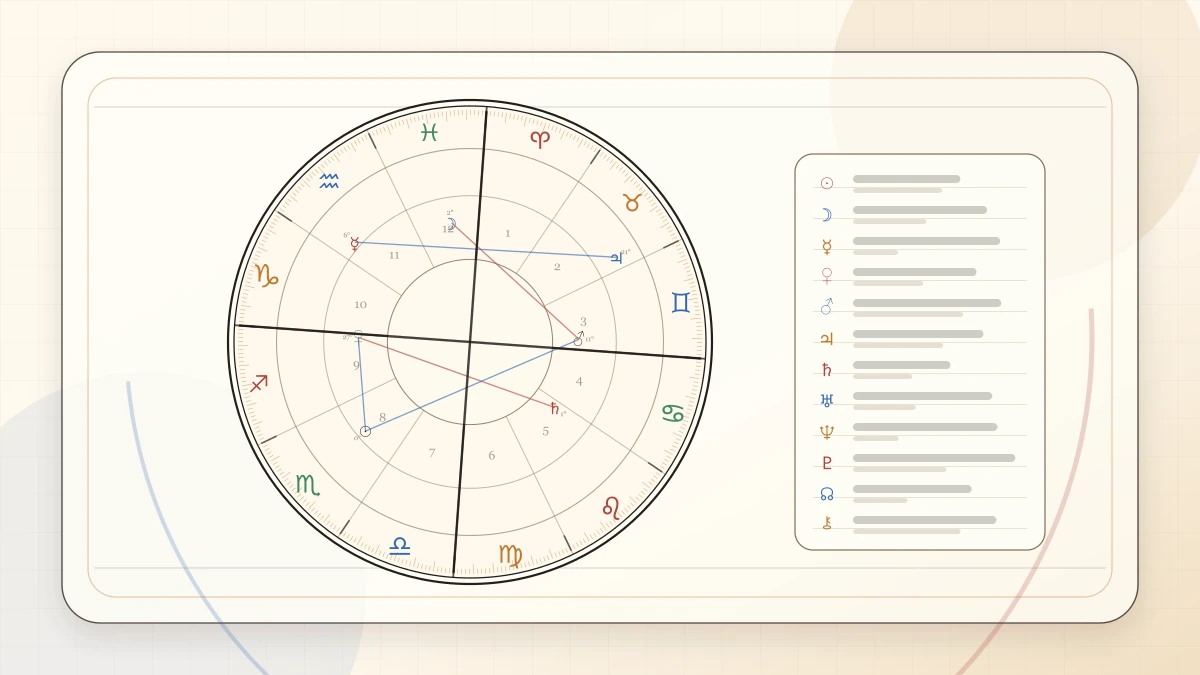
In Western astrology the Sun stands for identity: the self you are building, what you want to be recognized for and the effort that feels most like you. Its sign, house and aspects add detail.
Moon Meaning in Astrology
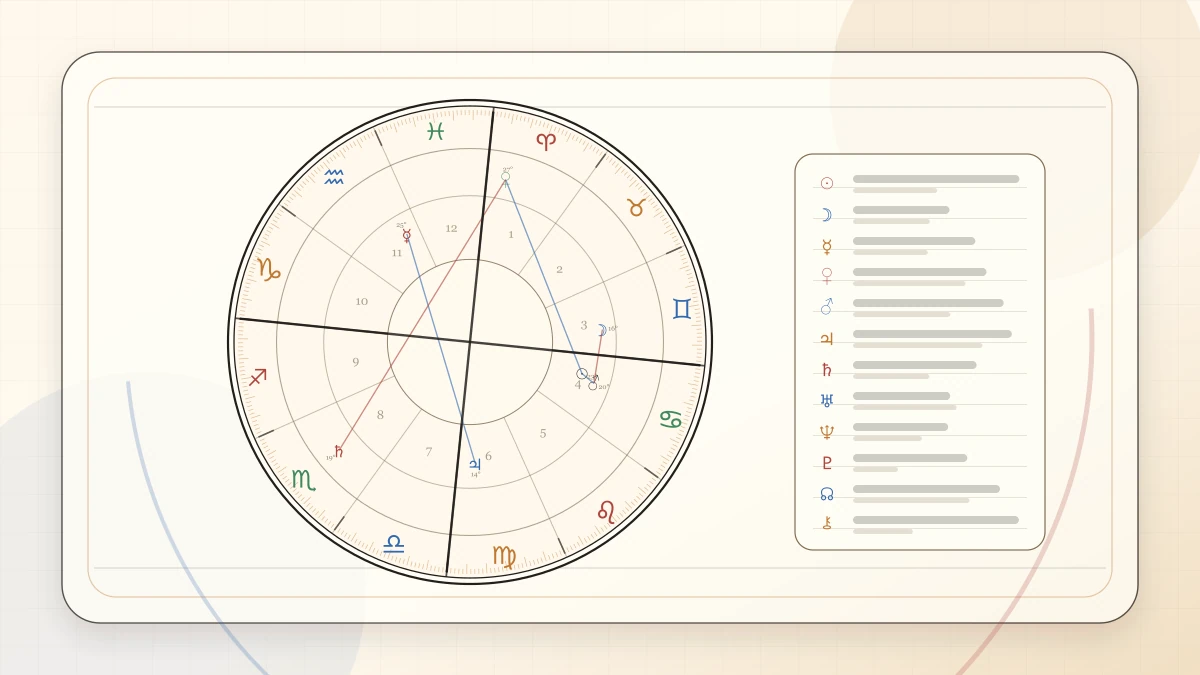
The Moon describes needs, habits and comfort: the foods, rhythms, places and company that feel familiar. Astrologers say it shows most clearly when you are tired, stressed or at home.
Mercury Meaning in Astrology
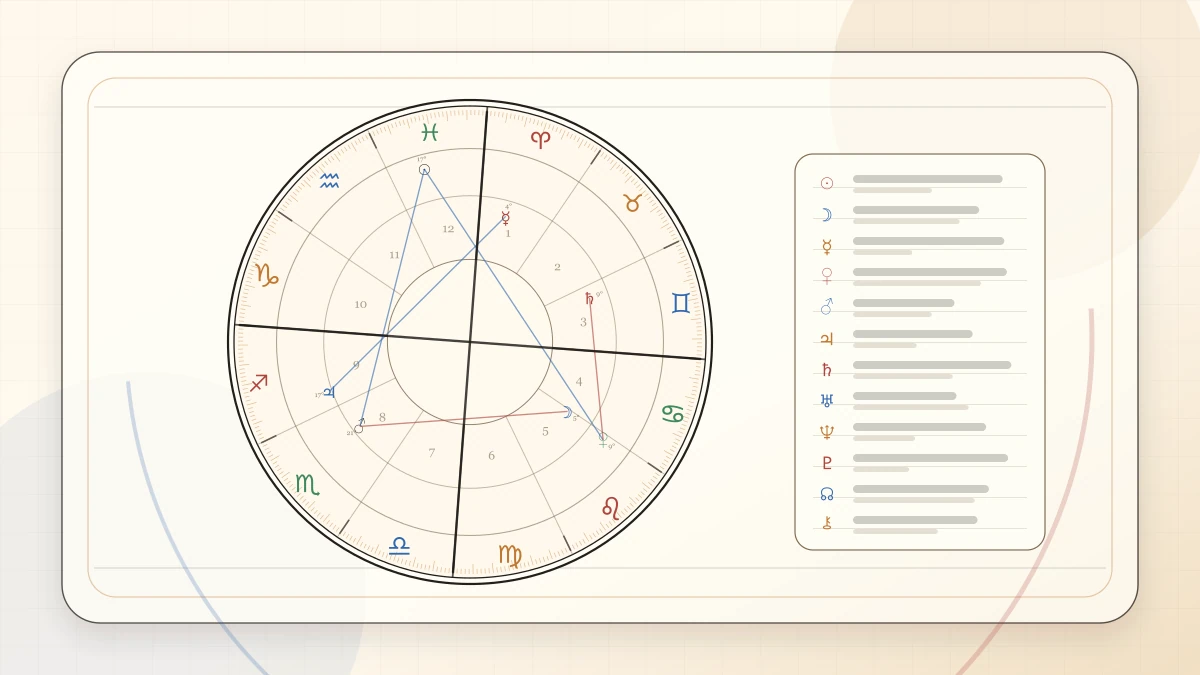
Mercury describes how you think, speak, learn and exchange information. It shows the style of your mind, such as thinking aloud or working one step at a time, not how intelligent you are.
Venus Meaning in Astrology
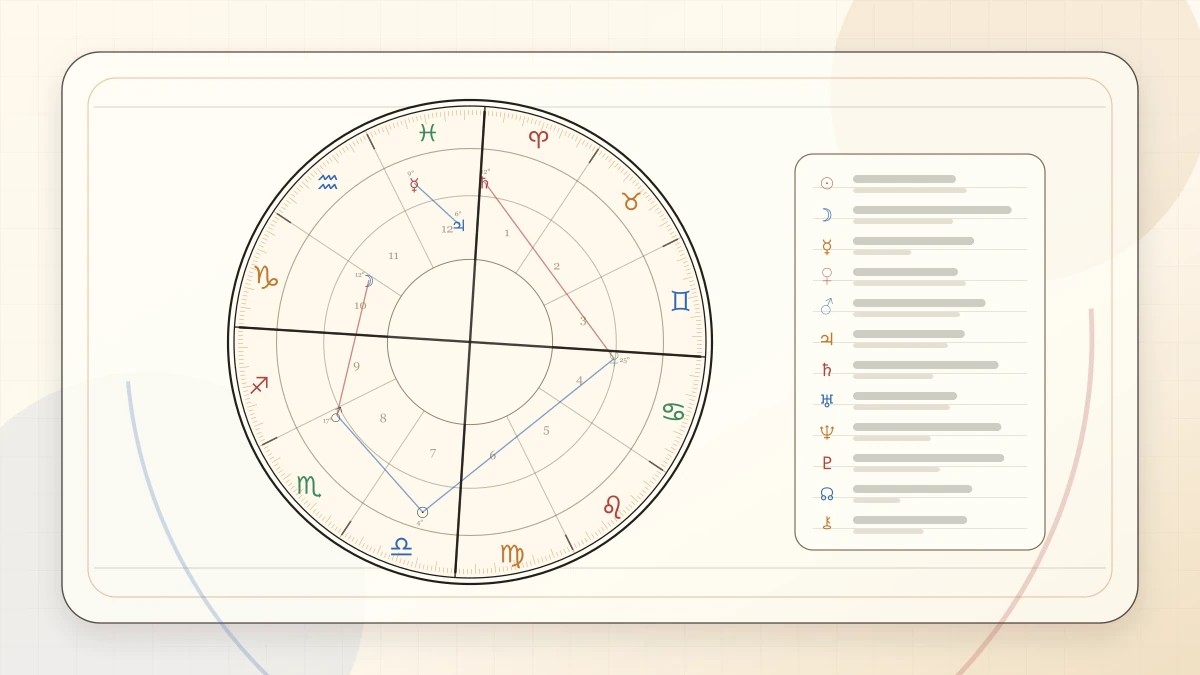
Venus describes what you value and enjoy: beauty, pleasure, harmony and affection. In relationships it shows how you express liking, but at heart it is a planet of values, not romance alone.
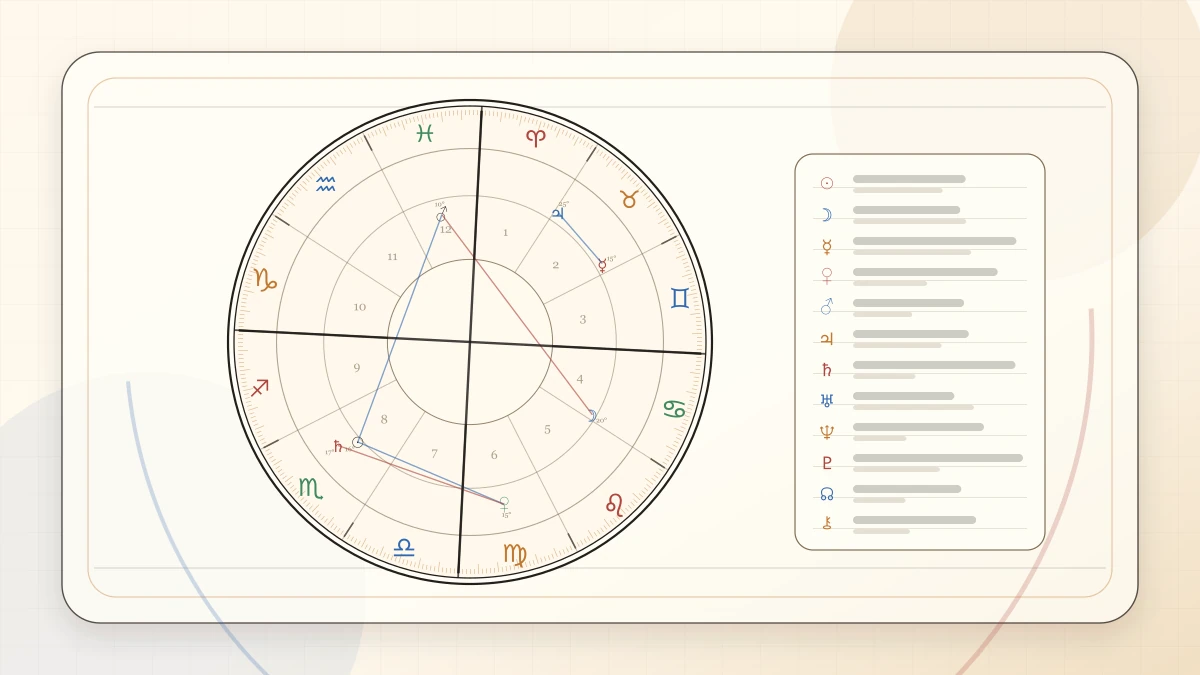
Mars Meaning in Astrology
Mars is the planet of drive and initiative: wanting something, going after it, competing and defending a boundary. Its sign and house suggest how and where that push tends to move.
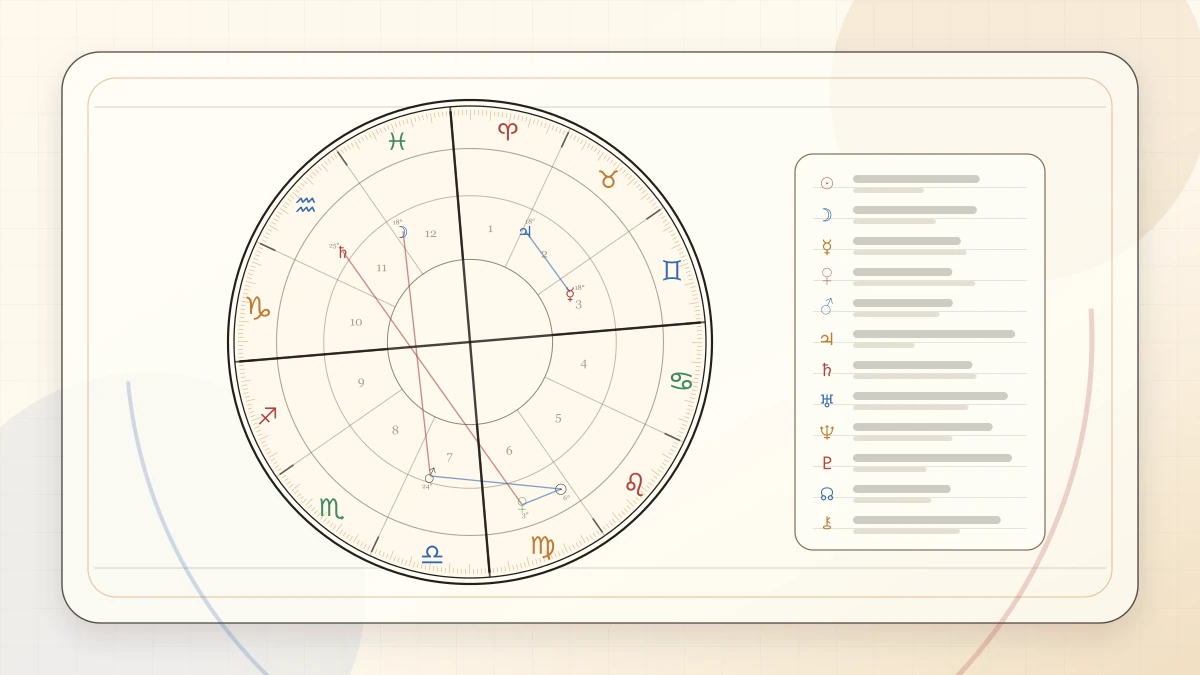
Saturn Meaning in Astrology
Saturn stands for boundaries, persistence and responsibility: skills built by repetition, commitments kept and limits that give a life shape. A limit can support you or confine you, depending on context.
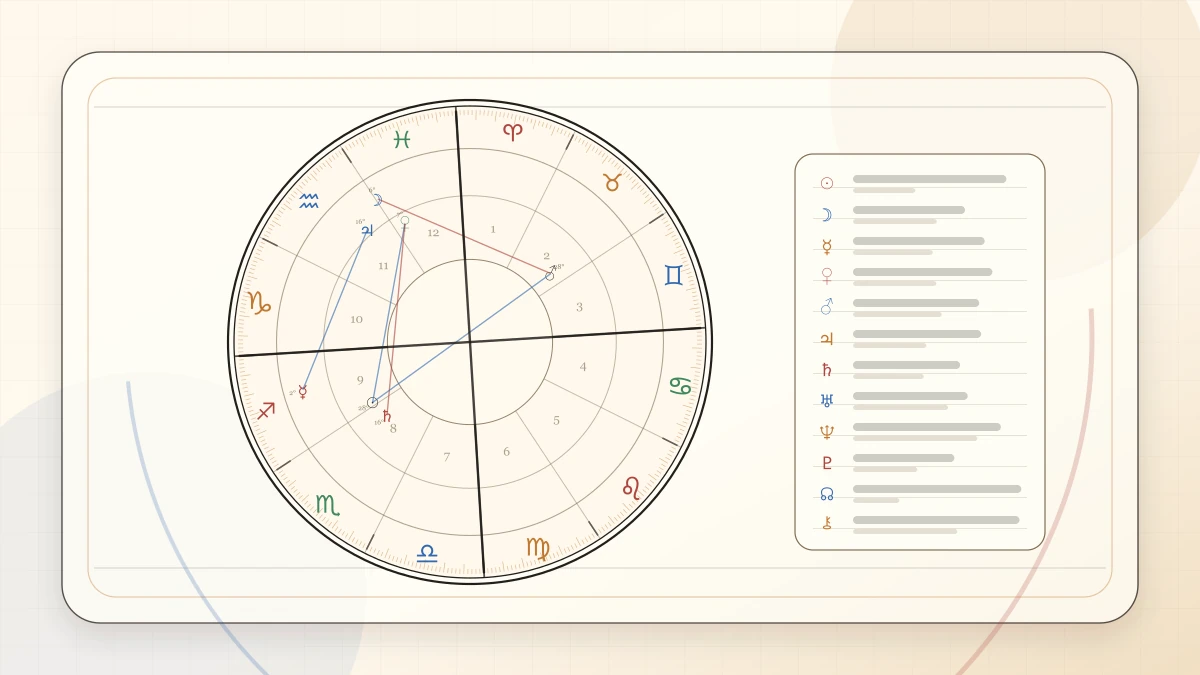
Jupiter Meaning in Astrology
Jupiter stands for growth: expansion, learning, generosity, optimism and the search for meaning. The same quality can turn into excess, so over-reach deserves as much attention as opportunity.
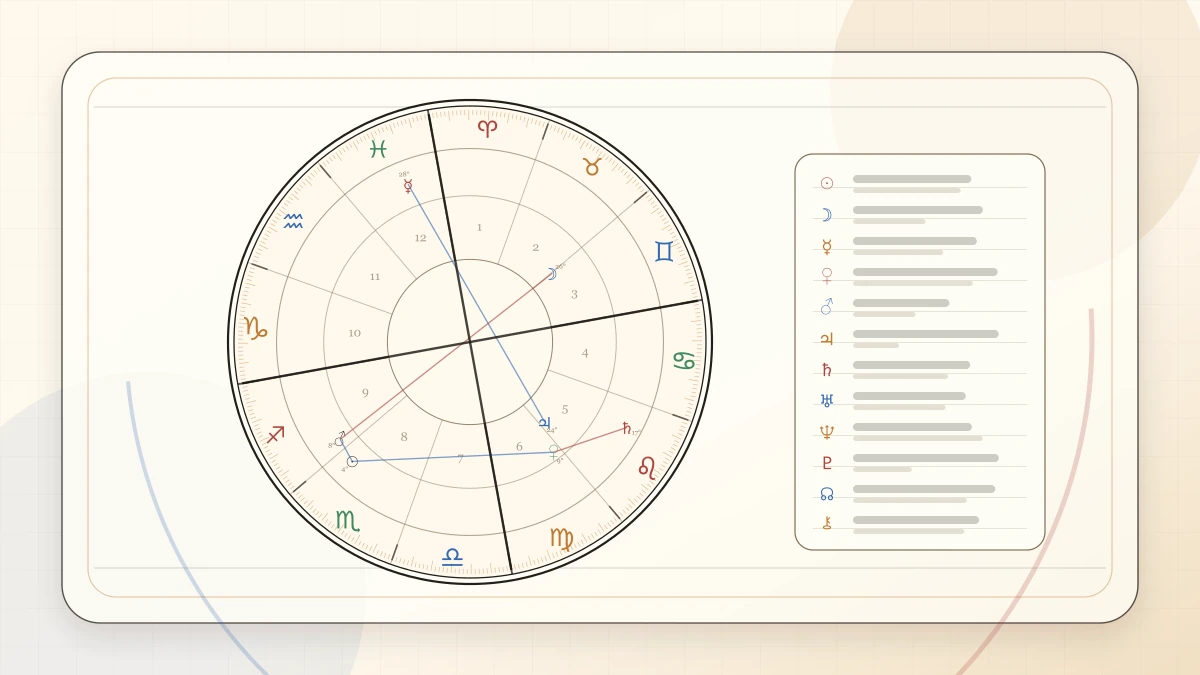
Uranus Meaning in Astrology
Uranus stands for change, independence, experimentation and breaks with convention. It was discovered in the late eighteenth century, so the traditional dignity system has no place for it.
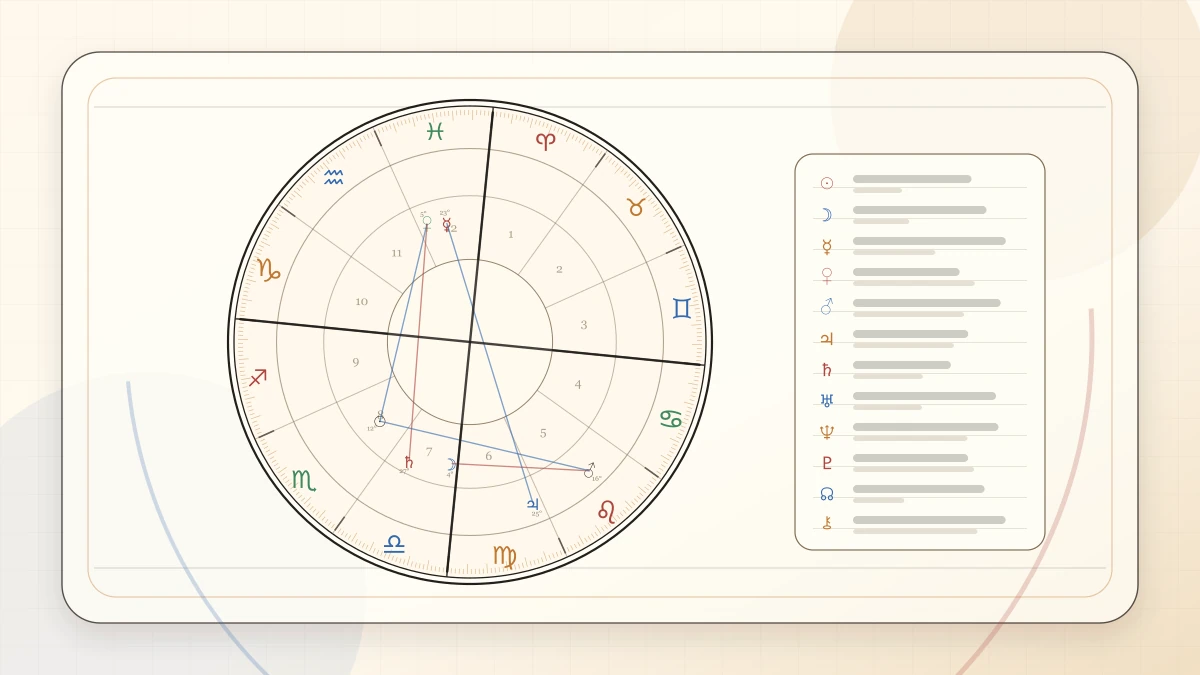
Neptune Meaning in Astrology
Neptune stands for imagination, idealism, compassion and the dissolving of boundaries, and the same openness can bring confusion or wishful thinking. These are modern readings, since ancient astrology never knew the planet.
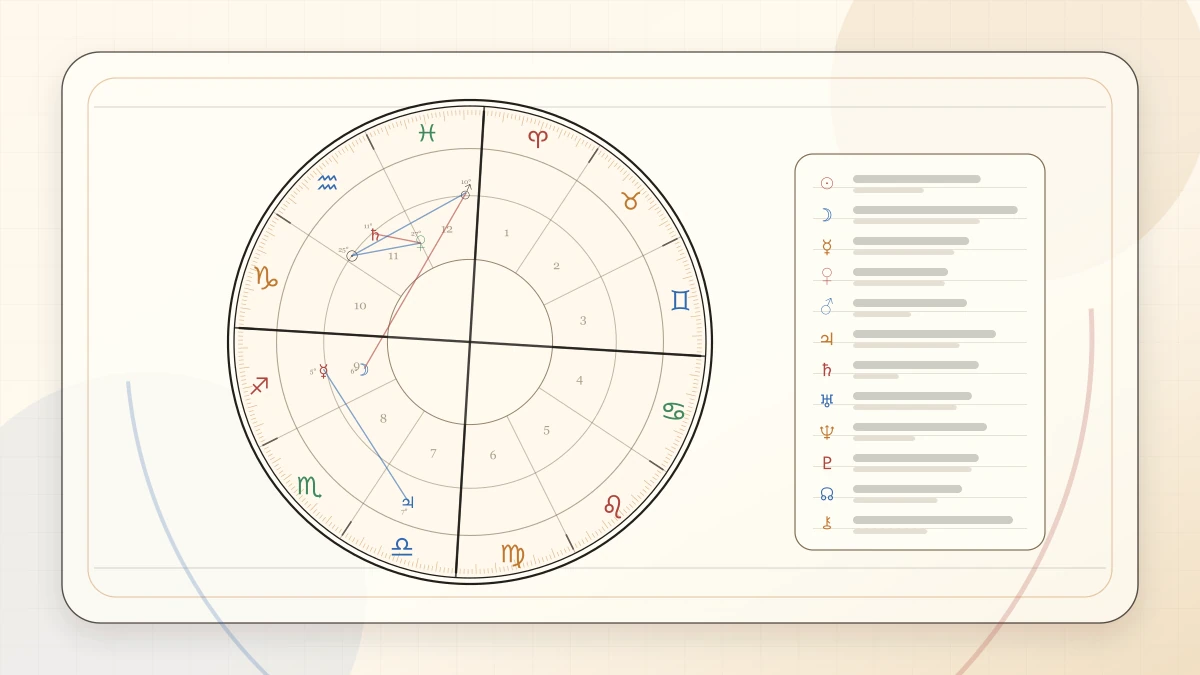
Pluto Meaning in Astrology
Pluto stands for power, depth, control and deep change. Astronomers reclassified it as a dwarf planet in 2006, but astrologers still use its position, which takes about 248 years to circle the zodiac.
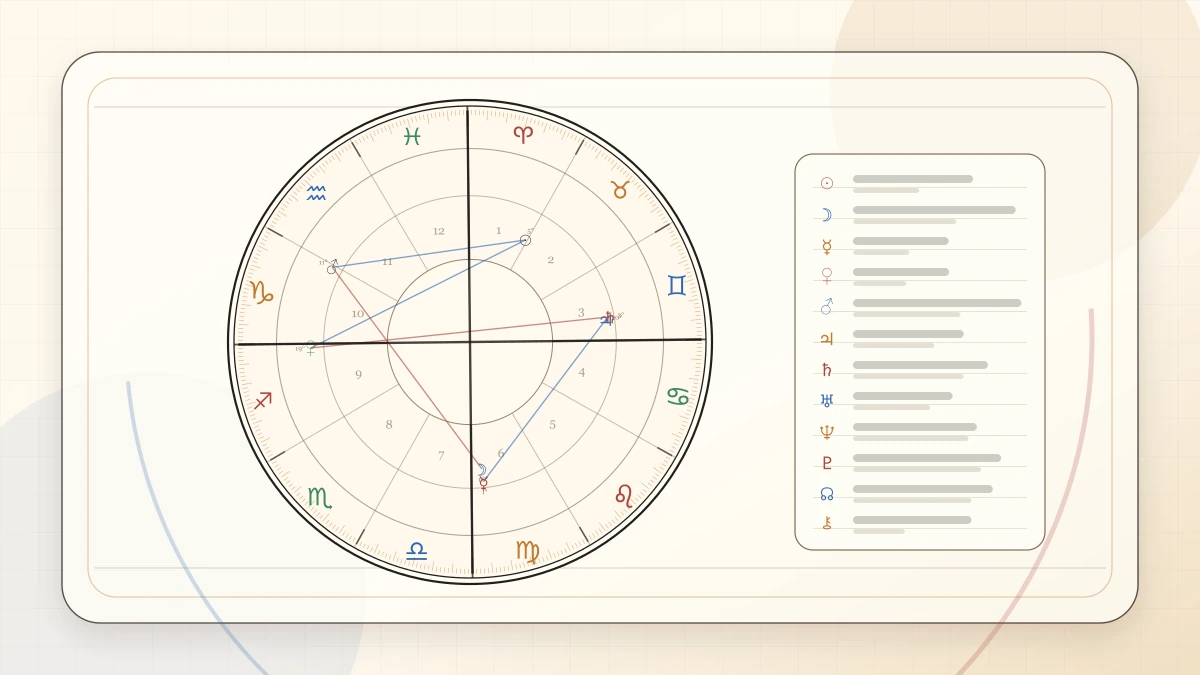
Chiron Meaning in Astrology
Chiron is a small body between Saturn and Uranus, named for the wounded teacher of Greek myth. Astrologers read its wounded-healer theme as a modern metaphor for sensitivity and what you can offer.
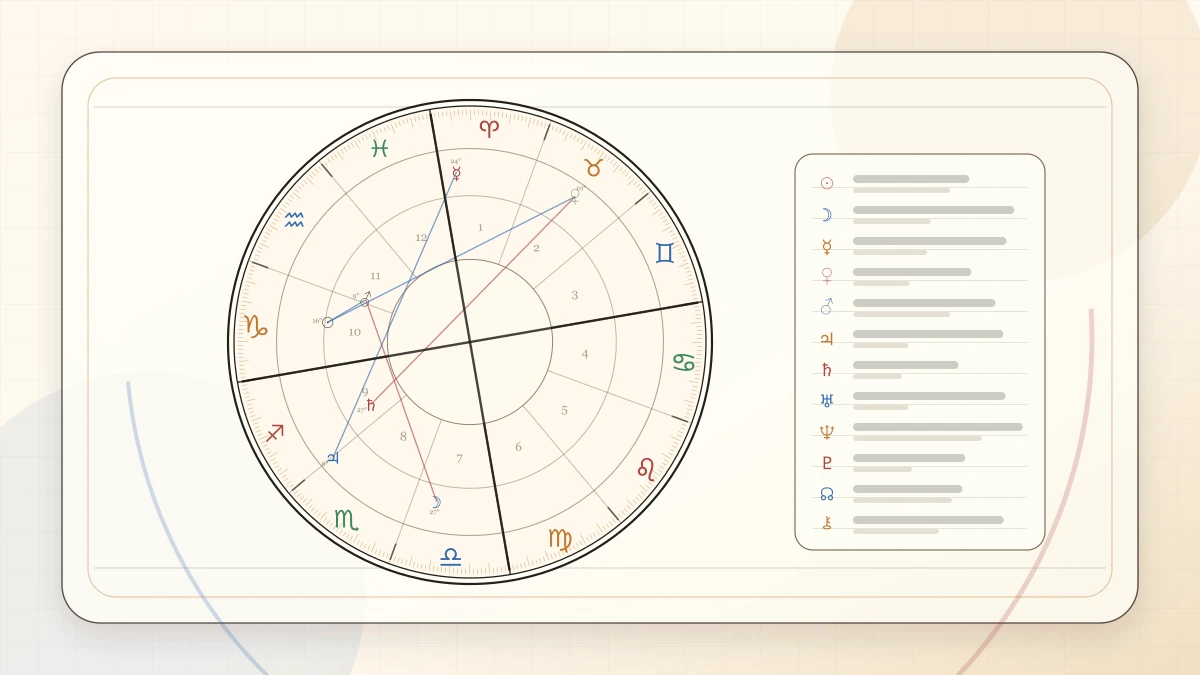
North Node Meaning in Astrology
The North Node is the point where the Moon's path crosses the Sun's apparent path heading north. Astrologers read its sign and house as a direction of growth toward less familiar qualities.
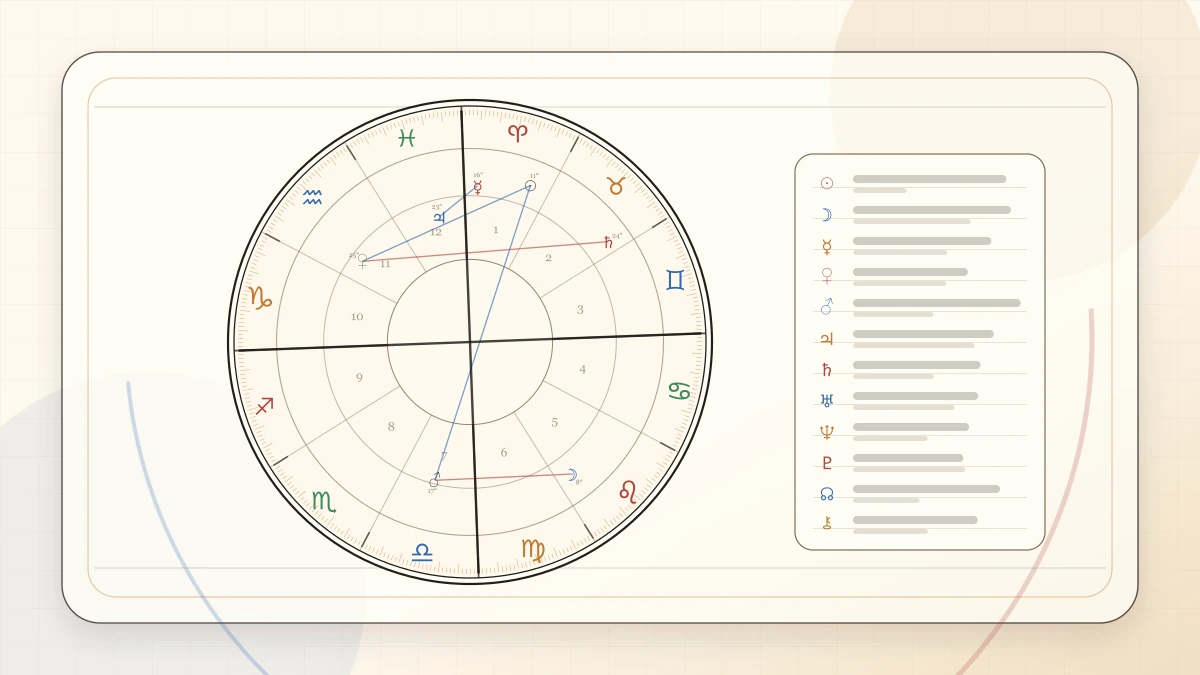
South Node Meaning in Astrology
The South Node sits exactly opposite the North Node, so the two are read as one axis. Its sign and house suggest familiar strengths you reach for easily, and what overusing them costs.
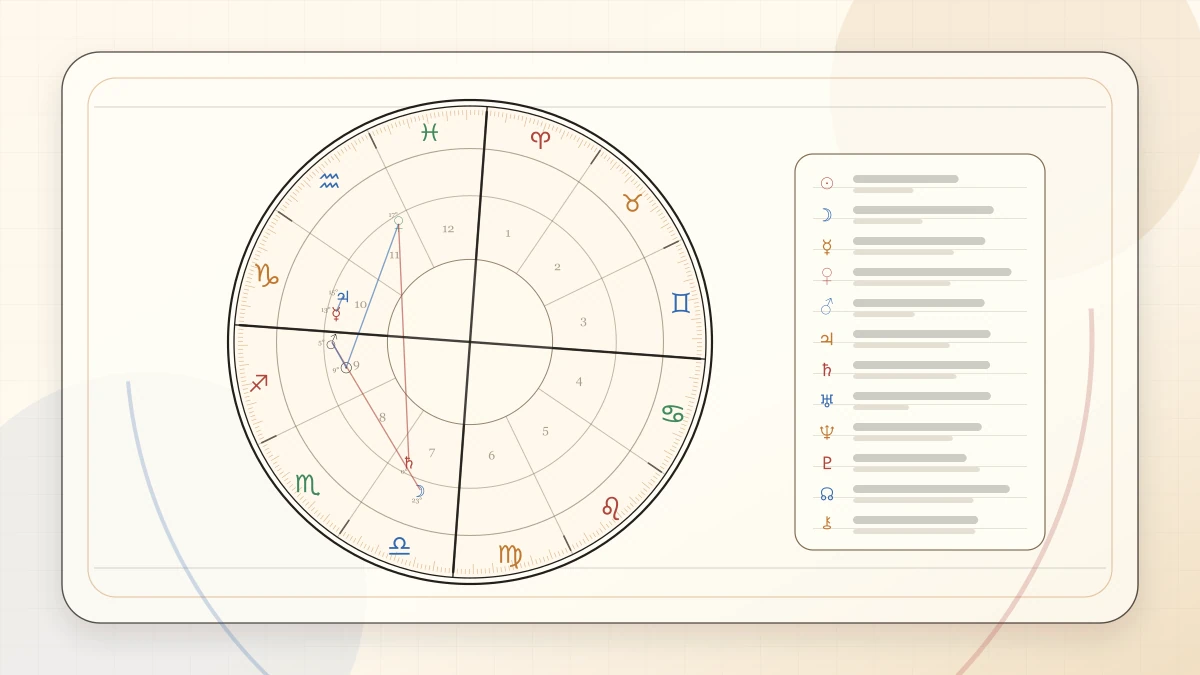
Quincunx Meaning in Astrology
A quincunx, or inconjunct, is a 150-degree angle between two planets, five signs apart, with a narrow orb of about 2 to 3 degrees. It describes an awkward fit rather than a clash.
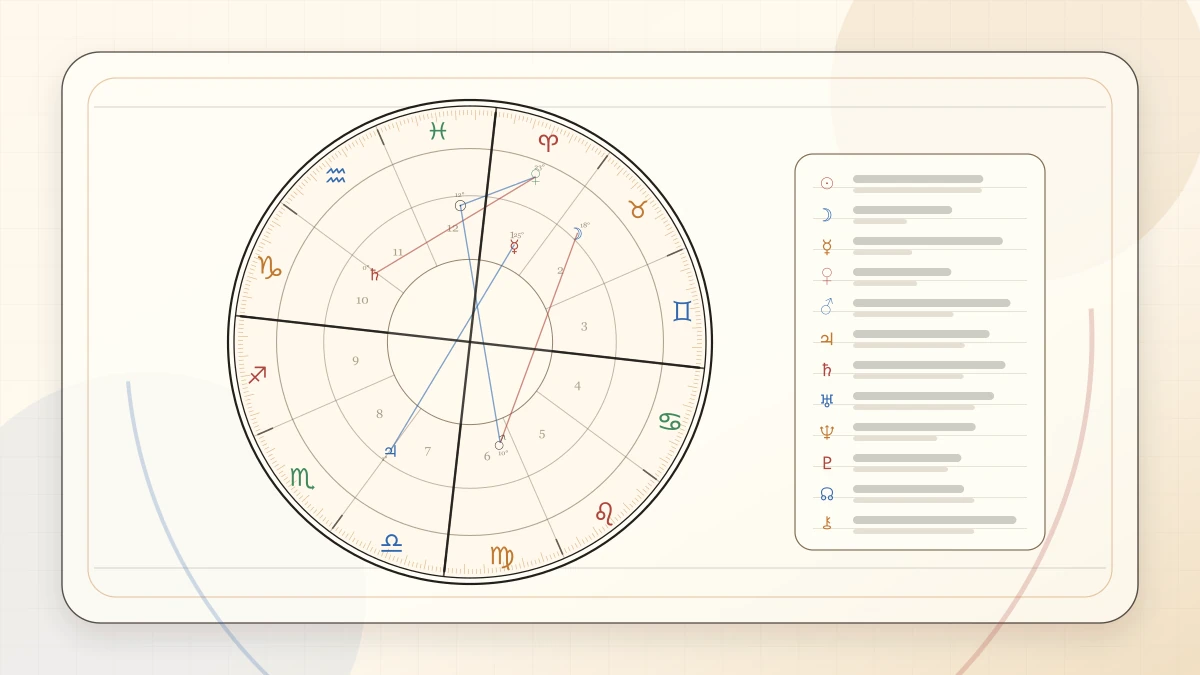
Semisextile Meaning in Astrology
A semisextile is a 30-degree angle, exactly one sign, usually between planets in neighboring signs, with a tight orb of 1 to 2 degrees. It is a minor aspect many astrologers leave out.
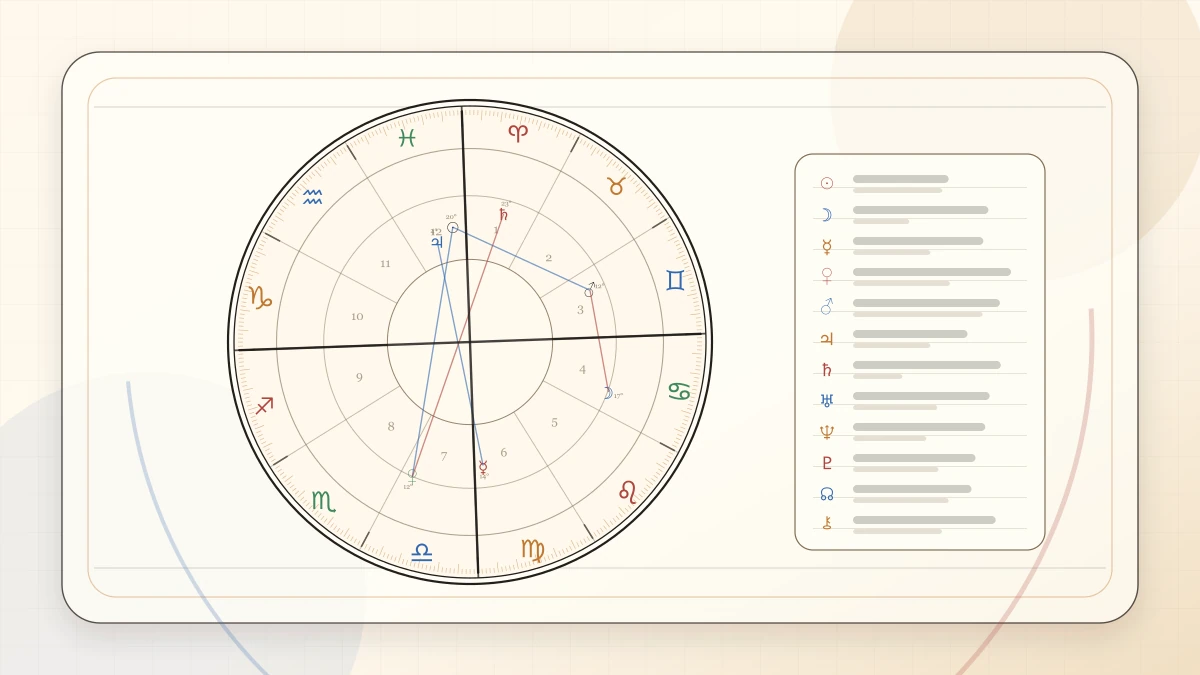
Part of Fortune Meaning in Astrology
The Part of Fortune is a calculated point, not a body. It carries the Sun-Moon relationship onto the Ascendant: Ascendant plus Moon minus Sun by day, with Sun and Moon swapped at night.
Ceres Meaning in Astrology
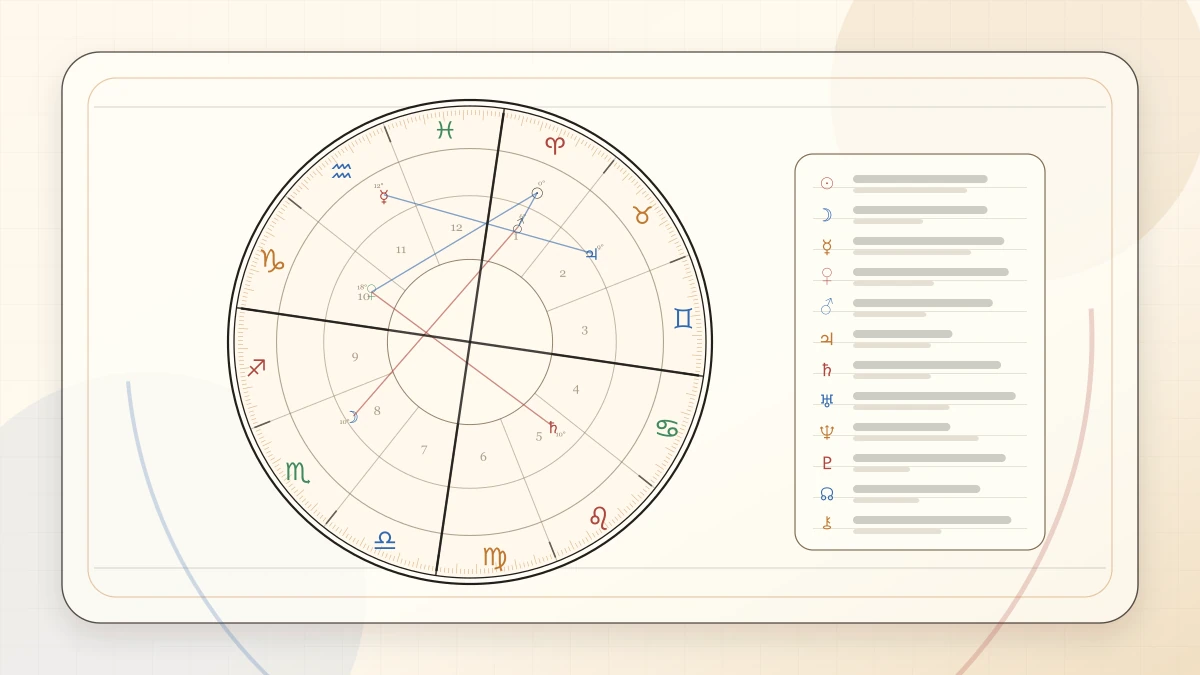
Ceres, the largest object in the asteroid belt and now classed as a dwarf planet, is read by modern astrologers as a symbol of nourishment, care and how you give and receive support.
Juno Meaning in Astrology
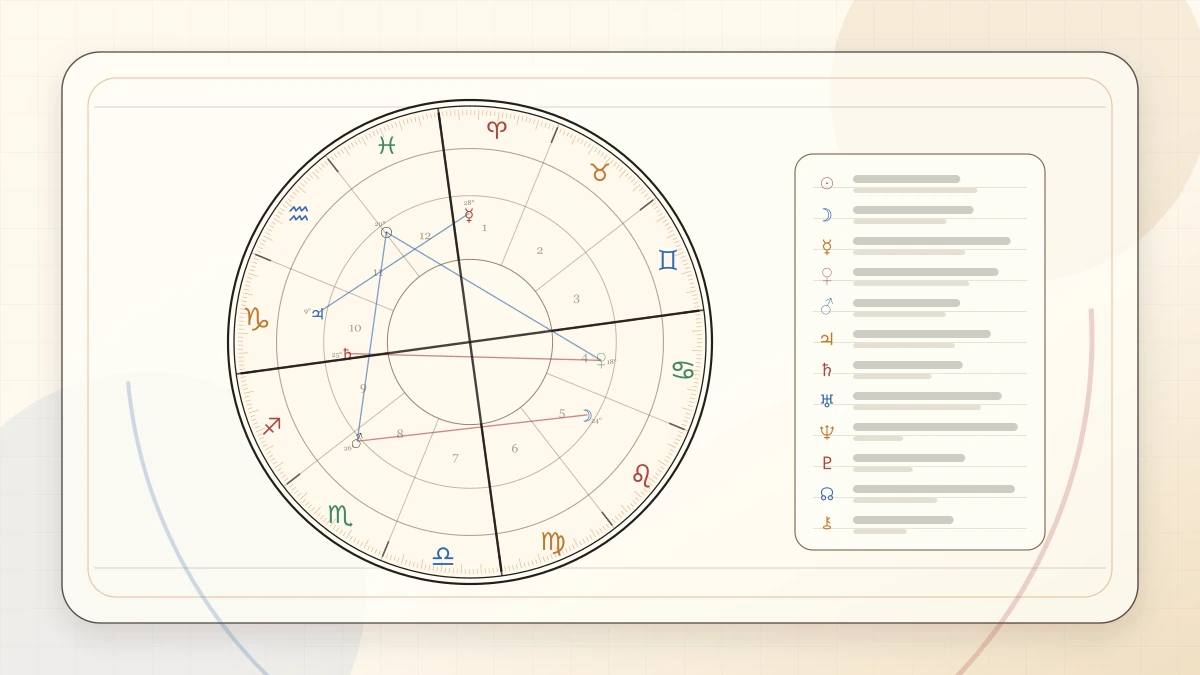
Juno, the third asteroid discovered, is read by modern astrologers as a symbol of commitment and agreements, in marriage and also in business partnerships, close friendships and promises to yourself.
Vesta Meaning in Astrology
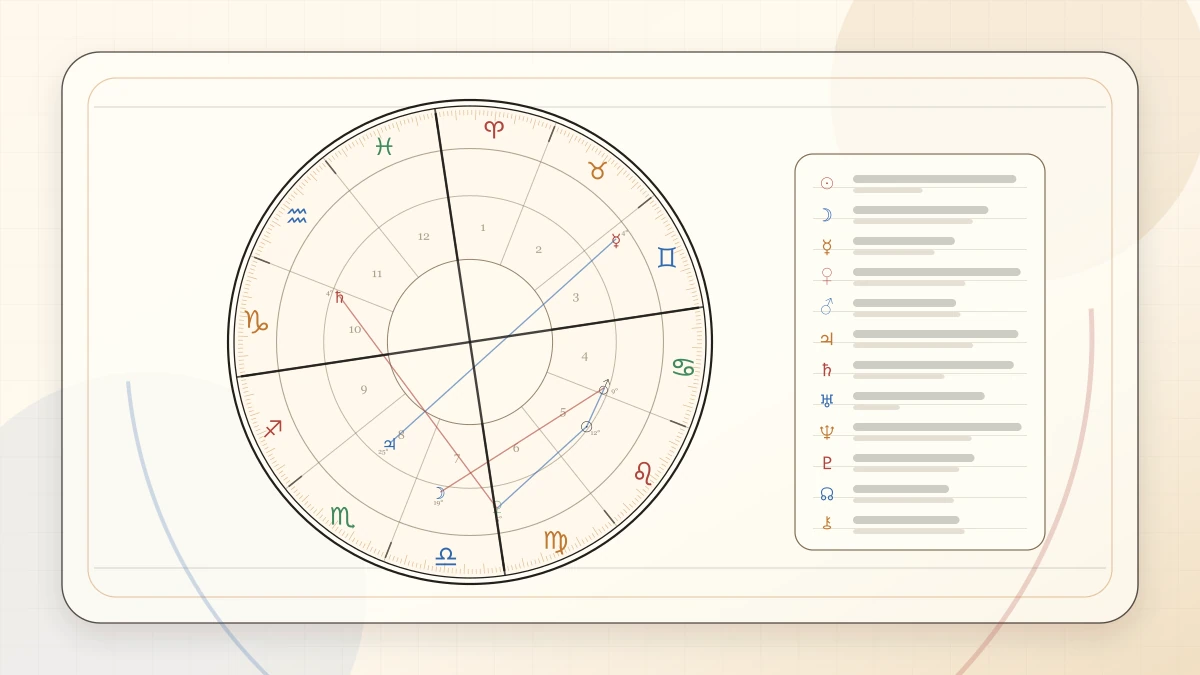
Vesta, the brightest asteroid seen from Earth, is read in modern astrology as a symbol of focus, devotion and sustained effort: where your attention settles and what you keep tending.
Pallas Meaning in Astrology
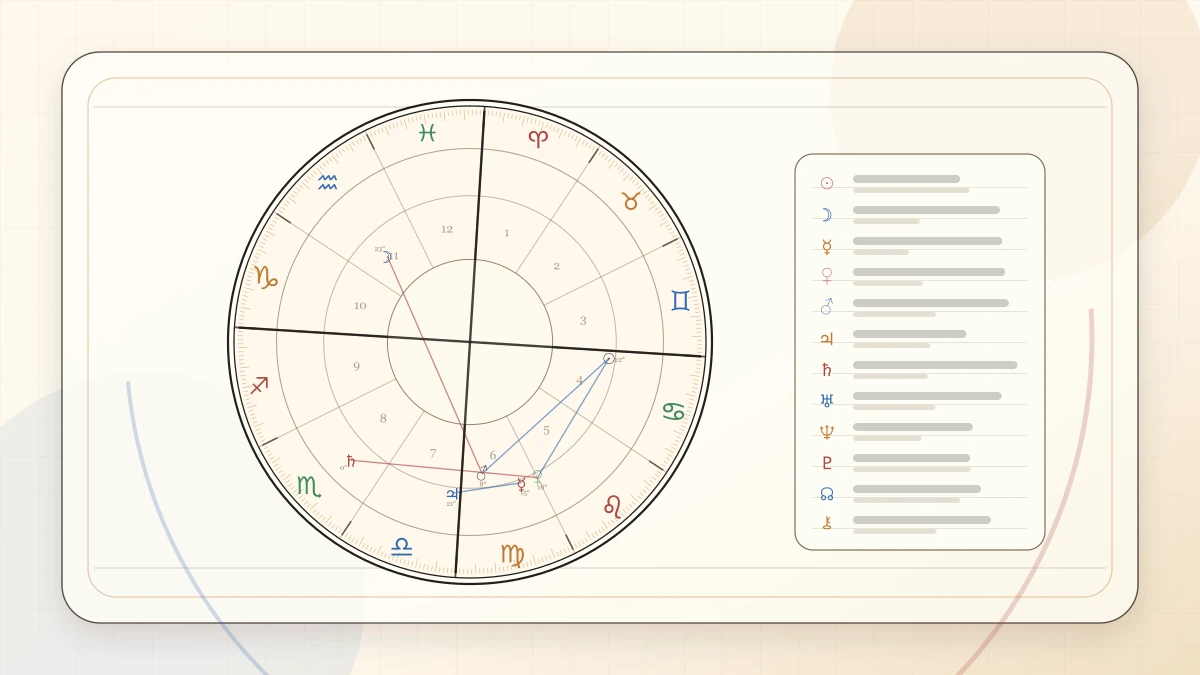
Pallas, the second asteroid found, is read in modern astrology as a symbol of strategy, pattern recognition and creative problem-solving, drawing on the myth of Pallas Athena.
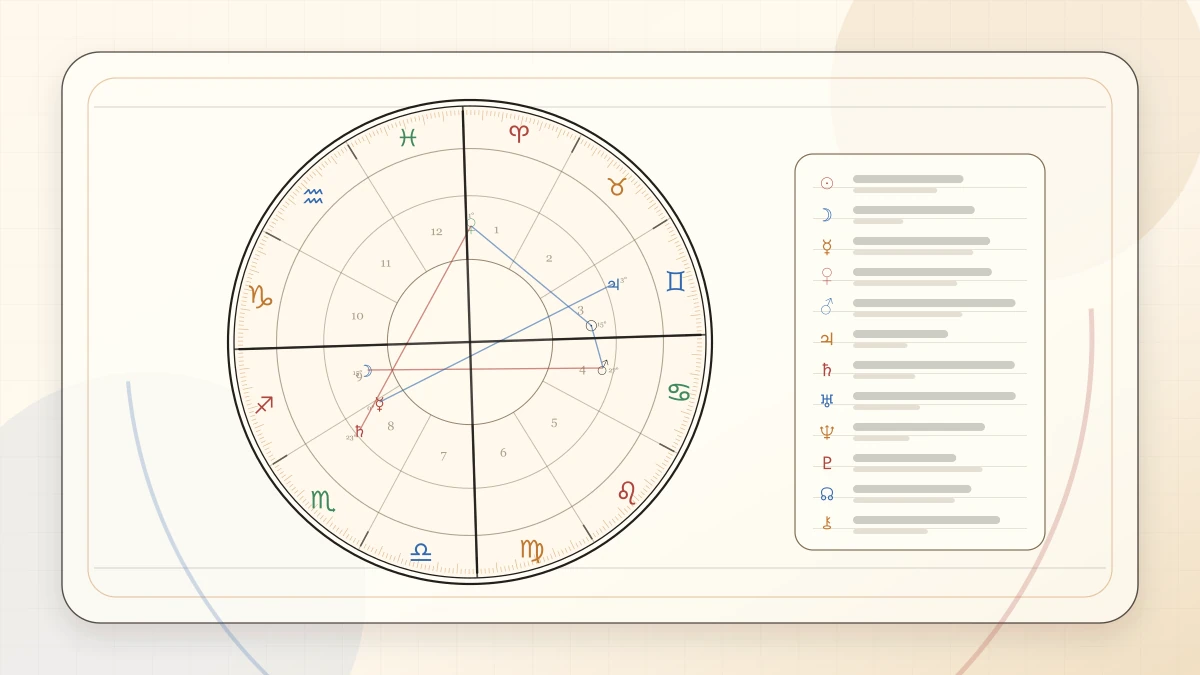
Eros Meaning in Astrology
Eros is asteroid 433, the first near-Earth asteroid found, and astrologers who use it read it as a symbol of desire and attraction. It is separate from Venus, Mars and the Lot of Eros.
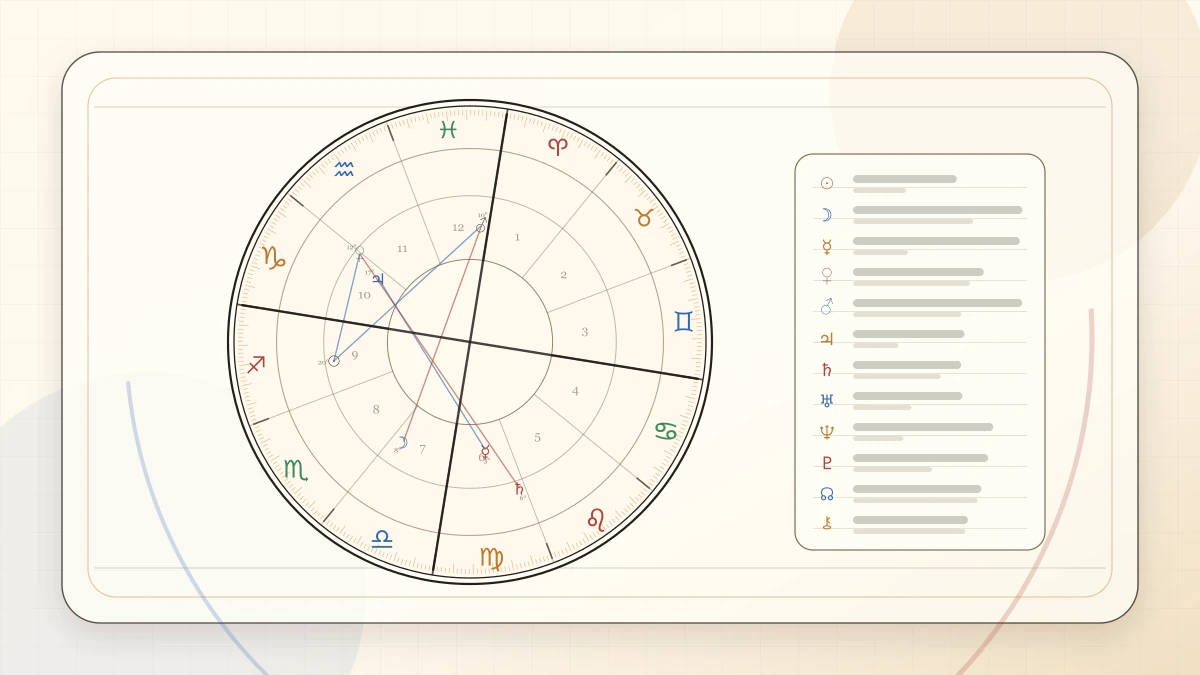
Psyche Meaning in Astrology
Psyche is asteroid 16, named for the mortal woman in Greek myth loved by Eros. Astrologers who use it read it as a symbol of the soul, devotion and self-knowledge through relationship and trial.
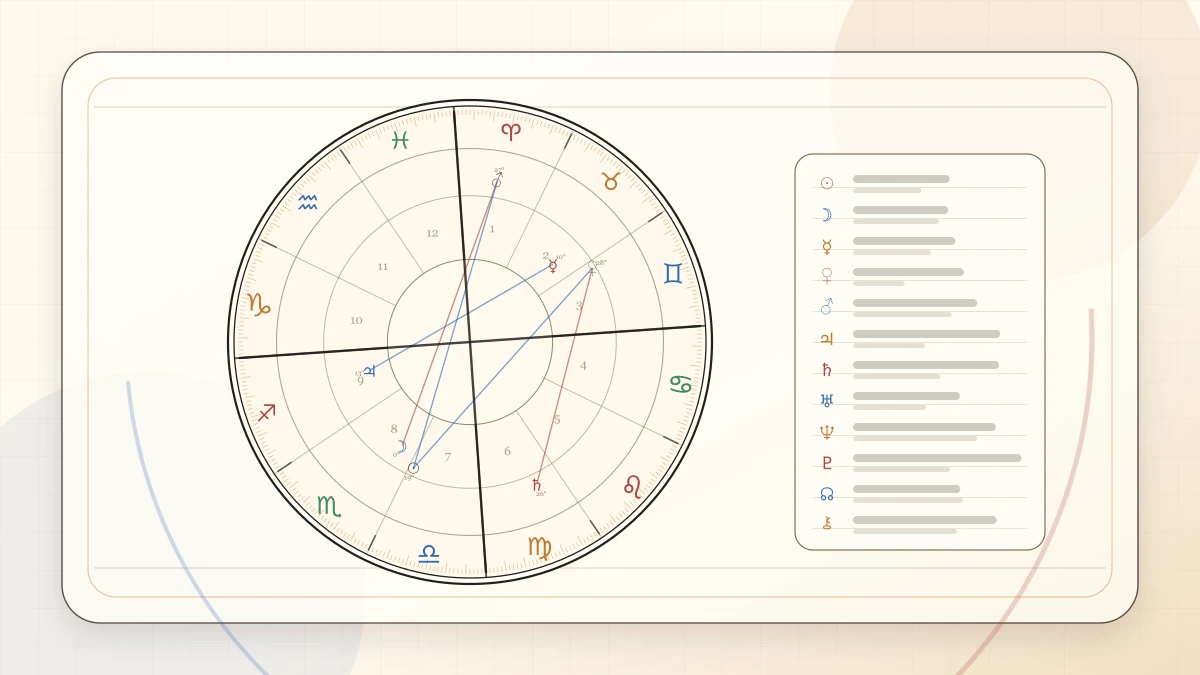
Vertex Meaning in Astrology
The Vertex is a calculated point, not a body, found from chart geometry and listed with the Antivertex opposite it. Astrologers who use it read it as a point of encounters.
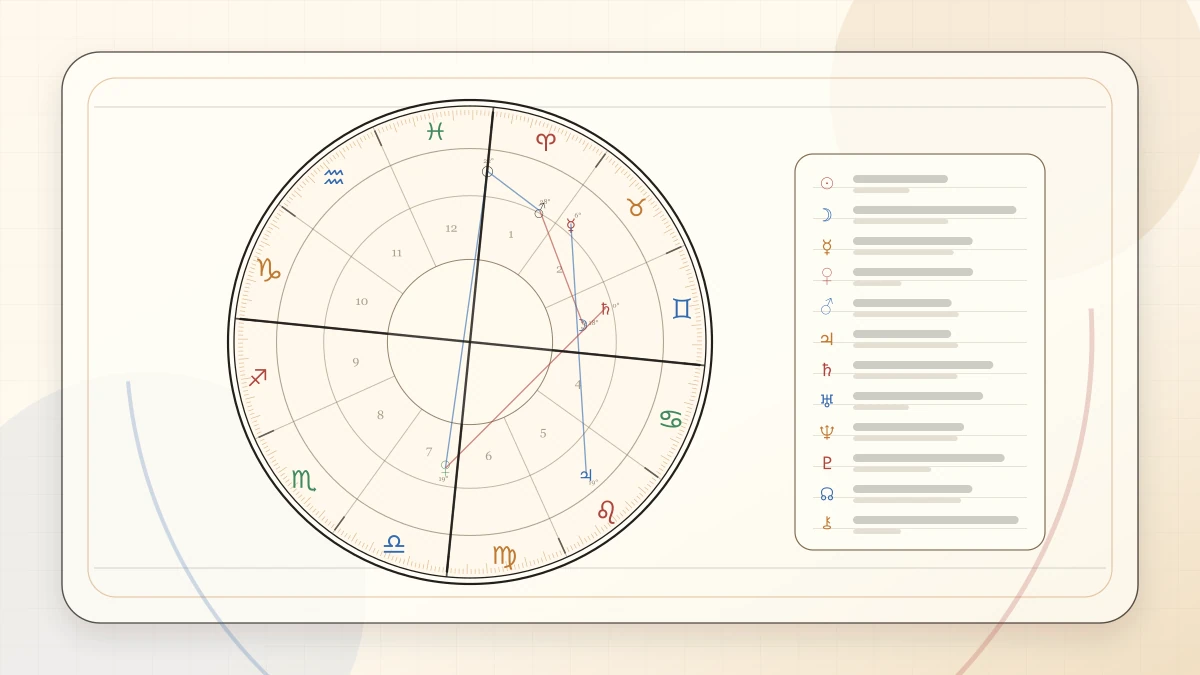
East Point Meaning in Astrology
The East Point, or Equatorial Ascendant, is the zodiac degree that would rise in the east at the equator at the sidereal time of your birth. It matches the Ascendant only at the equator.
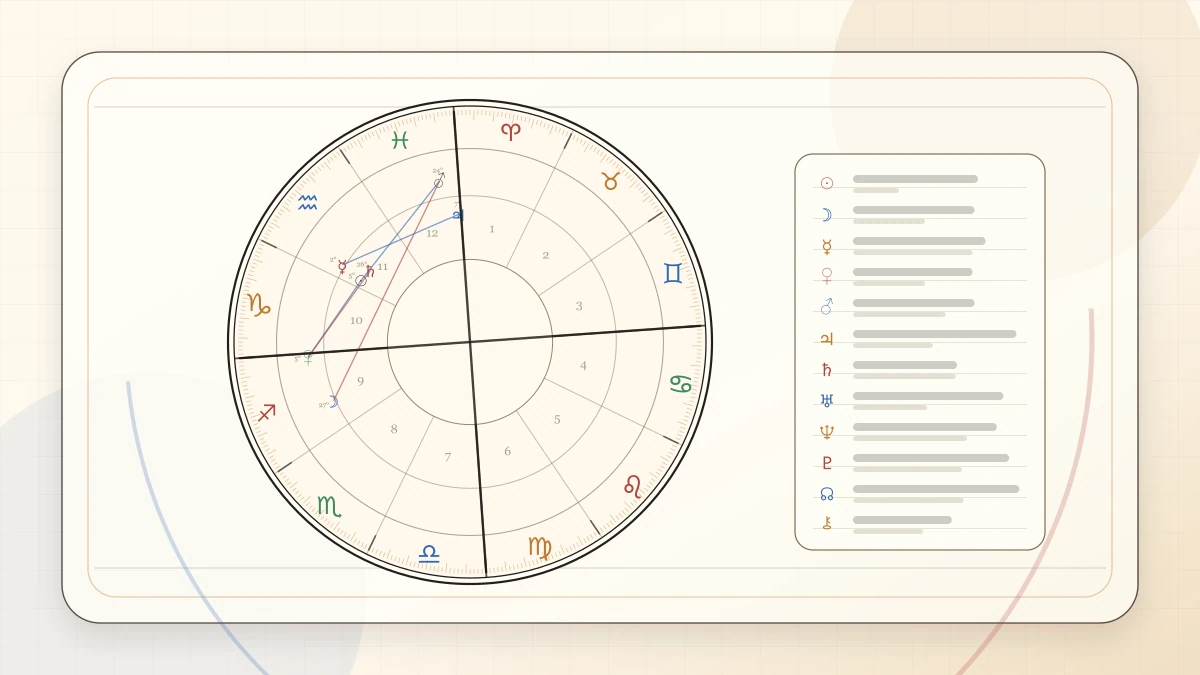
Black Moon Lilith Meaning in Astrology
Black Moon Lilith is a calculated point, usually the lunar apogee, where the Moon's orbit is farthest from Earth. It is not a planet or a moon, and mean and true versions can disagree.
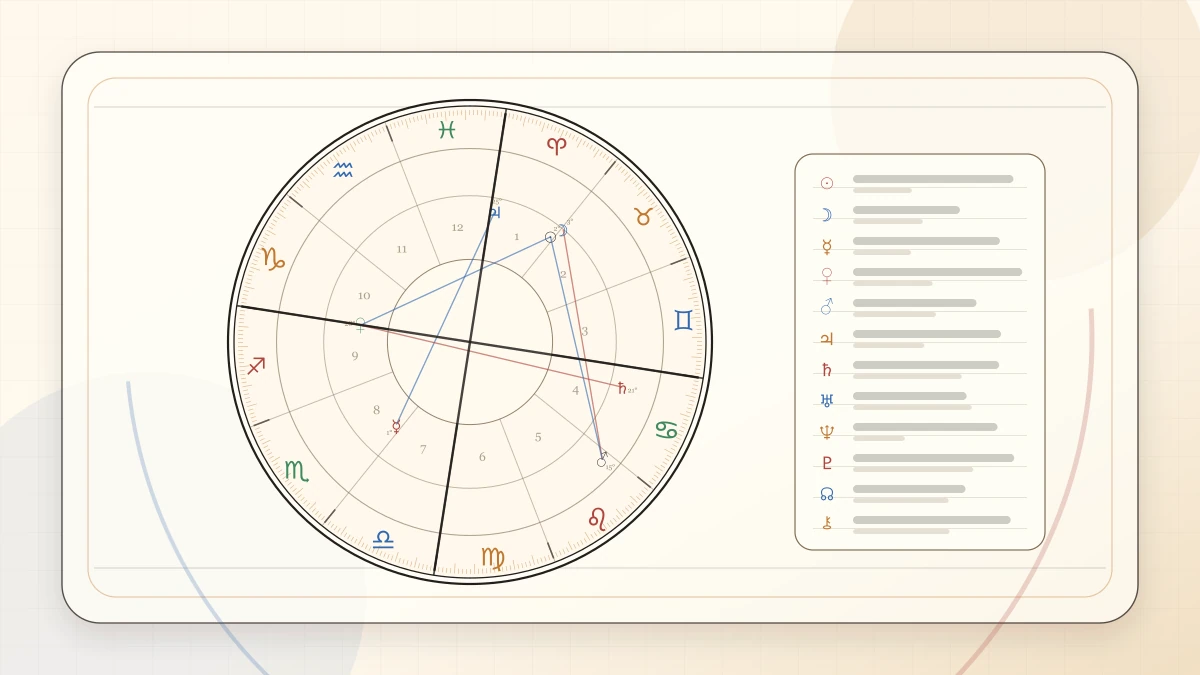
Asteroid Meanings in Astrology Explained
Astrology mostly uses the first four asteroids found: Ceres, Pallas, Juno and Vesta. Their meanings are borrowed from myth and are secondary to the Sun, Moon, Rising sign and planets.
Frequently asked questions
What is the best reading order for houses, planets, and aspects?
Start with the house, then the planet, then the sign, and finally the aspect pattern so the reading stays anchored.
Do house meanings require exact birth time?
Exact house placement is strongest when the birth time is verified, because houses and angles shift with time and place.